Monorail Systems
Monorail systems use overhead tracks with powered trolleys to transport products through facilities, combining the space efficiency of overhead conveyors with flexible routing and independent carrier control.
Monorail Systems Overview
System Types
- •Enclosed TrackProtected rail system
- •I-Beam MonorailHeavy-duty loads
- •Patented TrackSpecialized designs
- •Flexible SystemsCurved layouts
Key Benefits
- •Space EfficientOverhead transport
- •Flexible RoutingComplex paths
- •High Capacity500-5,000 lbs
- •Reliable Operation99%+ uptime
Components
- •Track SystemRails & supports
- •Trolleys/CarriersLoad bearing units
- •Drive SystemsChain or cable
- •Control SystemsAutomation & safety
Applications
- •AutomotiveAssembly lines
- •AerospaceHeavy components
- •ManufacturingProduction transport
- •WarehousingMaterial handling
Features
- •Curved SectionsFlexible layouts
- •Switches & TransfersRoute selection
- •Load StationsAccess points
- •Variable SpeedAdjustable rates
Future Trends
- •Smart ControlsIoT integration
- •Predictive MaintenanceAI monitoring
- •Energy EfficiencyGreen technology
- •Modular SystemsFlexible expansion
How Monorail Systems Work
The fundamental design consists of an overhead I-beam track suspended from the ceiling or supported by floor-mounted columns, with powered trolleys that travel along the track. Each trolley contains an electric motor powered by conductor bars running along the track or battery packs onboard the trolley. The onboard intelligence in each trolley enables independent speed control, positioning, and routing based on commands from the central control system. Wheels or rollers on the trolley engage with the track, providing smooth, quiet operation at speeds up to 300+ feet per minute.
Load carriers attach beneath the trolleys, with designs ranging from simple hooks for hanging products to complex fixtures for specific parts or assemblies. The carriers can be fixed (permanently attached to trolleys) or detachable (transferred between trolleys at workstations), depending on operational requirements. Rotating carriers enable products to be oriented for specific operations, while tilting carriers facilitate loading, unloading, or processing. Load capacities typically range from 50-500 pounds for light manufacturing to 1,000-2,000+ pounds for automotive or heavy industrial applications.
Switching mechanisms at track junctions enable trolleys to be routed to different destinations based on product type, process requirements, or system logic. Automated switches receive commands from the control system and position track sections to direct trolleys along desired paths. RFID tags or barcode readers identify trolleys and their loads, enabling the system to track product locations and make routing decisions. The flexible routing allows a single monorail network to serve multiple destinations, with trolleys automatically directed to appropriate locations based on real-time operational needs.
Control systems coordinate trolley movements, manage traffic at intersections, prevent collisions, and optimize routing for efficiency. Zone control divides the track into sections, with the system ensuring that only one trolley occupies each zone at a time to prevent collisions. Traffic management algorithms optimize trolley spacing and speeds to maximize throughput while maintaining safety. Accumulation zones allow trolleys to queue at workstations without blocking main traffic lanes. Integration with manufacturing execution systems (MES) or warehouse management systems (WMS) enables automated routing based on production schedules or order requirements.
Key Benefits
The primary advantage of monorail systems is flexible material flow with independent carrier control that adapts to varying process times and operational requirements. Unlike fixed-speed conveyors where all products move at the same pace, monorail trolleys can speed up in transport sections, slow down for precise positioning, and stop at workstations for variable process times. This flexibility eliminates the need for complex accumulation systems or manual intervention to manage products with different processing requirements. The intelligent routing enables a single system to serve multiple destinations efficiently.
Space efficiency results from the overhead design that frees floor space for personnel, equipment, and other operations. The compact footprint of the track structure (typically 6-12 inches wide) minimizes the overhead obstruction while providing robust material handling capability. Vertical space utilization enables facilities to maximize productivity within existing footprints, often adding 20-40% more capacity through better space management. The three-dimensional routing with curves, switches, and elevation changes navigates complex facility layouts efficiently.
Process integration capabilities enable monorail systems to serve as both transportation and process equipment. Products can undergo drying, curing, cooling, or aging while traveling on the monorail, with residence time controlled by trolley speed and path length. Assembly operations use monorails to present products at ergonomic heights for workers, with trolleys automatically advancing to the next station when work is complete. The precise positioning supports automated operations including robotic assembly, inspection, or testing.
Scalability and reconfigurability allow systems to grow and adapt as operational needs evolve. Modular track sections can be added to extend the system or create new branches without major disruption. Reprogrammable routing enables the system to adapt to changing product mixes or process flows through software updates rather than physical modifications. Incremental investment allows facilities to start with basic systems and add capabilities over time as needs and budgets permit.
Common Applications
Automotive manufacturing represents a major application for monorail systems, transporting vehicle bodies, engines, and major assemblies through production processes. Body shop operations use monorails to move bodies through welding, assembly, and inspection stations, with trolleys stopping at each station for the required time. Paint shop systems transport bodies through cleaning, primer, paint, and clear coat applications, then through ovens for curing, maintaining precise spacing and timing. The flexible routing enables different vehicle models to follow different process paths through the same facility.
Appliance and electronics manufacturing leverages monorail systems for transporting products through multi-stage assembly and testing processes. The variable speed capability accommodates different assembly times at various stations, with trolleys automatically pacing to match worker or equipment cycle times. Testing stations receive products via monorail, with trolleys waiting while tests complete before automatically advancing to the next operation. The precise positioning supports automated assembly operations including robotic installation of components.
Meat processing and food production facilities use monorail systems with sanitary stainless steel construction to transport products through processing, aging, and packaging operations. Carcass handling systems move products through cutting, processing, and chilling operations, with temperature-controlled environments and sanitary design supporting food safety. Aging rooms use monorails to store products for controlled periods, with trolleys automatically advancing based on aging time requirements. The overhead design keeps products off the floor, improving sanitation and food safety.
Distribution and warehousing operations employ monorail systems for transporting products between storage areas, picking stations, and shipping docks. Garment-on-hanger (GOH) systems use monorails to move clothing through facilities, supporting sorting, storage, and order fulfillment. The flexible routing enables products to be directed to appropriate destinations based on order requirements or storage locations. Accumulation zones buffer products before packing or shipping operations, managing flow between areas with different throughput rates.
Implementation Considerations
Successful monorail implementation requires thorough building structure assessment to verify that the facility can support the loads imposed by the track system, trolleys, and products. The ceiling or roof structure must have adequate capacity for the suspended loads, typically requiring structural engineering analysis. Column spacing and overhead obstructions including utilities, lighting, and HVAC systems must be accommodated in the track layout. Ceiling height must provide adequate clearance for the track system (typically 10-20 feet) while maintaining safe clearances above personnel and equipment.
Track layout planning should optimize material flow while accommodating facility constraints and operational requirements. The layout must navigate around building columns and overhead obstructions while maintaining proper clearances. Curve radii must accommodate trolley dimensions and product overhang, typically requiring minimum radii of 4-10 feet depending on system design. Switches and junctions must be positioned to enable efficient routing without creating traffic bottlenecks. Accumulation zones should be sized to provide adequate buffering for peak demand periods.
Power distribution requires conductor bars running along the track to supply electricity to trolleys, or battery systems for wireless operation. Conductor bar systems provide continuous power but require careful design to prevent electrical hazards and maintain reliable contact. Battery-powered trolleys eliminate conductor bars but require charging stations and battery management to ensure adequate runtime. The choice depends on operational requirements, safety considerations, and maintenance preferences.
Control system complexity increases with system size and routing flexibility. Simple systems with fixed routes and limited destinations use basic PLC controls, while complex networks with multiple branches, switches, and destinations require sophisticated traffic management software. Integration with MES or WMS enables automated routing based on production schedules or order requirements. Real-time tracking provides visibility into product locations and status throughout the facility.
Best Practices
Trolley and carrier design should balance load capacity, product protection, and operational efficiency. Lightweight trolleys minimize system loads and energy consumption while providing adequate strength. Quick-release carriers enable rapid product loading and unloading. Standardized designs simplify maintenance and reduce spare parts inventory. Modular carriers allow reconfiguration for different products without complete replacement.
Preventive maintenance ensures reliable operation and long system lifespan. Monthly inspections check track alignment, trolley condition, conductor bar integrity, and switch operation. Quarterly maintenance includes lubrication of moving parts, battery inspection and replacement, and control system verification. Annual professional inspections provide comprehensive assessments. Well-maintained monorail systems operate reliably for 20-30 years.
Traffic management optimization improves throughput and efficiency. Dynamic routing algorithms select optimal paths based on real-time conditions, avoiding congested areas. Speed optimization balances throughput against energy consumption and wear. Accumulation management prevents bottlenecks by buffering trolleys at strategic locations. Simulation modeling helps optimize system parameters before implementation.
Safety features protect personnel working near monorail systems. Guardrails or barriers prevent personnel from walking under areas where products could fall. Emergency stop systems must be accessible throughout the facility. Warning lights and audible alarms alert personnel when trolleys are approaching. Netting or screens can catch items that become dislodged. Maintenance access including catwalks or lifts enables safe inspection and repair.
Measuring Success
Key performance indicators include system uptime (target 95%+), throughput (products moved per hour), trolley utilization (percentage of trolleys in productive use), and routing efficiency (actual vs. optimal path lengths). ROI typically materializes over 4-7 years through labor savings, improved productivity, and better space utilization. Process improvements in cycle time, work-in-process inventory, and product quality validate the investment.
By implementing monorail systems with careful attention to building structure, layout optimization, and control system design, facilities can achieve flexible, intelligent material handling that adapts to complex operational requirements while maximizing space efficiency and productivity.
Related Technologies (6)
Dematic Pouch Sorter System: Flexible Omnichannel Fulfillment
byDematic
Pouch Sorter: Overhead Handling for Flat-Packed Items
bypsb intralogistics GmbH
Crossbelt Sorter: High-Availability Multifunctional Sorting
byInterroll
Monorail Systems for High-Volume Commercial Laundry
byOthers
Overhead Electrified Monorail System (OEMS): Ceiling-Mounted Material Transport
byOthers
Electrified Monorail Systems (EMS): Overhead Assembly Line Conveyors
byOthers
Related Transport Topics
Box Conveyor Systems
Box conveyor systems transport cartons and cases through distribution centers using belt, roller, or chain conveyors optimized for the consistent dimensions and weights of boxed products.
Overhead Conveyors
Overhead conveyors suspend products from tracks mounted above the work area, freeing floor space while transporting items through manufacturing, finishing, storage, and distribution processes.
Pallet Conveyors
Pallet conveyors transport palletized loads through warehouses and manufacturing facilities using powered rollers, chains, or belts, enabling automated material flow between storage, production, and shipping areas.
Small Load Conveyors
Small load conveyors transport individual items, totes, cartons, and packages through warehouses and distribution centers using belt, roller, or slat systems optimized for lightweight products.
Vertical Conveyors
Vertical conveyors transport products between different floor levels using continuous lifts, spiral systems, or reciprocating platforms, enabling multi-level material flow in warehouses and manufacturing facilities.
About This Topic
Related Projects(4)
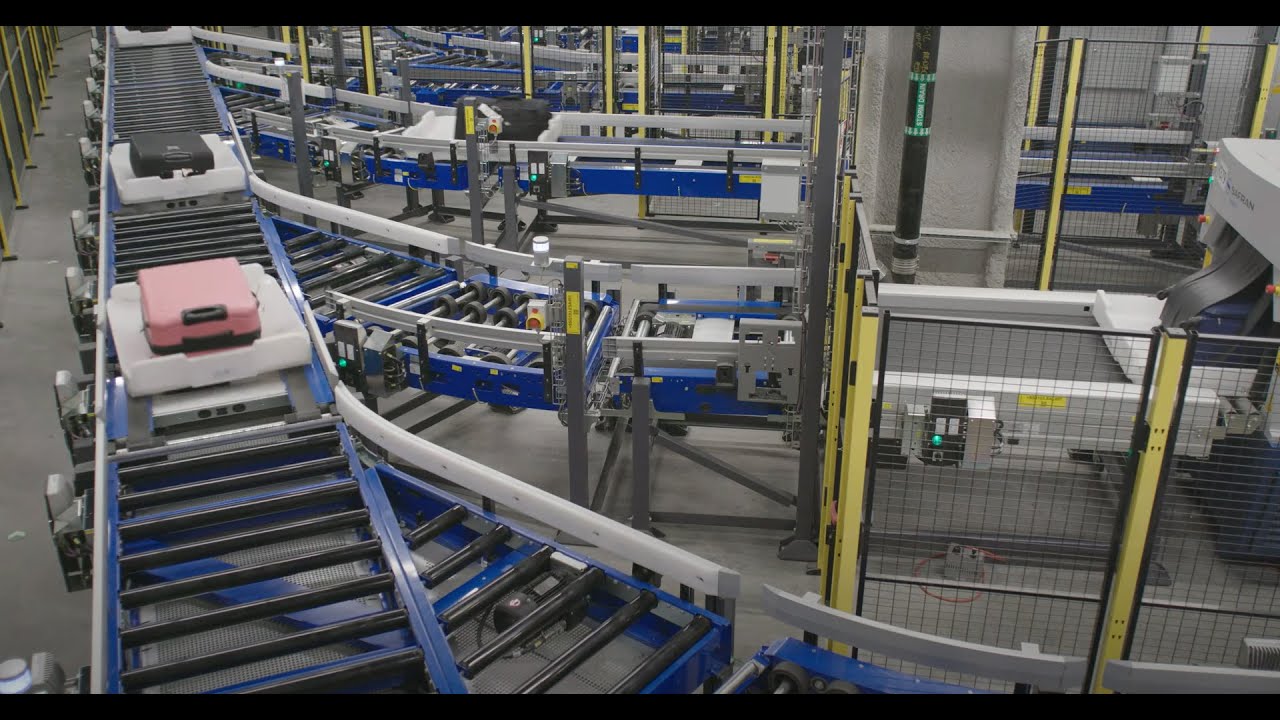
San Francisco International Airport Harvey Milk Terminal 1 Baggage Handling System
Beumer Group
Bastian Solutions Corporate Profile: Toyota Advanced Logistics
Bastian Solutions
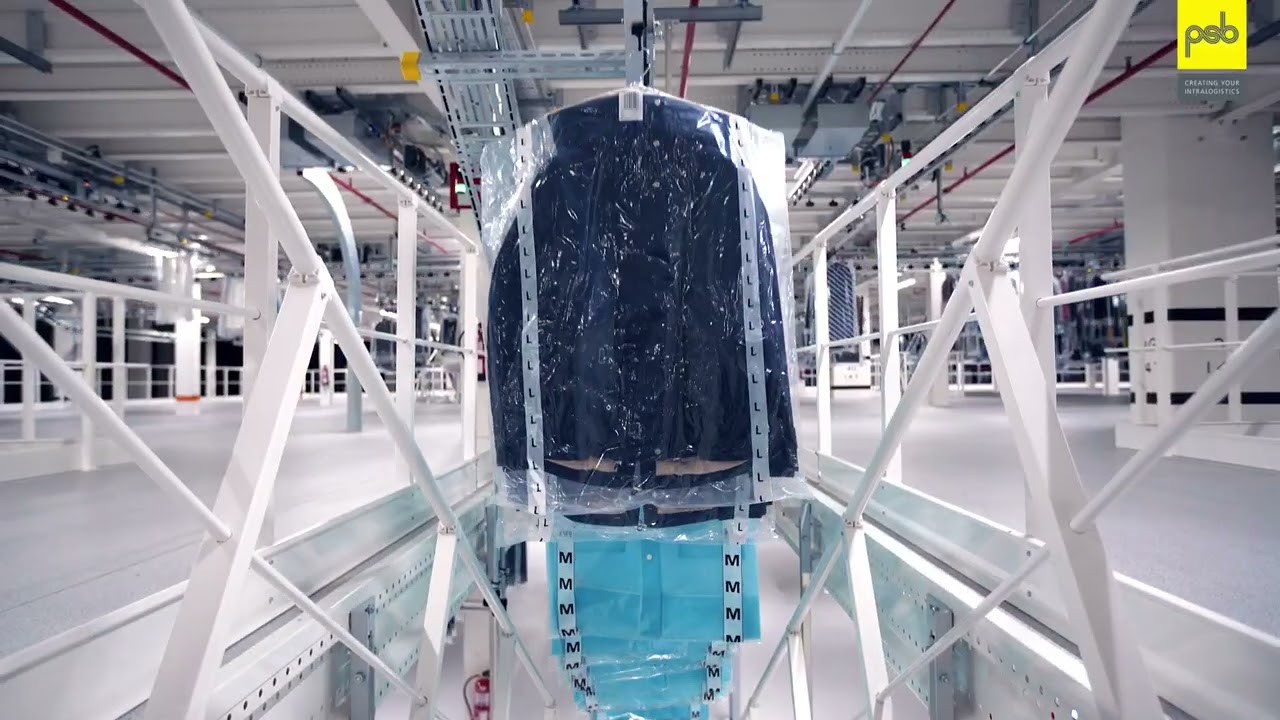
Fashion Retail Automated Hanging Garment Warehouse
psb intralogistics GmbH
BevChain Australia Distribution Center
Swisslog