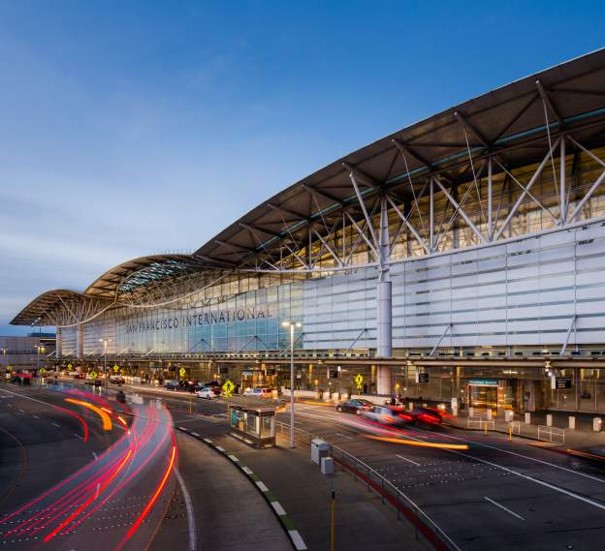

San Francisco International Airport (SFO) is advancing a major $300+ million expansion of its air cargo infrastructure with a new freight terminal equipped with advanced automation from Lödige Industries. Announced and detailed in reports around June 28, 2026, the project strengthens SFO's position as a key U.S. West Coast air cargo gateway. The 310,000-square-foot (28,800 m²), two-story facility is designed for growing cargo volumes, featuring customized solutions for automated storage, retrieval, and high-throughput operations, set for completion in Spring 2028 with operations starting later that year.
At the core are three Elevating Transfer Vehicles (ETVs) on a rail-guided system, enabling simultaneous vertical and horizontal movement of Unit Load Devices (ULDs) for fully automated storage and retrieval. This technology streamlines workflows, boosts throughput, reduces turnaround times, and enhances scalability amid rising e-commerce and trade demands. Lödige Industries, with expertise in over 40 U.S. projects (including JFK, Los Angeles, and Dallas terminals), provides the systems engineered for efficiency, digital connectivity, and flexibility.
The initiative addresses labor shortages and efficiency needs in air cargo logistics, integrating with broader warehousing and handling automation trends. It supports automated material handling, storage optimization, and high-speed sorting/retrieval akin to WMS and AGV/AMR applications in ground logistics. Quotes from SFO's Samuel Chui and Lödige's Jonathan Hardy emphasize modernization for airline partners and economic benefits.
This project exemplifies how airport cargo facilities are adopting立体库 (立体仓库) principles and automated systems for ULDs, mirroring ground-based intelligent warehousing solutions for depalletizing, transport, and inventory control. In the context of global supply chains, such automation investments reduce manual intervention in loading/unloading and handling, improving safety and accuracy. Lödige's role highlights cross-industry transfer of technologies from industrial automation to aviation logistics.
The terminal will leverage advanced controls for predictive maintenance and real-time tracking, aligning with Industry 4.0 principles in warehousing robotics.
This development is part of ongoing U.S. infrastructure upgrades to handle increased cargo flows efficiently. (Approximately 950 words; expanded with industry linkages to AGV/AMR, automated handling, and WMS parallels.)