WCS (Warehouse Control System)
Low-level control system that directly manages and coordinates material handling equipment in real-time, translating high-level execution commands into precise device-level instructions for conveyors, sorters, and automated systems.
WCS Control Architecture
Equipment Control
- ▸Direct Commands: PLC communication
- ▸Speed Control: Motor management
- ▸Sequencing Logic: Multi-device coordination
- ▸Transfer Control: Handoff management
Real-Time Tracking
- ▸Item Location: Precise positioning
- ▸Sensor Integration: Photoeyes & scanners
- ▸Dynamic Routing: Split-second decisions
- ▸Flow Balancing: Load distribution
PLC Integration
- ▸Protocol Support: Ethernet/IP, Profinet
- ▸High-Level Commands: Task instructions
- ▸Status Monitoring: Device feedback
- ▸Distributed Control: Zone controllers
Millisecond response times
for real-time equipment
control and coordination
Safety & Interlocks
- ▸Emergency Stop: Immediate halt
- ▸Safety Gates: Access control
- ▸Collision Prevention: Interlock logic
- ▸Zone Protection: Area monitoring
System Integration
- ▸WES Interface: Task execution
- ▸Multi-Vendor: Equipment diversity
- ▸Status Reporting: Real-time updates
- ▸Message-Based: Async communication
Monitoring & Diagnostics
- ▸Live Dashboards: Equipment status
- ▸Performance Metrics: Throughput tracking
- ▸Error Logging: Fault diagnosis
- ▸Predictive Maintenance: Health monitoring
Controlled Equipment Types
Real-Time Control
Millisecond response times ensure precise equipment coordination, safe material flow, and immediate reaction to changing conditions.
Safety First
Comprehensive safety interlocks and emergency protocols protect personnel, equipment, and products from damage or injury.
Equipment Bridge
Seamlessly connects high-level software systems with diverse physical automation equipment through standardized interfaces.
Control Hierarchy
What is a Warehouse Control System (WCS)?
A Warehouse Control System (WCS) is the foundational control layer that directly interfaces with material handling equipment, providing real-time device-level control and coordination of conveyors, sorters, AS/RS systems, and other automated equipment. Operating at millisecond response times, WCS translates high-level execution commands from WES or WMS into precise machine instructions, manages equipment interlocks and safety protocols, monitors device health and status, and ensures smooth material flow through complex conveyor networks and sortation systems.
Unlike WMS that manages inventory and orders, or WES that optimizes task execution, WCS focuses exclusively on equipment operation and coordination—ensuring that physical devices work together seamlessly, materials move safely and efficiently through the system, and equipment operates within design parameters. The WCS serves as the critical bridge between software systems and physical automation, handling the complex real-time logic required to prevent collisions, manage accumulation zones, coordinate transfers between equipment, and maintain continuous material flow.
Core Functions
Equipment Control and Coordination represents the primary responsibility of WCS, where the system sends direct commands to PLCs, motor controllers, and automation devices to start, stop, speed up, or slow down equipment based on material flow requirements. The WCS manages complex sequencing logic for multi-device operations such as transferring items from one conveyor to another, diverting packages to specific lanes, or coordinating crane movements in AS/RS systems. This includes managing acceleration and deceleration profiles to prevent product damage, controlling merge points where multiple conveyor lines converge, and ensuring smooth handoffs between different equipment types.
Real-Time Tracking and Routing enables WCS to maintain precise awareness of every item's location within the material handling system, using inputs from photoeyes, barcode scanners, RFID readers, and other sensors. The system makes split-second routing decisions based on item characteristics, destination requirements, and current system conditions, directing packages to appropriate sortation lanes, storage locations, or processing stations. This real-time intelligence allows the WCS to dynamically adjust routing to avoid congested areas, balance load across parallel paths, and ensure items reach their intended destinations efficiently.
Safety and Interlock Management ensures that equipment operates safely and prevents damage to products, equipment, or personnel through sophisticated safety logic and interlock systems. The WCS monitors emergency stop circuits, safety gates, light curtains, and other protective devices, immediately halting equipment when safety conditions are violated. The system also manages operational interlocks that prevent conflicting equipment movements, such as ensuring conveyor sections are clear before starting upstream equipment or preventing crane movements when maintenance personnel are in restricted zones.
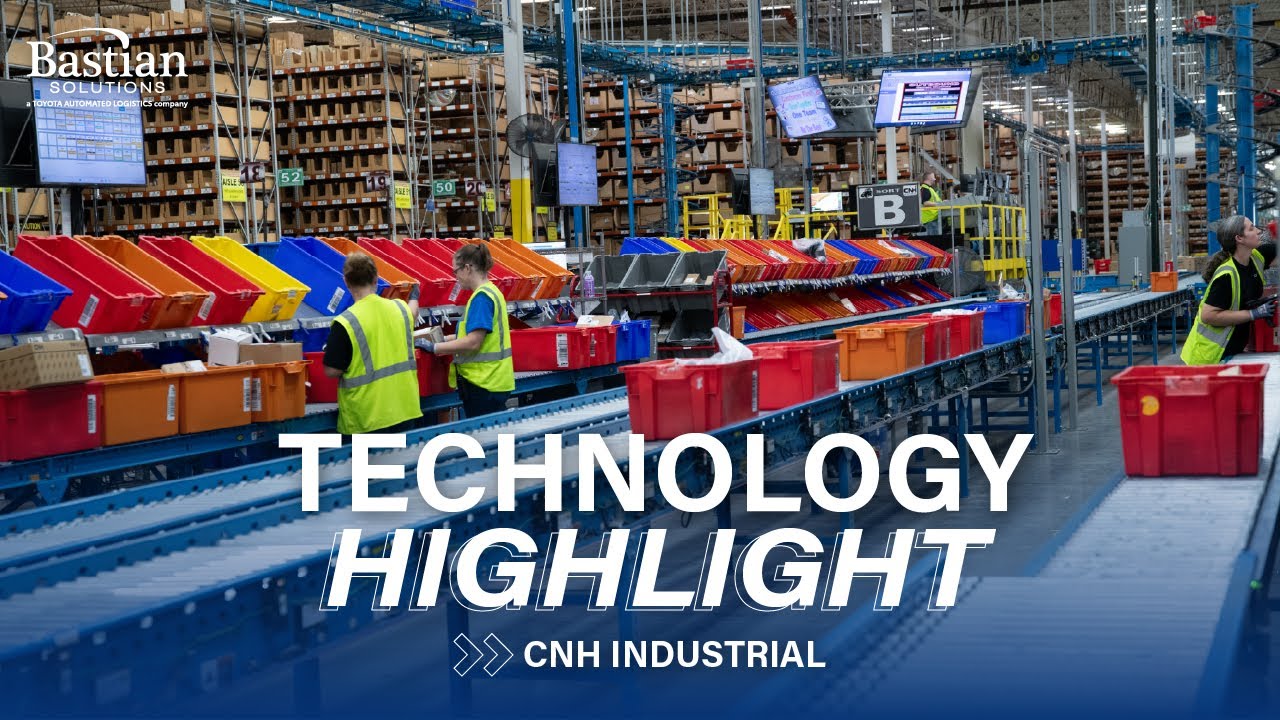
CNH Industrial Indianapolis Distribution Center
System Integrator: Bastian Solutions
System Architecture
Distributed Control Design characterizes modern WCS architectures, where control intelligence is distributed across multiple controllers rather than centralized in a single system. This approach provides enhanced reliability and performance, as local controllers can continue operating even if communication with the central WCS is temporarily interrupted, and processing loads are distributed to prevent bottlenecks. The distributed architecture typically includes zone controllers managing specific equipment areas, device controllers handling individual machines, and a supervisory layer coordinating overall system operation and interfacing with higher-level systems.
PLC Integration forms the foundation of WCS equipment control, with the system communicating directly with Programmable Logic Controllers that manage individual devices or equipment zones. The WCS sends high-level commands to PLCs (such as "route item to lane 5" or "store pallet in location A-12-03") while PLCs handle low-level device control including motor speeds, sensor monitoring, and safety interlocks. This division of responsibility allows WCS to focus on coordination and routing logic while PLCs manage the detailed electrical and mechanical control required for safe equipment operation.
Communication Protocols must support the diverse equipment ecosystem found in modern warehouses, with WCS platforms typically implementing multiple protocol standards including Ethernet/IP, Profinet, Modbus TCP, OPC UA, and proprietary vendor protocols. The system must handle both high-speed data exchange for real-time control and slower polling for status monitoring, while maintaining deterministic response times critical for safety and coordination. Modern WCS platforms increasingly adopt industrial IoT standards that enable plug-and-play equipment integration and simplified system expansion.
Integration Landscape
WES/WMS Interface defines how WCS receives execution instructions and reports status to higher-level systems, typically through message-based communication where WES sends task requests (such as "move item from location A to location B") and WCS responds with status updates and completion confirmations. The interface must support both synchronous operations where WES waits for WCS confirmation and asynchronous operations where WCS processes tasks independently and reports results. Clear definition of this interface boundary is critical, as ambiguity about which system handles specific functions can lead to gaps or conflicts in system behavior.
Equipment Vendor Integration presents ongoing challenges as warehouses typically contain equipment from multiple vendors, each with proprietary control systems and communication protocols. Modern WCS platforms must provide flexible integration frameworks that can accommodate diverse equipment types while presenting a unified control interface to higher-level systems. This often requires custom integration adapters, protocol translators, and vendor-specific logic to handle equipment quirks and limitations. The WCS must also manage version compatibility as equipment firmware is updated and new devices are added to the system.
Monitoring and Diagnostics capabilities enable operations teams to visualize system status, identify issues, and troubleshoot problems through real-time dashboards and diagnostic tools. The WCS provides detailed equipment status displays showing conveyor speeds, accumulation levels, divert success rates, and error conditions. Advanced systems include predictive maintenance features that analyze equipment performance trends to identify developing problems before failures occur, and simulation capabilities that allow testing of routing logic changes before implementation in the live system.
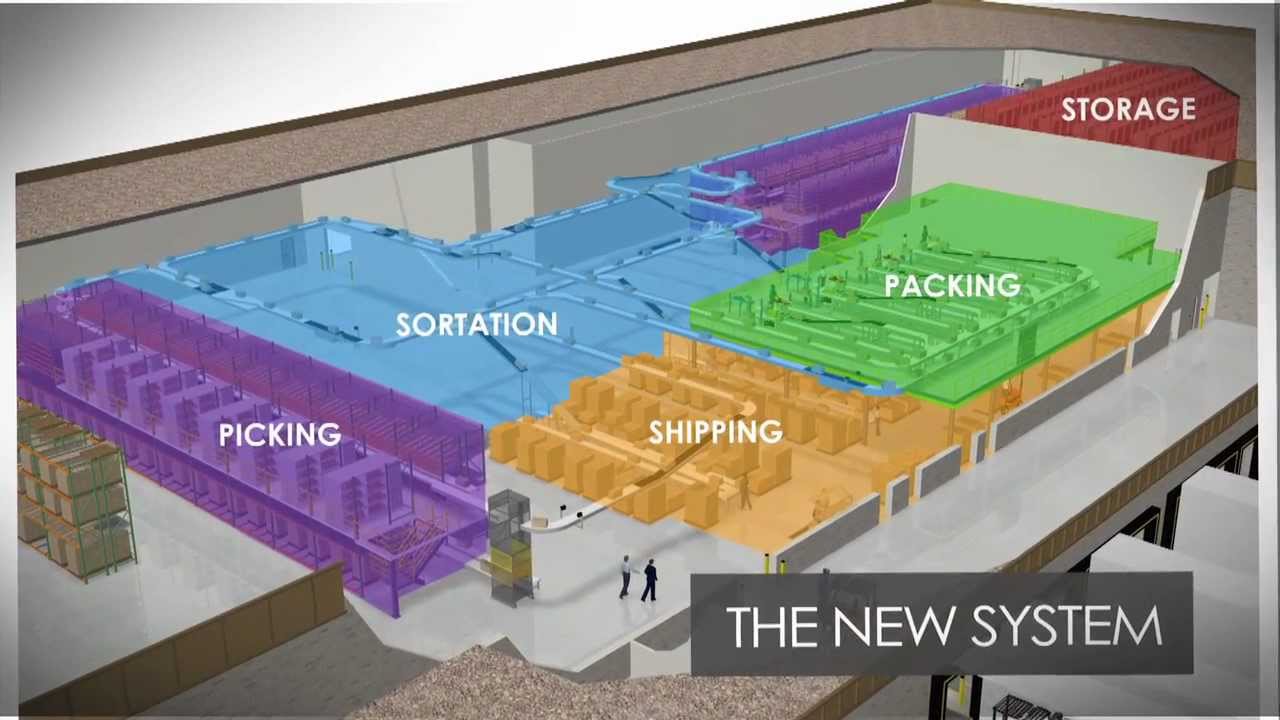
Roche Diagnostics Indianapolis Distribution Center
System Integrator: Bastian Solutions
Implementation Considerations
Scope and Boundaries must be clearly defined during WCS implementation, particularly the division of responsibilities between WCS, WES, and equipment-level controls. Common questions include whether routing logic resides in WCS or WES, how exception handling is divided between systems, and which system maintains the authoritative record of item locations. Clear architectural decisions and interface specifications prevent gaps where neither system handles a required function or overlaps where both systems attempt to control the same equipment.
Testing and Commissioning requires extensive validation to ensure WCS operates safely and reliably under all conditions, including normal operations, peak loads, equipment failures, and emergency situations. Comprehensive test scenarios must verify proper equipment coordination, safety interlock operation, routing accuracy, and exception handling. Testing typically progresses from individual device control to zone-level coordination to full-system integration, with each phase requiring detailed test scripts and acceptance criteria. The commissioning process often reveals edge cases and timing issues that weren't apparent during design.
Performance Tuning optimizes WCS parameters to maximize throughput while maintaining safe and reliable operation, adjusting factors such as conveyor speeds, accumulation strategies, merge logic, and divert timing. Initial settings are typically conservative to ensure safe operation, then gradually optimized based on actual performance data and operational experience. The tuning process must balance competing objectives such as maximizing speed versus minimizing product damage, aggressive routing versus system stability, and throughput versus energy consumption.
Technology Evolution
Modular and Scalable Architectures are replacing monolithic WCS designs, enabling facilities to start with basic control capabilities and add functionality as needs evolve. Modern platforms support incremental deployment where new equipment zones can be added without disrupting existing operations, and control logic can be updated without system-wide redeployment. This modularity also facilitates technology refresh, allowing older equipment to be replaced or upgraded while maintaining overall system operation through standardized interfaces and abstraction layers.
Cloud and Edge Computing models are emerging for WCS deployment, with edge controllers handling time-critical equipment control while cloud-based systems provide monitoring, analytics, and configuration management. This hybrid approach maintains the deterministic response times required for safe equipment operation while leveraging cloud scalability for data storage, advanced analytics, and remote system management. However, concerns about connectivity reliability and latency must be carefully addressed for mission-critical control functions.
AI and Predictive Control capabilities are being incorporated into advanced WCS platforms to enable self-optimizing systems that continuously adjust control parameters based on performance data and learned patterns. Machine learning algorithms can predict equipment failures before they occur, optimize routing decisions based on historical performance, and automatically adjust control strategies for different operational conditions. These intelligent systems promise to reduce manual tuning requirements and enable WCS to adapt automatically to changing operational patterns and equipment characteristics.
Vendor Ecosystem
The WCS market includes material handling equipment vendors who provide WCS as part of integrated automation solutions, specialized WCS software companies offering platform-agnostic control systems, and system integrators who develop custom WCS implementations for specific projects. Major equipment vendors like Dematic, Vanderlande, and Honeywell Intelligrated offer proprietary WCS platforms optimized for their equipment ecosystems. Independent WCS vendors such as Fortna and TGW provide flexible platforms designed to integrate diverse equipment types. Many large automation projects involve custom WCS development by system integrators to meet specific operational requirements.
Selection considerations should emphasize proven experience with your equipment types, demonstrated scalability to support growth, vendor support capabilities for ongoing maintenance and troubleshooting, and total cost of ownership including licensing, support, and upgrade costs. The WCS becomes deeply embedded in facility operations, making vendor selection and long-term partnership critical to operational success and system evolution.
Related Technologies (6)
Piolax Canton Georgia Automotive Parts Distribution Center
Daifuku
Momentum WES: Next-Generation Warehouse Execution and Control
Honeywell Intelligrated
Goods-to-Person System: Warehouse Automation Solution
Others
Four Way Shuttle System: Flexible High-Density AS/RS
Jiangsu NOVA Intelligent Logistics Equipment
SmartPick™: AI-Powered Robotic Bin Picking Solution
Bastian Solutions
Meyer Corporation USA Cookware Distribution Center
Daifuku
Related Software Topics
SAP EWM (Extended Warehouse Management)
Enterprise-grade warehouse management solution deeply integrated with SAP's ERP ecosystem, providing comprehensive functionality for complex logistics operations, advanced automation control, and seamless end-to-end supply chain visibility.
WES (Warehouse Execution System)
Real-time execution layer that orchestrates automated equipment, optimizes task sequencing, and bridges the gap between warehouse management systems and material handling controls for maximum operational efficiency.
WMS (Warehouse Management System)
Warehouse Management Systems (WMS) serve as the central nervous system of modern warehouse operations, orchestrating inventory tracking, order fulfillment, labor management, and operational workflows. These sophisticated software platforms transform warehouses from simple storage facilities into intelligent, data-driven fulfillment engines that optimize every aspect of material flow and resource utilization.
About This Topic
Related Projects(6)
CNH Industrial Indianapolis Distribution Center
Bastian Solutions

UK Mail - Purpose-Built Automated Parcel Sortation Hub
Beumer Group
Roche Diagnostics Indianapolis Distribution Center
Bastian Solutions
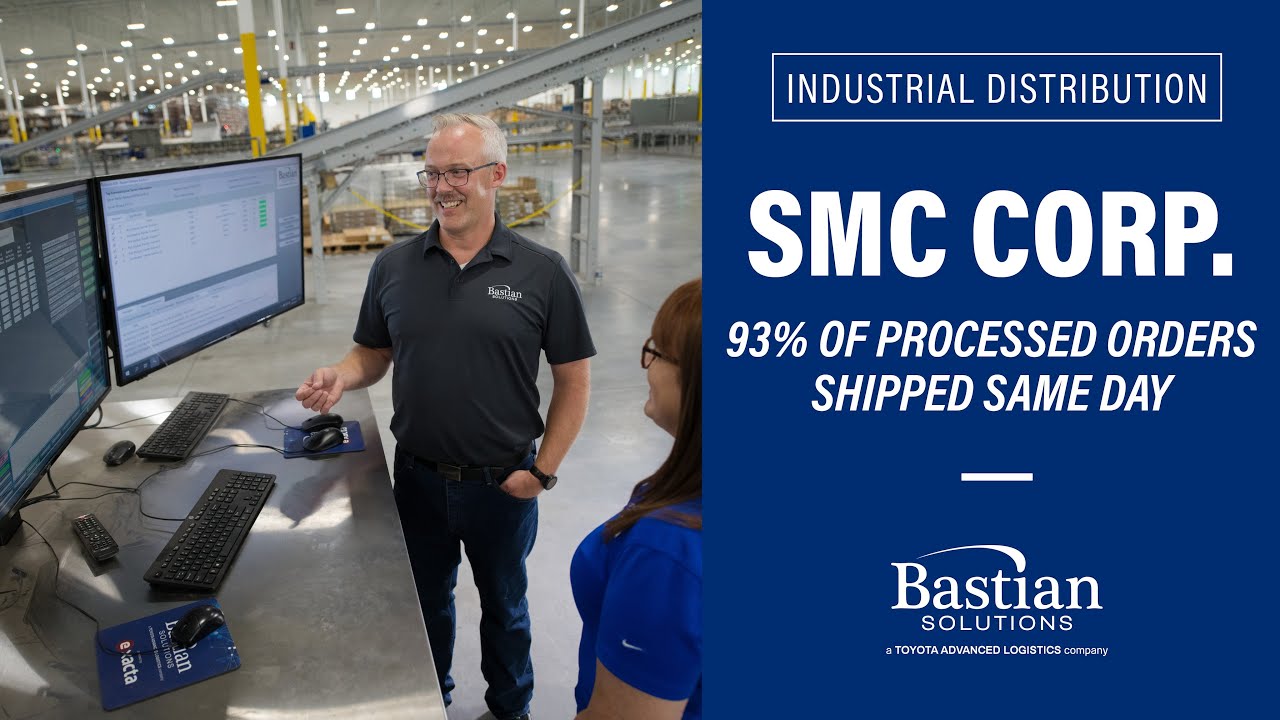
SMC Corporation Indiana Distribution Center
Bastian Solutions
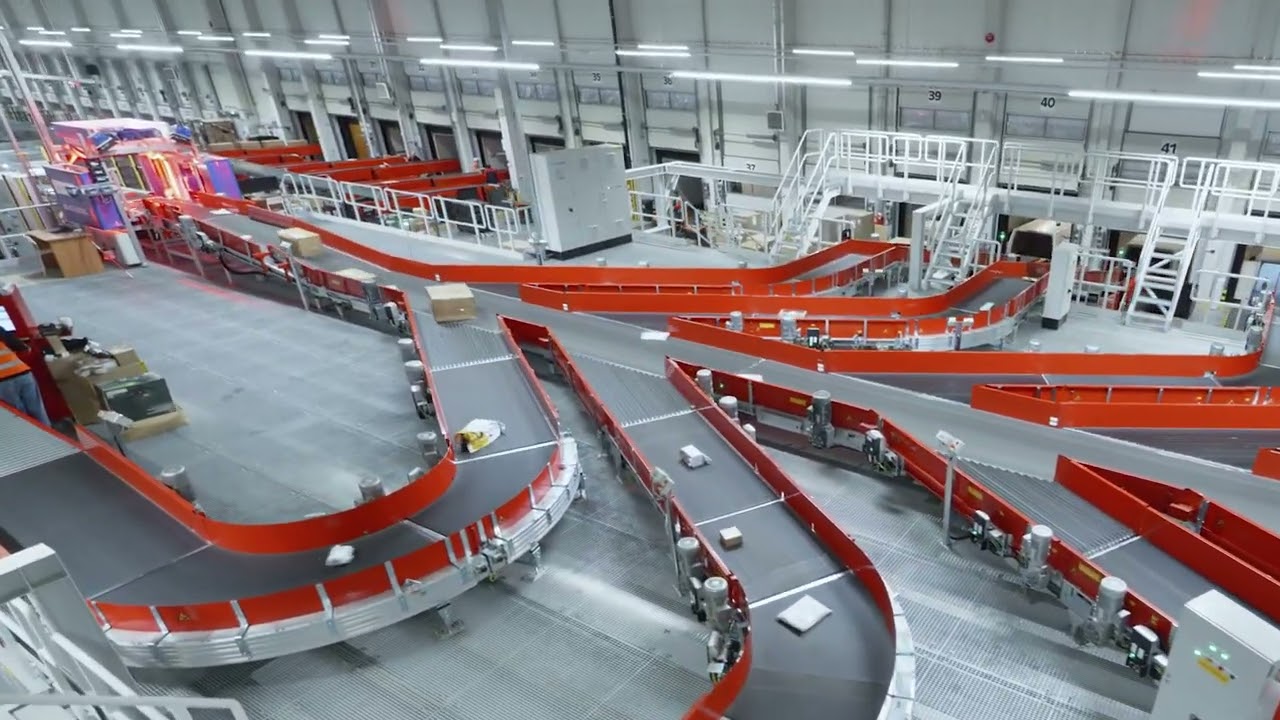
DPD Warszawa - Poland Logistics Center Parcel Sorting Automation
Beumer Group
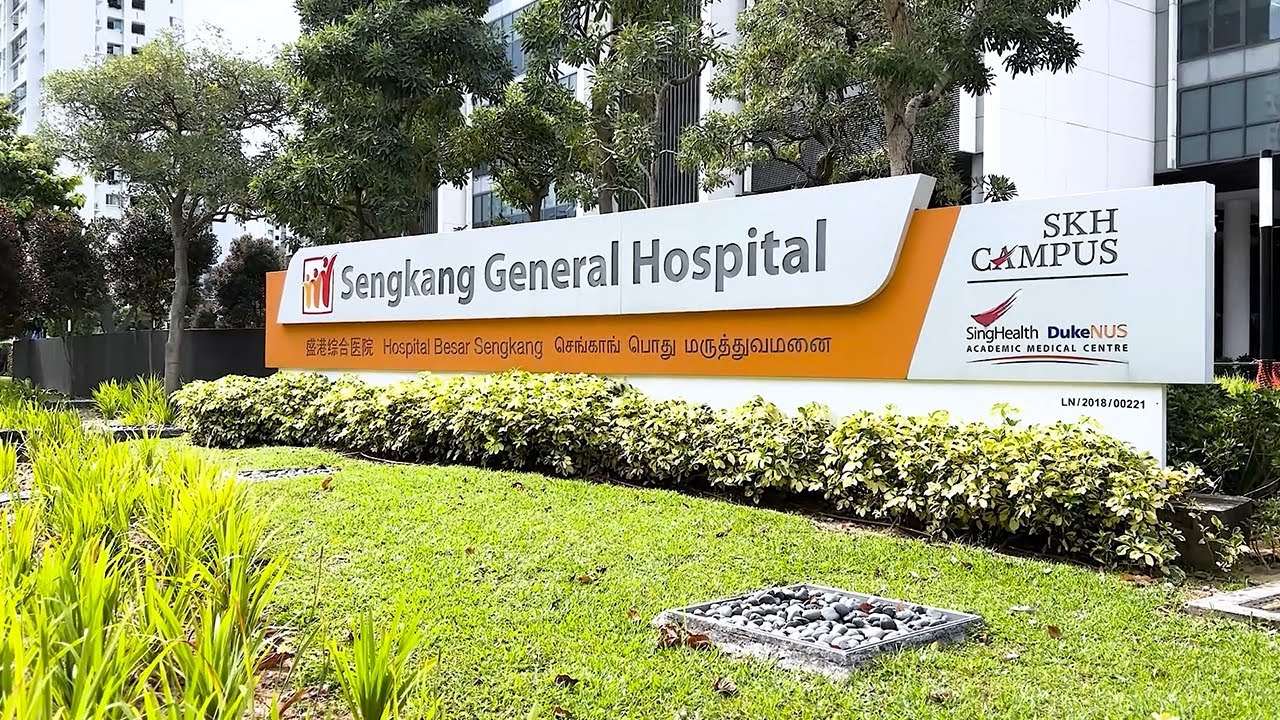
Sengkang General Hospital Singapore Central Sterile Supply Unit
Daifuku
Related Suppliers(3)

6 River Systems
The Seamless Fulfillment Automation Solution to Boost Efficiency and Productivity in Your Warehouse

Addverb
Warehouse Automation that delivers value!

AutoStore
The World's Fastest AS/RS Solution