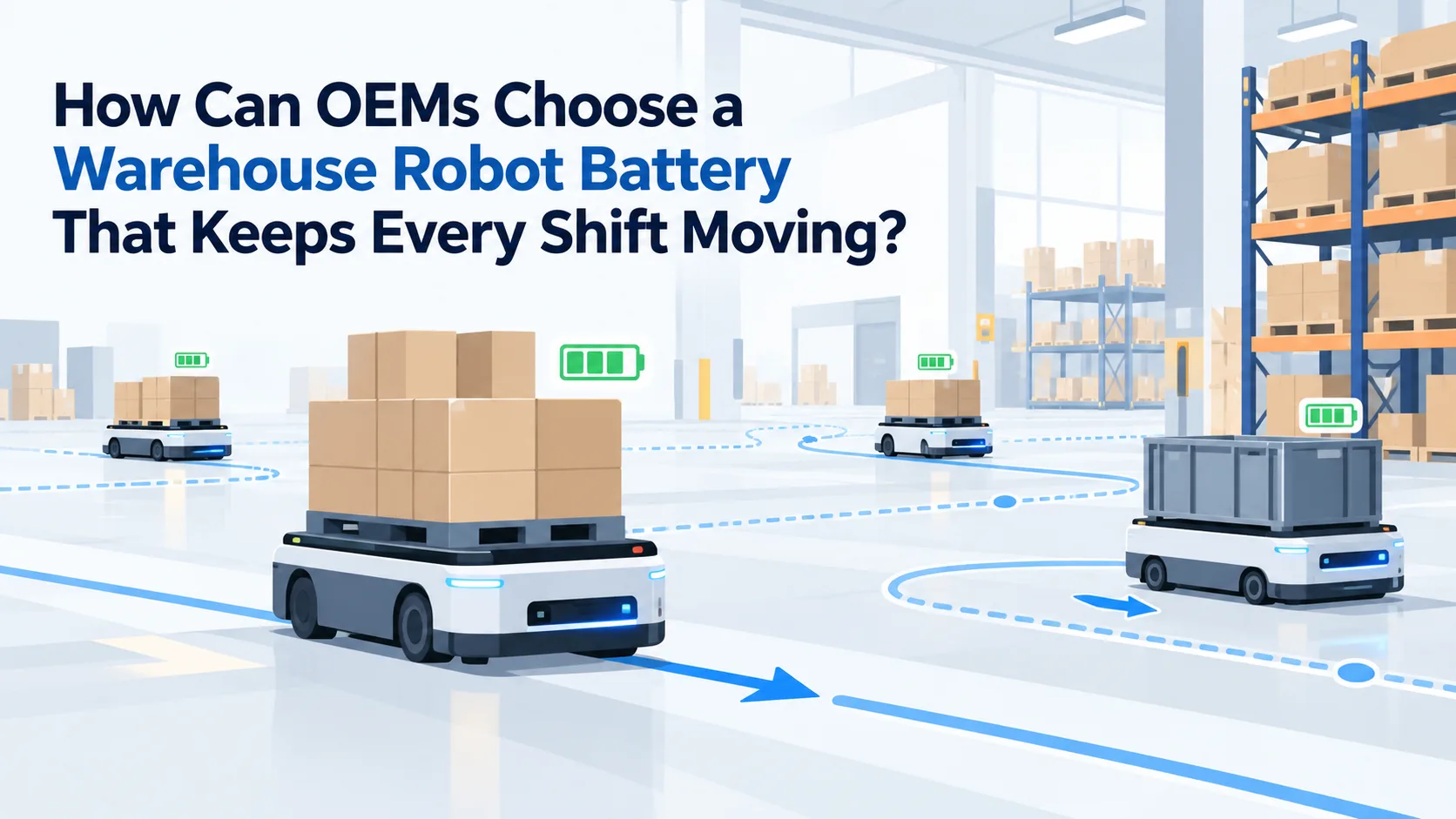
Published around October 22, 2026, a detailed guide from FEBATT outlines eight critical OEM checks for selecting warehouse robot batteries to ensure fleet availability for AGVs and AMRs. A battery is framed not merely as a component but as a constraint on throughput, requiring fit to specific missions, repeated duty cycles, fleet software communication, and rapid return to service. OEMs must start with real operating profiles and charger capacity, standardize interfaces, and validate the complete robot–battery–charger system before bulk orders.
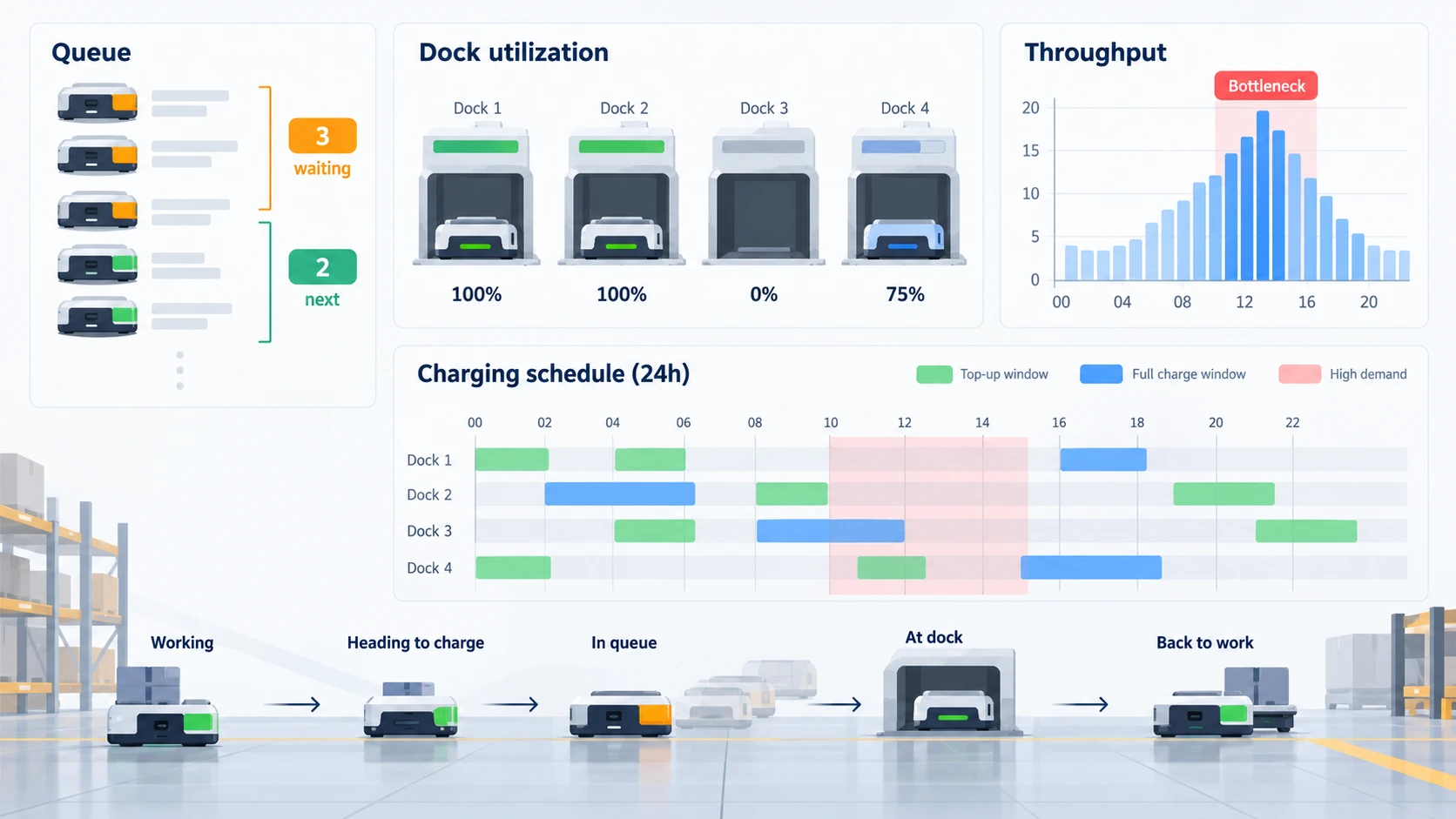
Different applications demand distinct profiles: goods-to-person AMRs prioritize predictable runtime and short opportunity-charge windows amid frequent starts/stops; pallet-moving AGVs need peak-current headroom, secure mounting, and temperature monitoring for payload variation and ramps; tugger/towing robots require sustained power and thermal performance for prolonged travel. Modeling uses measured energy (e.g., illustrative 350 W average over seven hours yielding ~2.45 kWh daily, plus allowances for ~3.68 kWh nominal at 80% DoD) rather than catalog runtimes, incorporating peak currents, telemetry from peak traffic, and capacity retention. Charging must support throughput—e.g., 24 robots needing 12-minute top-ups every two hours may require multiple docks based on utilization, arrival clustering, and recovery from interruptions.
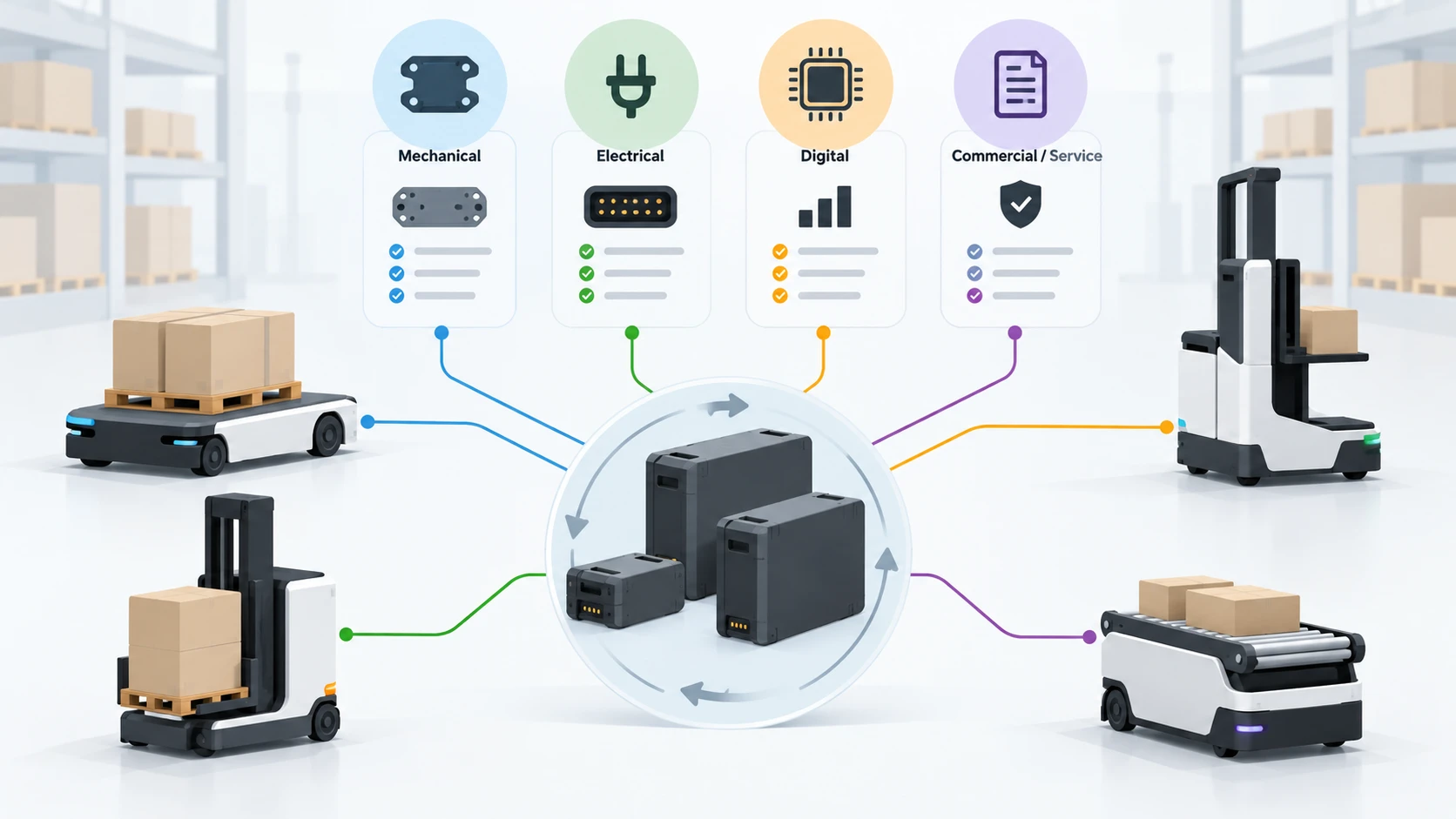
Standardization via an interface control document covers mechanical envelopes, electrical limits, digital messages (SOC, voltage, current, temperature, faults, identity, SOH), and commercial aspects for interchangeability. Fleet software needs validated data paths with fallback for stale reports or deratings. Maintenance focuses on plug-compatible replacements minimizing downtime, tracked by serial number.
Acceptance tests include mission simulations, docking/recovery, fault handling, interchangeability, and production consistency, aligned with standards like IEC 62619 for industrial motive applications. RFQs should specify profiles, integration packages, reliability evidence, and support rather than basic voltage/capacity. This guidance addresses bottlenecks in multi-robot fleets, ensuring high utilization, reduced operational debt, and scalable 24/7 performance amid labor shortages and rising automation adoption in warehouses.