Sorting Robot
Sorting Robots use mobile autonomous robots equipped with intelligent vision systems and manipulation capabilities to sort packages, parcels, and items with exceptional flexibility. These systems combine AMR technology with advanced AI to enable dynamic sortation without fixed infrastructure, adapting to changing operational needs and handling diverse item types with human-like dexterity.
Sorting Robot System Architecture
System Components
- ▸AMR Platform: Autonomous navigation
- ▸Vision System: AI-powered recognition
- ▸LiDAR/Cameras: 3D environment mapping
- ▸Fleet Software: Centralized coordination
Performance
- ▸Per Robot: 300-600 items/hr
- ▸Fleet (20): 6,000-12,000 items/hr
- ▸Accuracy: 99.9%+ sort rate
- ▸Speed: 1.5-2.0 m/s travel
Package Handling
- ▸Payload: 10-50 kg capacity
- ▸Size: Up to 600x400x300mm
- ▸Types: Parcels, boxes, poly bags
- ▸Battery: 8-16 hours runtime
Key Applications
- ▸E-commerce: Flexible fulfillment
- ▸Parcel: Last-mile sortation
- ▸3PL: Multi-client operations
- ▸Omnichannel: Dynamic routing
AI Capabilities
- ▸Vision: Package recognition
- ▸SLAM: Real-time mapping
- ▸Path Planning: Dynamic routing
- ▸Learning: Continuous optimization
Investment & ROI
- ▸Start Small: $200K-$400K (5-10 robots)
- ▸Per Robot: $20K-$40K each
- ▸Payback: 2-3 years typical
- ▸Scalable: Add robots as needed
System Overview and Operating Principles
Sorting robots represent a paradigm shift in sortation technology, replacing fixed conveyor-based systems with fleets of autonomous mobile robots (AMRs) that navigate freely throughout the facility, picking up items and delivering them to designated destinations. Picture dozens or even hundreds of intelligent robots moving independently across the warehouse floor, each one capable of identifying packages, determining optimal routes, and coordinating with other robots to avoid collisions while maximizing throughput. Unlike traditional sorters that require packages to come to them, sorting robots go to the packages, fundamentally changing the economics and flexibility of sortation operations. This mobile approach eliminates the need for expensive fixed infrastructure like conveyor loops and discharge chutes, enabling rapid deployment, easy reconfiguration, and incremental scalability that matches business growth.
The intelligence embedded in sorting robots extends far beyond simple navigation. Computer vision systems enable robots to identify packages through barcode scanning, RFID reading, or even visual recognition of shipping labels without requiring perfect positioning or orientation. Artificial intelligence algorithms optimize routing decisions in real-time, considering factors like package destination, robot battery levels, traffic congestion, and priority orders to maximize system efficiency. Machine learning capabilities allow the system to improve performance over time, learning from experience to refine navigation paths, predict congestion patterns, and optimize charging schedules. This intelligence transforms sorting from a mechanical process into an adaptive system that continuously optimizes itself based on actual operational conditions.
The physical design of sorting robots balances payload capacity, speed, and maneuverability to match sortation requirements. Most systems feature compact footprints measuring 24 to 36 inches in diameter or width, enabling navigation through standard warehouse aisles and around obstacles. Payload capacities typically range from 10 to 50 kilograms, accommodating most parcel and package sizes encountered in e-commerce and distribution operations. Top-loading platforms or integrated conveyors on the robot surface provide secure package transport, with some designs incorporating adjustable shelves or compartments for handling multiple items simultaneously. Battery systems provide 8 to 16 hours of continuous operation, with opportunity charging or battery swapping enabling 24/7 operation without extended downtime.
Performance and Throughput Capabilities
Performance characteristics of sorting robot systems reflect their optimization for flexibility and scalability rather than raw speed. Individual robots typically achieve sorting rates of 300 to 600 packages per hour, which may seem modest compared to high-speed conveyor sorters. However, the true power emerges from fleet scalability—a deployment of 20 robots can process 6,000 to 12,000 packages per hour, with throughput increasing linearly as additional robots join the fleet. This incremental scalability enables operations to start small and grow capacity precisely as needed, avoiding the large upfront investment and capacity risk associated with fixed sortation systems. Sort accuracy typically exceeds 99.9%, with vision-based verification and AI-powered error detection ensuring packages reach correct destinations.
The operational flexibility of sorting robots delivers value beyond simple throughput numbers. The system handles variable package sizes from small envelopes to large cartons within the same operational flow, with robots automatically adjusting handling based on item characteristics. Dynamic destination assignment enables real-time changes to sorting logic without system reconfiguration—new destinations can be added, removed, or relocated simply by updating software parameters. Peak capacity management becomes straightforward, with additional robots deployed during high-volume periods and redeployed to other tasks during slower times. This flexibility proves particularly valuable for omnichannel operations where sortation requirements change frequently based on order mix, carrier schedules, and promotional activities.
Sorting Robot: AI-Powered High-Efficiency Parcel Sortation
Vendor: Others
Economic Considerations and ROI
Investment in sorting robot systems follows a fundamentally different model than traditional sortation equipment. Rather than a large upfront capital expenditure for a complete system, organizations can start small with an initial fleet of 5 to 10 robots costing $200,000 to $400,000 including software, charging infrastructure, and implementation services. This modest entry point enables proof-of-concept deployments that validate the technology and refine operational processes before committing to larger investments. Incremental expansion adds robots in small batches as volume grows, with each robot costing $20,000 to $40,000 depending on capabilities and payload capacity. This pay-as-you-grow model aligns capital investment with revenue growth, reducing financial risk and improving cash flow compared to traditional sortation systems.
Return on investment for sorting robots typically materializes within 2 to 3 years for operations processing more than 3,000 packages daily, driven by multiple value streams. Labor cost reduction remains significant, with a fleet of 20 robots potentially replacing 10 to 20 manual sorters while simultaneously improving accuracy and throughput. Space efficiency delivers additional value, as the system requires no fixed conveyor infrastructure, freeing valuable floor space for other productive uses. Operational flexibility reduces costs associated with seasonal volume fluctuations, as robots can be redeployed to other tasks like inventory transport or replenishment during slow periods rather than sitting idle. Reduced infrastructure costs eliminate expenses for conveyor maintenance, structural supports, and building modifications required by traditional sorters.
System Integration and Control
Successful sorting robot deployment depends on sophisticated fleet management software that orchestrates the activities of dozens or hundreds of independent robots. The warehouse management system (WMS) provides high-level direction, communicating package destinations and priorities to the fleet management system. Traffic management algorithms coordinate robot movements to prevent collisions, optimize path efficiency, and manage congestion at high-traffic locations like induction points and destination zones. Task allocation algorithms assign packages to specific robots based on factors like current location, battery level, and destination proximity, ensuring optimal resource utilization across the fleet. Predictive analytics anticipate bottlenecks and proactively adjust robot assignments to maintain smooth flow.
Real-time optimization continuously refines system performance based on actual operational conditions. Dynamic routing adjusts robot paths in response to obstacles, congestion, or changing priorities, ensuring packages reach destinations via the fastest available routes. Battery management systems monitor charge levels across the fleet, automatically directing robots to charging stations when needed while ensuring sufficient active robots remain to maintain throughput. Performance monitoring tracks key metrics like packages per hour, travel distance, idle time, and error rates, providing visibility into system efficiency and identifying opportunities for improvement. Machine learning algorithms analyze historical data to predict optimal robot counts for different times of day, days of week, and seasonal patterns.
Landmark Group Kuwait Fulfillment Center
System Integrator: Addverb
Facility Requirements and Infrastructure
Physical infrastructure requirements for sorting robots prove remarkably modest compared to traditional sortation systems. The system operates on standard warehouse floors without requiring special surface treatments, though smooth, level surfaces optimize robot navigation and speed. Ceiling height requirements are minimal, as robots operate at ground level without overhead structures. Destination zones require only simple floor markings or physical barriers to define package collection areas, with no need for complex chute systems or discharge conveyors. Charging stations occupy minimal space, typically 2 to 4 square feet per station, with one station supporting 5 to 10 robots depending on charging speed and operational intensity.
Network infrastructure provides the connectivity essential for fleet coordination and system management. Wi-Fi coverage throughout the operational area enables continuous communication between robots and the fleet management system, with redundant access points ensuring reliable connectivity even during equipment failures. Edge computing capabilities at charging stations or central locations process vision data and run AI algorithms, reducing latency and bandwidth requirements. Cloud connectivity enables remote monitoring, software updates, and access to advanced analytics, though local systems maintain operational capability even during internet outages. Security measures including network segmentation, encryption, and access controls protect the system from cyber threats.
Package Handling and Induction Methods
Package induction for sorting robot systems emphasizes simplicity and flexibility over high-speed automation. Manual induction dominates current deployments, with operators placing packages in designated pickup zones where robots autonomously collect them. Operators scan package barcodes or RFID tags, communicating destination information to the fleet management system, which then assigns an available robot to collect the package. This approach requires minimal infrastructure investment while providing flexibility to handle diverse package types and sizes. Induction rates of 400 to 800 packages per hour per operator prove sufficient for many operations, with multiple induction points operating in parallel to achieve required system throughput.
Semi-automated induction combines human judgment with robotic efficiency to improve throughput. Conveyor-fed induction delivers packages to pickup zones where robots collect them, eliminating manual carrying while retaining human oversight for quality control and exception handling. Vision-guided placement systems direct operators to optimal package positioning, ensuring robots can efficiently grasp items. Some advanced systems employ collaborative robots (cobots) that work alongside human operators, with the cobot handling repetitive lifting while humans manage scanning and quality verification. Automated induction remains relatively rare but emerging, with systems using robotic arms or gantry systems to place packages onto robot platforms, enabling fully lights-out operation for standardized package streams.
Navigation and Safety Systems
Navigation technology enables sorting robots to move safely and efficiently through dynamic warehouse environments. LiDAR sensors create detailed 3D maps of the surrounding environment, detecting obstacles, other robots, and people with centimeter-level precision. Camera systems supplement LiDAR with visual information, enabling recognition of floor markings, signs, and package labels. Simultaneous Localization and Mapping (SLAM) algorithms combine sensor data to determine the robot's precise position and update environmental maps in real-time as conditions change. Multi-sensor fusion integrates data from multiple sources to create robust navigation that functions reliably even when individual sensors face challenging conditions like bright sunlight or reflective surfaces.
Safety systems ensure robots operate safely around people and equipment. Collision avoidance algorithms detect potential impacts and automatically adjust speed or route to prevent accidents. Emergency stop capabilities enable immediate halting through physical buttons on the robot or wireless commands from supervisors. Speed limiting in congested areas or near people reduces accident risk while maintaining productivity in open spaces. Audible and visual warnings alert nearby workers to robot presence and intended movements. Safety certifications including CE marking and compliance with ISO 3691-4 standards for automated guided vehicles demonstrate adherence to international safety requirements. Risk assessments and safety training programs ensure workers understand how to interact safely with the robotic fleet.
Maintenance and Operational Support
Preventive maintenance for sorting robots focuses on mechanical components and battery systems that experience wear during continuous operation. Daily routines include visual inspections of wheels, sensors, and package handling mechanisms, checking for any signs of damage or debris accumulation. Weekly maintenance involves cleaning sensors and cameras, inspecting battery connections, and verifying charging system operation. Monthly service includes detailed examination of drive motors, wheel bearings, and structural components, plus software updates and calibration of navigation sensors. Battery maintenance follows manufacturer-specified schedules for capacity testing, cell balancing, and eventual replacement, typically required after 2,000 to 3,000 charge cycles or 3 to 5 years of operation.
Fleet management capabilities simplify maintenance activities across large robot deployments. Predictive maintenance algorithms analyze sensor data to identify developing issues before they cause failures, scheduling service proactively rather than reactively. Remote diagnostics enable technical support teams to troubleshoot problems without physical access to robots, reducing downtime and service costs. Modular design facilitates rapid component replacement, with common parts like wheels, batteries, and sensor modules swappable in minutes by trained technicians. Spare robot inventory enables immediate replacement of units requiring extended service, maintaining fleet capacity even during maintenance activities. Most operators maintain service contracts with robot suppliers that include software updates, technical support, and guaranteed response times.
Industry Applications and Use Cases
E-commerce fulfillment centers represent the primary application for sorting robots, where the technology's flexibility aligns perfectly with the variable volumes and changing requirements characteristic of online retail. Robots sort picked orders by carrier, service level, or destination zone, consolidating items for efficient packing and shipping. The scalable capacity enables facilities to handle peak seasons like holidays without investing in oversized fixed infrastructure that sits underutilized during normal periods. The rapid deployment timeline—often 4 to 8 weeks from order to operation—enables quick response to market opportunities or capacity constraints. Multi-use capability allows robots to perform inventory transport, replenishment, or returns processing during slow sortation periods, maximizing asset utilization.
Parcel carrier operations leverage sorting robots for last-mile sortation at local distribution centers where package volumes don't justify traditional high-speed sorters. The flexible destination assignment accommodates changing delivery routes and driver assignments without system reconfiguration. Small facility footprint enables sortation in space-constrained urban locations where traditional sorters won't fit. Some carriers deploy mobile sortation units using sorting robots in trailers or temporary structures, enabling rapid capacity deployment to address seasonal peaks or service new markets without permanent facility investment. The gentle handling characteristic of robotic systems reduces package damage compared to high-speed mechanical sorters.
Third-party logistics (3PL) providers use sorting robots to serve multiple clients from shared facilities, with the system's flexibility enabling rapid switching between different sortation schemes for different customers. Dynamic reconfiguration allows the same robot fleet to sort by client, by destination, or by product type depending on current operational needs. Scalable capacity enables 3PLs to take on new clients without major capital investment, with robot fleets expanding incrementally as business grows. Data collection capabilities provide detailed performance metrics and proof of service for client reporting. The low infrastructure requirements enable 3PLs to operate from less expensive facilities without the structural capacity needed for traditional sortation systems.
Technology Variants and Configurations
Standard sorting robots feature top-loading platforms where packages rest on the robot's upper surface during transport. These systems handle packages weighing up to 30 kilograms and measuring up to 600mm x 400mm x 300mm, accommodating most e-commerce and parcel items. Navigation relies on LiDAR and cameras for autonomous movement, with speeds of 1.5 to 2.0 meters per second balancing throughput with safety. Battery capacity provides 8 to 12 hours of continuous operation, with opportunity charging during brief idle periods extending operational time. Payload verification using integrated scales ensures correct items are transported, catching errors before they propagate through the fulfillment process.
High-capacity robots extend payload limits to 50 kilograms or more, handling larger packages and enabling multi-item transport where a single robot carries several packages to the same destination zone. Reinforced structures and larger drive motors support the increased loads while maintaining navigation precision and safety. Extended battery systems compensate for the higher power consumption of heavier payloads, maintaining acceptable operational duration. These systems prove valuable for operations handling bulky items like appliances, furniture, or industrial supplies that exceed standard robot capacities.
Collaborative sorting systems combine robots with human workers in hybrid workflows that leverage the strengths of both. Robots handle the repetitive transport of packages between zones while humans perform quality control, exception handling, and complex decision-making that challenges current AI capabilities. Person detection and adaptive speed control enable safe operation in shared spaces, with robots automatically slowing or stopping when people are nearby. Intuitive interfaces allow workers to easily redirect robots, report issues, or request assistance without specialized training. This collaborative approach often delivers better results than fully automated systems, particularly for operations with high product variety or frequent exceptions.
Future Trends and Technology Evolution
Artificial intelligence advances are expanding sorting robot capabilities in multiple dimensions. Deep learning algorithms improve package recognition, enabling identification even when labels are damaged, obscured, or positioned irregularly. Predictive analytics anticipate operational bottlenecks and proactively adjust robot assignments to prevent congestion before it impacts throughput. Reinforcement learning enables robots to discover optimal navigation strategies through trial and error, continuously improving efficiency as they gain experience. Natural language processing may eventually enable voice-based interaction between robots and human workers, simplifying exception handling and system management.
Manipulation capabilities are evolving beyond simple transport to include active handling of packages. Robotic arms mounted on mobile platforms enable robots to pick packages from shelves, conveyors, or pallets rather than requiring manual placement in pickup zones. Gripper technology advances including soft robotics and adaptive grasping enable reliable handling of diverse package types without damage. Vision-guided manipulation allows robots to adjust grip based on package characteristics like size, shape, and apparent fragility. These capabilities move sorting robots toward fully autonomous operation that eliminates manual induction entirely.
Swarm intelligence concepts are being applied to sorting robot fleets, enabling emergent behaviors that optimize system performance without centralized control. Individual robots make local decisions based on nearby conditions and communication with neighboring robots, with system-level efficiency emerging from these distributed interactions. Decentralized coordination improves system resilience, as the fleet continues operating effectively even if central management systems fail. Adaptive algorithms enable the swarm to automatically adjust to changing conditions like volume surges, equipment failures, or facility layout changes without human intervention. This approach may eventually enable self-organizing sortation systems that require minimal human management.
Implementation Considerations and Decision Criteria
Selecting sorting robots requires careful analysis of operational requirements and facility characteristics. The technology excels in operations handling variable volumes, particularly those with seasonal peaks that would leave traditional sorters underutilized much of the year. Flexible sortation requirements where destinations, routing logic, or operational processes change frequently favor robotic systems over fixed infrastructure. Space constraints make robots attractive, as they require no permanent conveyor structures or discharge chutes. The volume threshold for justifying sorting robots typically falls around 2,000 to 5,000 packages per day, though this varies based on labor costs, facility constraints, and the value of operational flexibility.
Package characteristics influence system design and performance. Items must fit within robot payload capacity, typically 30 kilograms maximum for standard systems, and dimensions generally limited to 600mm x 400mm x 300mm. Packages should have sufficient structural integrity to withstand transport on robot platforms without damage. Barcode or RFID labels must be present and scannable to enable automated routing, though some advanced systems can operate with visual recognition of shipping labels. Operations handling predominantly oversized items, extremely fragile products, or unlabeled goods may find traditional sortation or manual processes more suitable.
Integration complexity deserves thorough attention. Successful sorting robot implementation requires seamless coordination between the robot fleet, WMS, and operational processes. Network infrastructure must provide reliable Wi-Fi coverage throughout the operational area, with adequate bandwidth and redundancy to support the fleet. Facility layout should accommodate robot navigation, with clear pathways, minimal obstacles, and appropriate destination zones. The project timeline typically spans 3 to 6 months from initial planning through full operational deployment, including system design, robot procurement, software integration, testing, and operator training. Change management activities including process redesign, staff training, and performance monitoring ensure smooth transition and maximize technology benefits.
Success with sorting robots demands more than equipment deployment—it requires commitment to continuous optimization, data-driven decision making, and adaptive operations. The most successful implementations treat robots as part of an integrated fulfillment strategy, redesigning processes to leverage their unique capabilities like flexibility, scalability, and multi-use potential. Organizations should plan for iterative improvement, starting with modest deployments that prove the technology and refine operational processes before expanding to full-scale implementation. When properly planned, implemented, and managed, sorting robots deliver decades of reliable service, processing millions of packages annually with the flexibility, scalability, and efficiency that modern logistics operations demand.
Related Technologies (6)
Mini FlyPick Robot: Compact High-Speed Sorting AMR
Others
TiltSort-Bot: Autonomous Mobile Robot (AMR) for Sortation
Conveyco
t-Sort Robotic Unit and Parcel Sortation System: Next-Generation E-commerce Order Fulfillment
Other
Sorting Robot: AI-Powered High-Efficiency Parcel Sortation
Others
Dark Warehouse: Fully Automated Warehouse Operations
Addverb
Helix System: AI-Powered Robotic Package Sorting
Figure AI
About This Topic
Related Projects(5)
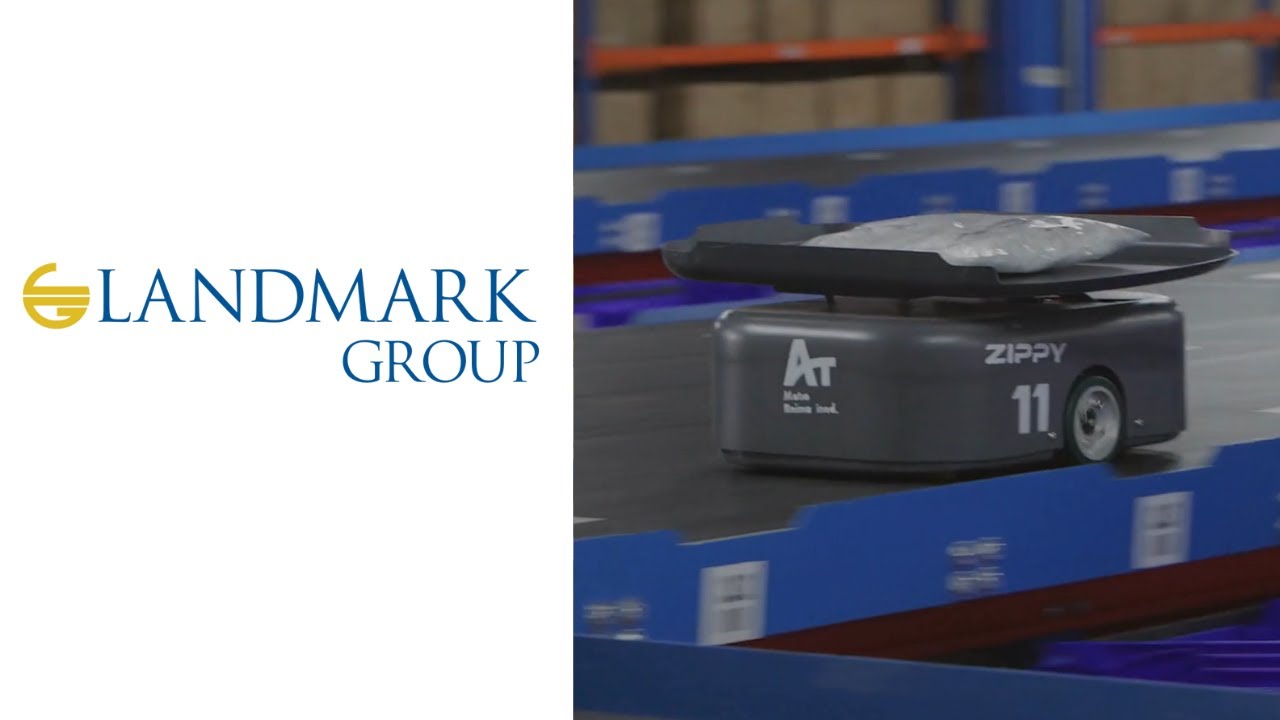
Landmark Group Kuwait Fulfillment Center
Addverb
Bastian Solutions Corporate Profile: Toyota Advanced Logistics
Bastian Solutions
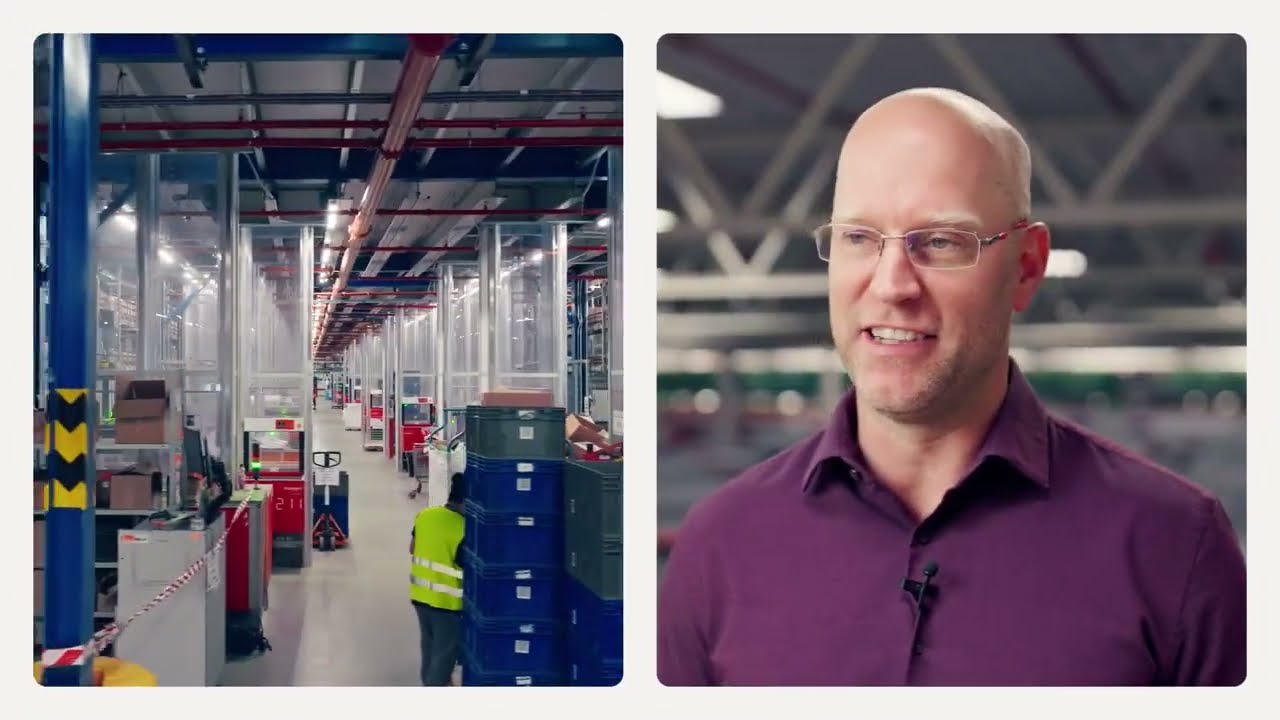
Alza Prague High-Throughput Fulfillment Center
Element Logic

Addverb 3PL Omnichannel Fulfillment Center
Addverb
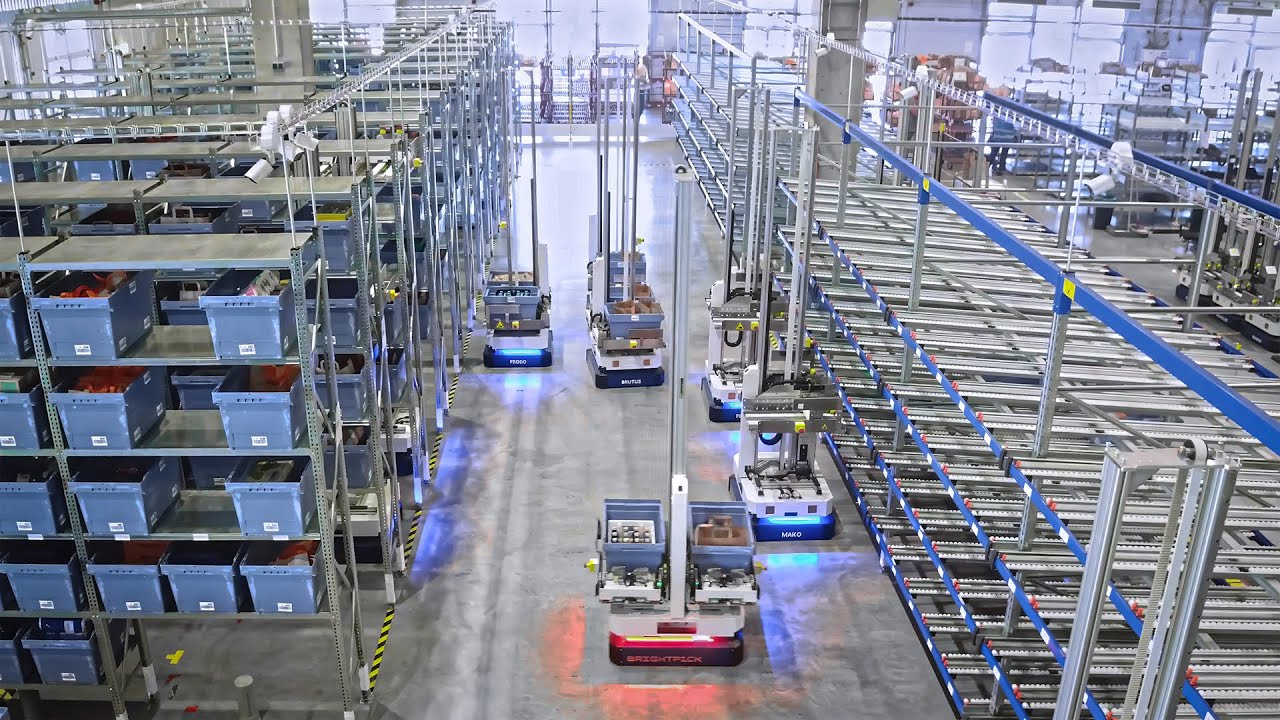
Knuspr Germany Micro Fulfillment Center
Brightpick