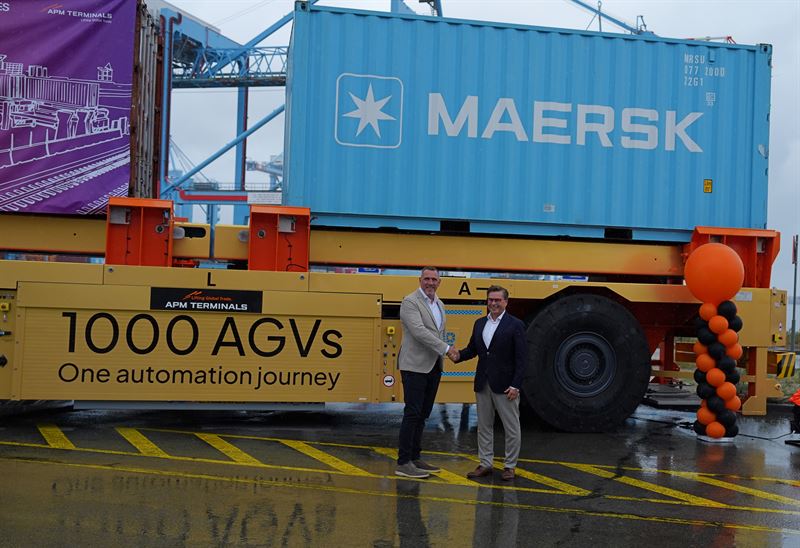
Konecranes and APM Terminals Maasvlakte II marked handover of Konecranes’ 1,000th automated guided vehicle at the Rotterdam terminal. The milestone AGV is presented as the product of more than a decade of joint work on automated container moves between quay and yard. In this setting AGVs are electric, repetitive, high-duty vehicles rather than warehouse tote bots, but the control problems—fleet scheduling, mixed traffic, energy management, and tight interface with yard systems—are the same class of problem warehouses face when they scale pallet AGVs. APM Terminals uses the vehicles as a core link in a highly automated terminal, and both companies framed the golden AGV as proof that long-cycle automation partnerships can keep improving reliability instead of freezing a first-generation design.
For warehouse and inland logistics readers, the story is a reminder that AGV technology is commercially mature at very large fleet sizes, that electrified guided vehicles remain relevant where routes are stable and payloads are heavy, and that software plus maintenance culture matter as much as the chassis. Ports and warehouses increasingly share vendors and orchestration ideas, so a 1,000-unit AGV landmark is relevant to automated handling, yard-to-warehouse transfer, and future AMR/AGV hybrids.