AMR Sortation
AMR sortation systems use autonomous mobile robots to transport and sort items, providing flexible, scalable alternatives to traditional conveyor-based sortation infrastructure.
AMR - Sortation Overview
Sortation Types
- •Put-to-WallFixed destination slots
- •Mobile SortationDynamic destinations
- •Zone SortationArea-based sorting
- •Cross-DockDirect transfer
Key Benefits
- •High Throughput1,000+ items/hour
- •Flexible RoutingDynamic destinations
- •Scalable SystemAdd robots as needed
- •Reduced Labor60-80% automation
Technology
- •Vision SystemsBarcode/QR scanning
- •AI RoutingOptimal path planning
- •Fleet CoordinationMulti-robot sync
- •Real-Time WMSSystem integration
Applications
- •E-commerceOrder consolidation
- •Parcel HubsPackage routing
- •Retail DistributionStore allocation
- •Returns ProcessingReverse logistics
Process Flow
- •Item ScanningAutomatic identification
- •Route CalculationDestination assignment
- •Transport & SortAutomated delivery
- •ConfirmationDelivery verification
Future Trends
- •AI OptimizationPredictive routing
- •Multi-Level Sorting3D sortation systems
- •Swarm IntelligenceCollective behavior
- •IoT IntegrationSmart packaging
How AMR Sortation Works
In a typical AMR sortation system, items are inducted onto individual mobile robots at one or more induction stations. Each robot receives destination information from the warehouse control system and autonomously navigates to the appropriate discharge location—typically a chute, bin, or staging area designated for a specific carrier route, store, or order batch. Upon arrival, the robot tilts its platform, slides its tray, or uses another mechanism to discharge the item into the destination, then returns to the induction area for the next assignment.
The fleet management system orchestrates robot movements, optimizing traffic flow, preventing collisions, and balancing workload across the robot fleet. Advanced algorithms consider factors like robot battery levels, item priorities, destination congestion, and induction queue depths to maximize throughput while maintaining system efficiency. This intelligent coordination enables dozens or even hundreds of robots to operate simultaneously in a relatively compact footprint.
Navigation technology varies by system but typically employs LiDAR, computer vision, or natural feature navigation to enable robots to move freely without requiring floor markers, magnetic tape, or other fixed guidance infrastructure. This flexibility allows operations to reconfigure layouts, add destinations, or relocate induction points with minimal disruption—changes that would require significant time and expense with traditional sorters.
Key Benefits
The primary advantage of AMR sortation is exceptional flexibility. Operations can easily add or remove destinations by simply designating new discharge locations in the software, without installing additional conveyor spurs, diverters, or mechanical infrastructure. This adaptability is invaluable for operations with seasonal fluctuations, changing carrier networks, or evolving business requirements.
Scalability represents another major benefit. Facilities can start with a modest robot fleet and incrementally add units as volume grows, avoiding the large upfront capital investment required for traditional sorters. This pay-as-you-grow model reduces financial risk and allows operations to match capacity precisely to demand. If volumes decline, robots can be redeployed to other facilities or applications, providing asset flexibility that fixed infrastructure cannot match.
Rapid deployment distinguishes AMR sortation from conventional systems. While traditional sorters may require 12-18 months for design, fabrication, and installation, AMR sortation systems can be operational in weeks or months. This speed-to-value is particularly attractive for operations facing urgent capacity needs or those operating in leased facilities where permanent infrastructure investment is impractical.
The technology also delivers space efficiency by eliminating the extensive conveyor networks and recirculation loops required by traditional sorters. AMR systems can operate in tighter spaces and navigate around obstacles, making them suitable for facilities with challenging layouts or limited expansion room.
System Components
A complete AMR sortation system consists of several integrated elements. The mobile robots themselves feature platforms or trays designed to securely transport items of various sizes and weights. Most systems handle parcels, polybags, and totes, with payload capacities typically ranging from 5 to 50 pounds depending on the robot model. The robots include onboard sensors for navigation and obstacle detection, along with batteries that support several hours of continuous operation.
Induction stations provide the interface where items enter the system. These stations typically include dimensioning equipment, barcode scanners, and weighing systems that capture item data and assign destinations. Some systems support multiple induction points to increase throughput or accommodate different item sources.
Discharge locations can take various forms depending on operational requirements. Common configurations include gravity chutes that direct items into gaylords or carts, shelving units with designated bins, or staging areas where items accumulate for batch processing. The flexibility to support diverse discharge methods enables AMR sortation to adapt to different workflows and space constraints.
The fleet management system serves as the operational brain, coordinating robot movements, optimizing routes, managing battery charging, and providing real-time visibility into system performance. This software integrates with warehouse management systems and other enterprise applications to ensure seamless information flow and coordinated operations.
Implementation Considerations
Successfully deploying AMR sortation requires careful planning and design. Throughput requirements must be clearly defined, as AMR systems typically achieve lower peak rates than high-speed conveyor sorters. While traditional sorters can process 10,000+ items per hour, AMR systems generally handle 1,000-5,000 items per hour depending on configuration, distance traveled, and discharge time. Operations must ensure that AMR capacity aligns with volume requirements and peak demand patterns.
Facility layout significantly impacts system performance. Shorter travel distances between induction and discharge points improve throughput and reduce the number of robots needed. Operations should optimize destination placement to minimize average travel distance while maintaining logical groupings for downstream processes.
Item characteristics influence system suitability. AMR sortation works best with relatively uniform items that can be securely transported on robot platforms. Operations handling extremely heavy items, fragile products, or highly variable package sizes may need specialized robots or alternative sortation methods for certain item categories.
Integration requirements extend beyond the sortation system itself. Upstream processes must reliably feed items to induction stations at appropriate rates, while downstream operations must efficiently remove sorted items from discharge locations to prevent congestion. The entire workflow must be designed as an integrated system rather than treating AMR sortation as an isolated component.
Best Practices
To maximize AMR sortation effectiveness, consider these proven strategies. Dynamic destination assignment allows the system to adjust discharge locations based on real-time conditions, such as shifting items to less congested areas or consolidating low-volume destinations to improve efficiency. This flexibility leverages the software-defined nature of AMR systems to optimize performance continuously.
Predictive maintenance uses robot telemetry and performance data to identify potential issues before they cause failures. Monitoring metrics like battery health, motor performance, and sensor accuracy enables proactive maintenance that minimizes downtime and extends robot lifespan.
Traffic management optimization continuously refines routing algorithms based on observed patterns and congestion points. Machine learning approaches can identify opportunities to improve flow, reduce conflicts, and increase throughput without requiring manual intervention.
Staged deployment allows operations to validate system performance and refine processes before scaling to full capacity. Starting with a subset of destinations or lower volumes provides valuable learning opportunities and reduces implementation risk.
Comparison with Traditional Sorters
AMR sortation and conventional sorters each offer distinct advantages for different operational contexts. Traditional sorters excel in high-throughput applications where consistent, predictable volumes justify the capital investment and space requirements. They deliver superior peak rates and lower per-item operating costs at high volumes, making them ideal for large parcel hubs and distribution centers with stable, high-volume operations.
AMR sortation shines in scenarios requiring flexibility, scalability, and rapid deployment. Operations with variable volumes, changing destination requirements, or space constraints often find AMR systems more suitable. The technology is particularly attractive for e-commerce fulfillment, retail distribution, and third-party logistics operations where adaptability and capital efficiency are priorities.
Many operations are discovering that hybrid approaches combining both technologies deliver optimal results. Traditional sorters handle high-volume, stable flows while AMR systems provide flexible capacity for overflow, seasonal peaks, or specialized sorting requirements. This combination leverages the strengths of each technology while mitigating their respective limitations.
Measuring Success
Key performance indicators for AMR sortation include items sorted per hour, robot utilization rates, sort accuracy, and system uptime. These metrics help assess whether the system meets operational requirements and identify optimization opportunities.
Cost per item sorted provides important economic insight, accounting for robot depreciation, maintenance, energy consumption, and labor. Comparing this metric against alternative sortation methods helps validate technology selection and identify areas for efficiency improvement.
Flexibility utilization tracks how frequently the operation leverages AMR sortation's adaptability advantages—adding destinations, reconfiguring layouts, or adjusting capacity. High flexibility utilization indicates that the technology is delivering its unique value proposition beyond simple item sorting.
Return on investment typically materializes over 3-5 years through a combination of labor savings, space efficiency, and operational flexibility. The incremental investment model often produces more favorable ROI profiles than traditional sorters, particularly for operations with uncertain volume trajectories or limited capital availability.
By implementing AMR sortation with careful attention to throughput requirements, layout optimization, and integration design, operations can create flexible, scalable sorting infrastructure that adapts to changing business needs while delivering reliable performance and attractive economics. The technology's continued evolution promises even greater capabilities and broader applicability in the years ahead.
Related Technologies (6)
Momentum WES: Next-Generation Warehouse Execution and Control
byHoneywell Intelligrated
Mobile Picking Robot (MPR): Smart Logistics Automation
byHyundai
HaiPick Climb System: Goods-to-Person Warehouse Automation
by Hai Robotics
Collaborative Autonomous Mobile Robots for Picking
byLocus Robotics
MIX: All-round Goods-to-Person Picking Solution
byMushiny
Autopicker: AI-Powered Mobile Picking Robot
byBrightpick
Related Transport Topics
AGV Forklift
AGV forklifts are automated guided vehicles that replicate traditional forklift operations without human operators, performing vertical pallet handling with lifting, transporting, and stacking capabilities up to 35 feet high.
AGV Tugger
AGV tuggers are automated guided vehicles that tow trains of carts or trailers through warehouses and manufacturing facilities, efficiently moving large volumes of materials along fixed routes.
AGV Unit Load
AGV unit load vehicles are automated guided vehicles designed to transport individual pallets, containers, or large items along fixed routes, providing reliable, predictable material movement in warehouses and manufacturing facilities.
Collaborative AMR
Collaborative AMRs work safely alongside human workers without safety cages, using advanced sensors and AI to navigate dynamic warehouse environments and assist with material transport tasks.
AMR Goods-to-Person
AMR goods-to-person systems use autonomous mobile robots to transport inventory from storage locations to picking stations, eliminating worker travel time and dramatically improving order fulfillment efficiency.
About This Topic
Related Projects(6)
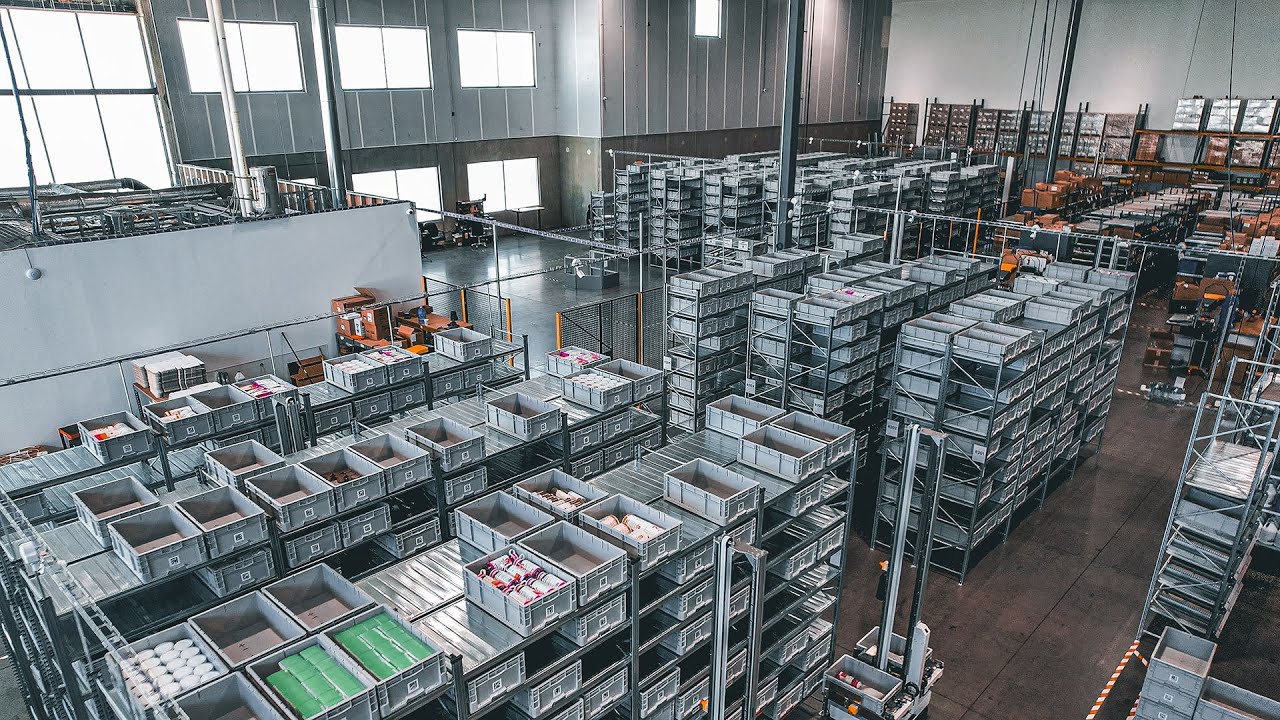
Netrush Kentucky E-commerce Fulfillment Warehouse
Brightpick
Bastian Solutions Corporate Profile: Toyota Advanced Logistics
Bastian Solutions

X-step Smart Warehouse
Geek+
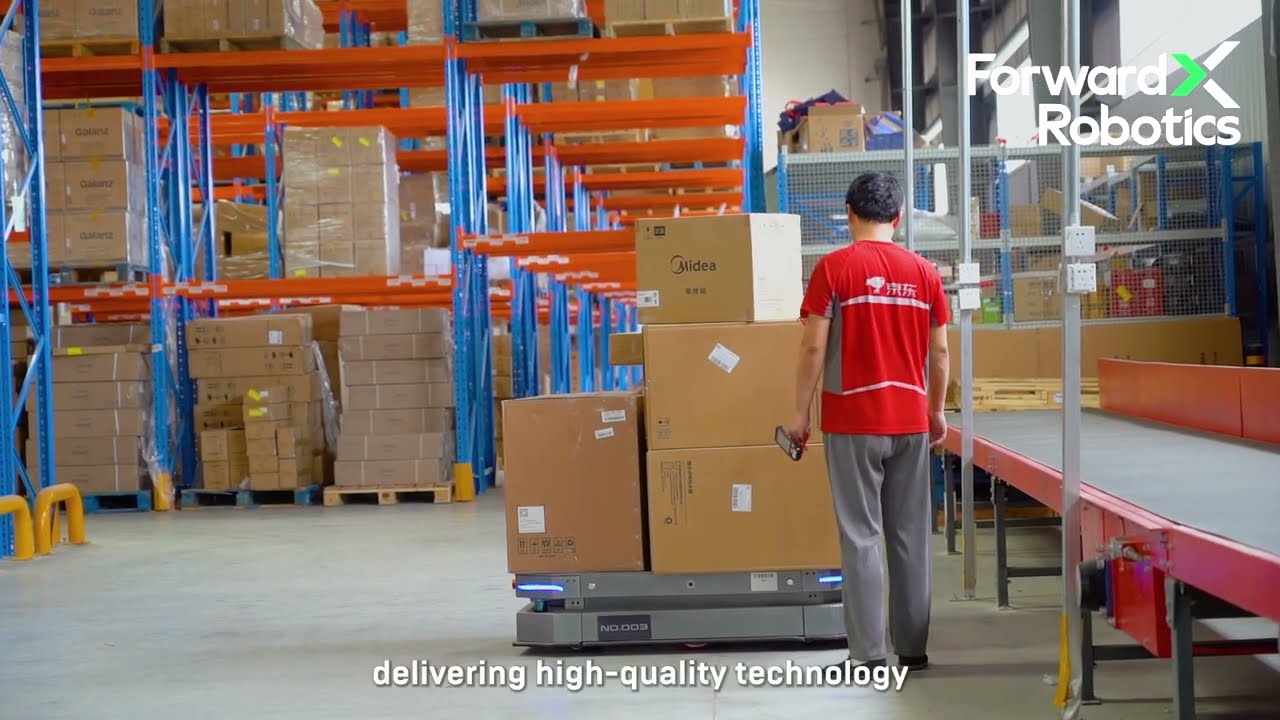
JD.com - Flexible Case Picking Automation with ForwardX Robotics AMRs
ForwardX Robotics
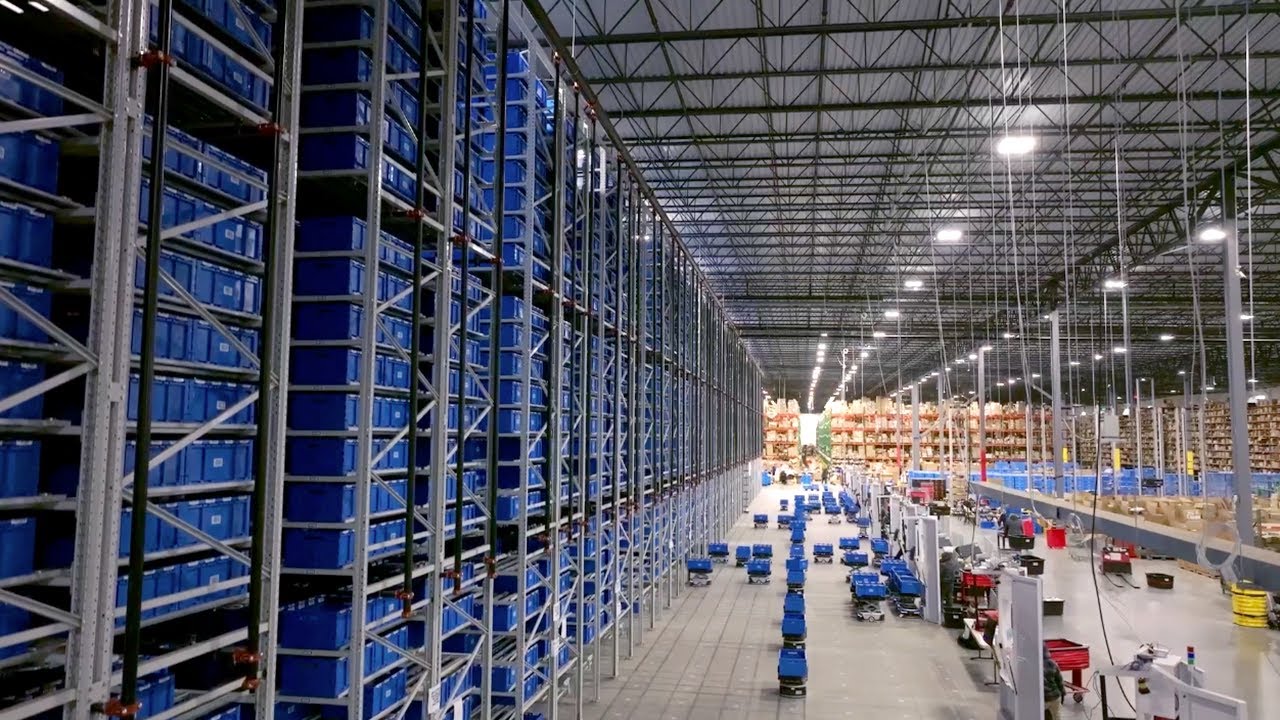
International 3PL E-commerce Warehouse with RoboShuttle
Geek+
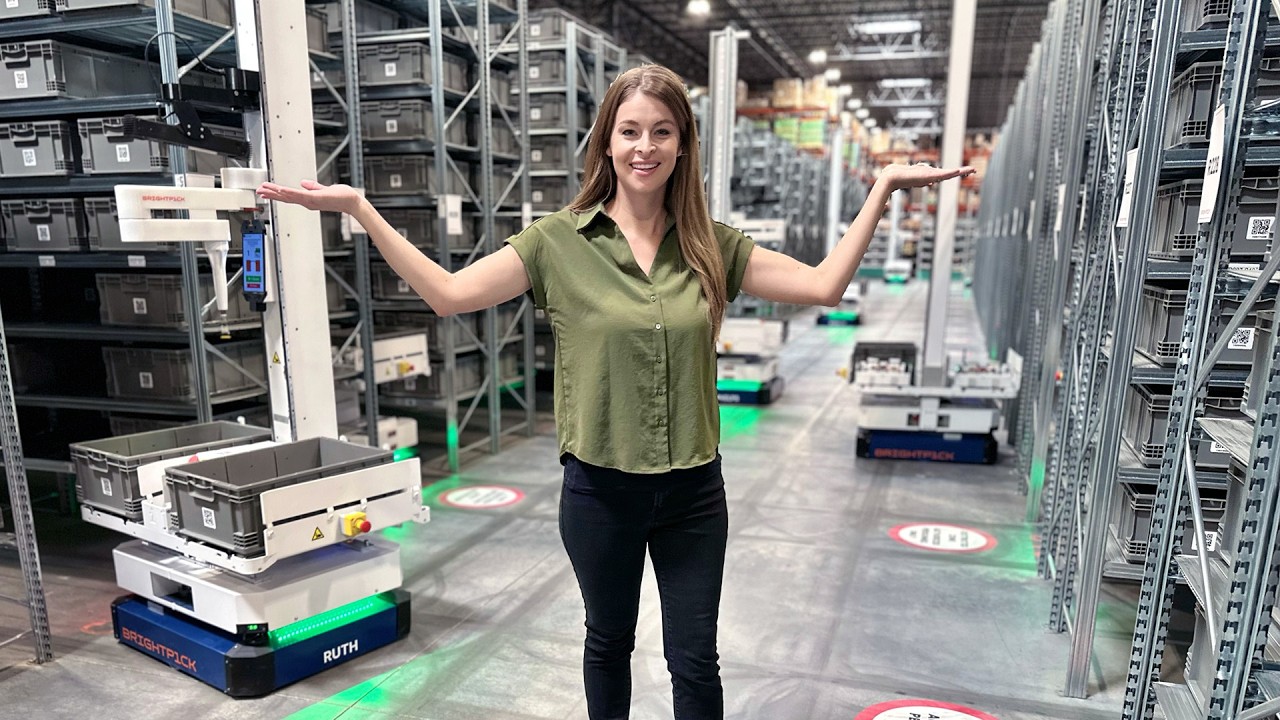
The Feed Sports Nutrition Automated Fulfillment Center with Brightpick
Brightpick
Related Suppliers(3)

6 River Systems
The Seamless Fulfillment Automation Solution to Boost Efficiency and Productivity in Your Warehouse

Addverb
Warehouse Automation that delivers value!

Ancra Systems
Efficient Loading