Tilt-Tray Sorter
Tilt-Tray Sorters are high-speed automated sorting systems featuring individual tilting trays mounted on a continuous loop that discharge items by tilting at precise moments. Known for their exceptional speed and reliability, these systems are ideal for handling small to medium-sized items in high-volume parcel, postal, and e-commerce operations.
Tilt-Tray Sorter System Architecture
System Components
- ▸Loop Track: 150-500m continuous path
- ▸Trays: 200-800+ tilting platforms
- ▸Tilt Mechanism: 30-45° discharge angle
- ▸Scanners: Barcode/RFID tracking
Performance
- ▸Throughput: 10,000-30,000 items/hr
- ▸Accuracy: 99.95%+ sort rate
- ▸Speed: 500-600 ft/min
- ▸Destinations: 100-400 chutes
Item Handling
- ▸Weight: 0.1-35 kg (up to 50 kg)
- ▸Tray Size: 24-36 inches typical
- ▸Types: Envelopes to medium boxes
- ▸Discharge: Gravity-assisted tilt
Key Applications
- ▸Postal: Mail & small parcel sorting
- ▸Parcel: Regional hub operations
- ▸E-commerce: Order consolidation
- ▸Distribution: Multi-destination sorting
Induction Methods
- ▸Manual: 1,000-1,800 items/hr/station
- ▸Automated: 2,500-4,000 items/hr/lane
- ▸Hybrid: Flexible combination
- ▸Quality: Visual inspection points
Investment & ROI
- ▸Cost: $1.5M-$8M installed
- ▸Payback: 2-5 years typical
- ▸Labor: Replaces 30-60 sorters
- ▸Savings: 60-80% labor reduction
System Overview and Operating Principles
Among the family of high-speed sortation technologies, the tilt-tray sorter stands as one of the most proven and reliable solutions for handling small to medium-sized items at impressive speeds. Imagine a continuous loop of individual trays, each mounted on a carrier that travels along an elevated track at speeds reaching 500 to 600 feet per minute. As items ride on these trays, sophisticated tracking systems monitor their progress, and at precisely the right moment, the tray tilts to one side, allowing gravity to gently slide the item into its designated chute. This simple yet elegant mechanism has been refined over decades, making tilt-tray sorters the workhorse of postal facilities, parcel hubs, and e-commerce distribution centers worldwide.
The beauty of tilt-tray technology lies in its mechanical simplicity combined with operational sophistication. Unlike systems requiring complex belt mechanisms or pusher arms, tilt-tray sorters rely on a straightforward tilting action that's both reliable and easy to maintain. Each tray typically measures 24 to 36 inches in length and can handle items weighing from 0.1 to 35 kilograms, though some heavy-duty configurations extend to 50 kg. The trays accommodate a wide range of item sizes, from small envelopes and poly bags to medium-sized boxes, making them particularly well-suited for the diverse product mix characteristic of modern e-commerce and parcel operations. The tilting angle, usually 30 to 45 degrees, provides sufficient momentum for items to slide off smoothly while maintaining control throughout the discharge process.
System architecture centers on a continuous loop configuration, with track lengths typically ranging from 150 to 500 meters depending on the number of sort destinations required and available facility space. The loop can be configured in various shapes—oval, rectangular, or custom layouts—to fit specific building constraints and operational requirements. Each tray carrier travels independently along the track, guided by rails and powered by a continuous chain drive or linear motor system. The number of trays in a system can range from 200 to over 800, with spacing optimized to balance throughput capacity against system cost. This distributed architecture means the system continues operating even if individual trays require maintenance, providing inherent operational resilience.
Performance and Throughput Capabilities
Performance metrics for tilt-tray sorters are impressive by any standard. Modern systems routinely achieve sorting rates of 10,000 to 30,000 items per hour, with some high-performance installations pushing beyond 35,000 items per hour. The sort accuracy typically exceeds 99.95%, meaning fewer than five items per 10,000 are missorted—a level of precision that's critical for postal and parcel operations where misroutes create costly service failures. This accuracy stems from sophisticated barcode scanning and RFID tracking systems that identify each item as it enters the sorter, combined with precise tray positioning and discharge timing controlled by the warehouse control system (WCS).
The speed advantage of tilt-tray sorters becomes particularly apparent in high-volume operations. A single system can replace 30 to 60 manual sorters, depending on throughput requirements and item characteristics. More importantly, the system maintains consistent performance throughout shifts, eliminating the productivity variations inherent in manual operations. During peak periods like holiday seasons, when parcel volumes can double or triple, tilt-tray sorters simply run longer hours rather than requiring proportional increases in labor—a scalability advantage that delivers significant operational flexibility and cost control.
Bastian Solutions Corporate Profile: Toyota Advanced Logistics
System Integrator: Bastian Solutions
Economic Considerations and ROI
Investment in tilt-tray sortation represents a substantial commitment, with typical system costs ranging from $1.5 million to $8 million depending on size, throughput capacity, and level of automation. A mid-sized installation serving a regional distribution center might cost $3 to $5 million including equipment, installation, controls, and integration with existing warehouse systems. Despite these significant upfront costs, the return on investment typically materializes within 2 to 5 years for operations processing more than 8,000 items daily. The economics become increasingly compelling at higher volumes, where labor savings and throughput gains justify the capital expenditure.
The labor cost reduction represents the primary economic driver for most implementations. By replacing manual sorting operations, tilt-tray systems can reduce direct sorting labor by 60 to 80% while simultaneously increasing throughput capacity. For a facility processing 20,000 items per day, annual labor savings of $300,000 to $600,000 are common, providing a clear path to payback even accounting for maintenance costs and system depreciation. Beyond direct labor savings, the system delivers improved accuracy that reduces costly misroutes and redelivery attempts, faster processing that enables tighter delivery commitments, and operational consistency that simplifies workforce planning and reduces reliance on temporary labor during peaks.
System Integration and Control
Successful tilt-tray operation depends on seamless integration between multiple system layers. The warehouse management system (WMS) provides high-level sorting logic, determining destination assignments based on order data, shipping zones, carrier routes, and service level requirements. The warehouse control system (WCS) translates these instructions into precise mechanical commands, managing tray assignments, tracking item positions, and coordinating discharge timing with microsecond precision. Modern systems employ predictive algorithms that optimize tray utilization by anticipating item arrivals and pre-positioning empty trays to minimize gaps in the sort stream.
Real-time tracking forms the backbone of system intelligence. As items enter the sorter, barcode scanners or RFID readers capture identification data and communicate it to the WCS, which immediately calculates the optimal discharge point based on current tray positions and destination requirements. The system continuously monitors tray status, item presence, and discharge success, providing operators with real-time visibility into system performance and immediate alerts for any exceptions requiring attention. This level of control enables dynamic routing that can adapt to changing priorities, such as expediting urgent shipments or rerouting items when specific destinations become full.
Split Tray (Bomb Bay) Sorter Compilation: Versatile High-Speed Sortation
Vendor: Others
Facility Requirements and Infrastructure
Physical infrastructure requirements deserve careful attention during planning phases. Tilt-tray sorters require ceiling heights of typically 10 to 14 meters to accommodate the elevated track structure and discharge chutes that use gravity to deliver items to ground-level collection points. The floor space requirement depends on loop size and destination count, but a typical installation might occupy 2,000 to 5,000 square meters. The floor must be level and capable of supporting structural loads, though these are generally modest compared to high-bay storage systems. The elevated design actually provides an advantage in space utilization, as the area beneath the sorter can often be used for other purposes like staging or packing operations.
Acoustic considerations matter in tilt-tray installations. While quieter than some sortation technologies, the continuous operation of hundreds of trays traveling at high speed, combined with items discharging into chutes, creates ambient noise levels typically ranging from 75 to 85 decibels. Proper facility design should include sound dampening measures, particularly if the sorter operates near office areas or in facilities with strict noise regulations. Modern systems incorporate noise reduction features like rubberized track components and acoustic panels, but the fundamental nature of high-speed mechanical operation means some noise is inevitable.
Induction Methods and Package Flow
The induction process—how items enter the sorter—significantly influences overall system performance and represents a critical design decision. Manual induction involves operators placing items onto trays as they pass by, with the system controlling tray speed and spacing to match human capabilities. This approach offers maximum flexibility for handling irregular items and provides a quality control checkpoint, but limits throughput to what humans can sustain, typically 1,000 to 1,800 items per hour per induction station. Most manual induction systems employ ergonomic workstations with adjustable heights and clear visual indicators showing which tray to load, reducing operator fatigue and improving accuracy.
Automated induction uses conveyors, singulation systems, and sometimes robotic placement to feed items onto trays at much higher rates, potentially 2,500 to 4,000 items per hour per lane. Automated systems excel with standardized items that meet specific size and weight criteria, delivering consistent performance without the variability of human operators. However, they require more sophisticated controls and may reject items that don't meet specifications, necessitating manual handling for exceptions. Many operations employ a hybrid approach, using automated induction for the bulk of standard items while maintaining manual stations for oversized, irregular, or fragile items that require special handling.
Maintenance and Operational Support
Preventive maintenance programs are essential for maintaining tilt-tray system performance and reliability. Daily routines typically include visual inspections of trays, track components, and discharge mechanisms, checking for any signs of wear or damage that could affect operation. Weekly maintenance involves lubrication of moving parts, cleaning of sensors and scanners, and verification of tray alignment and discharge angles. Monthly service includes detailed inspections of drive systems, replacement of wear components, and calibration of tracking and discharge timing. Quarterly comprehensive service addresses major components like drive motors, control systems, and structural elements, ensuring long-term reliability.
The modular nature of tilt-tray systems facilitates maintenance activities. Individual trays can be removed from the loop for service or replacement without shutting down the entire system, though operations typically schedule such work during lower-volume periods to minimize impact. Most operators maintain a spare parts inventory including replacement trays, tilt mechanisms, sensors, and drive components to enable rapid response to failures. Leading equipment suppliers offer service contracts that include remote monitoring, predictive maintenance alerts based on system data, and guaranteed response times, providing operational peace of mind for facilities where sorter downtime directly impacts customer service commitments.
Industry Applications and Use Cases
Postal operations represent the original and still dominant application for tilt-tray sorters. National postal services worldwide rely on these systems to process millions of letters and small parcels daily, sorting by postal code, delivery route, and service class. The combination of high speed, accuracy, and reliability makes tilt-tray technology ideal for the demanding requirements of postal operations, where processing windows are tight and accuracy directly impacts service quality. Modern postal tilt-tray systems often integrate with address recognition and barcode printing systems, creating fully automated mail processing lines that require minimal human intervention.
Parcel carriers have embraced tilt-tray technology for regional and local sorting facilities, where packages must be quickly sorted to delivery routes or transfer to other facilities. The system's ability to handle the size and weight range typical of parcel operations—from small envelopes to medium boxes—makes it well-suited for this application. During peak seasons, when parcel volumes surge dramatically, the scalability of tilt-tray systems through extended operating hours provides crucial capacity without proportional labor increases. Some carriers operate sorters 24/7 during peak periods, processing incoming volumes continuously as they arrive from collection routes.
E-commerce fulfillment operations increasingly deploy tilt-tray sorters for order consolidation and shipping preparation. After items are picked for multiple orders, the sorter directs them to packing stations or shipping lanes organized by carrier, service level, or destination zone. This application leverages the sorter's ability to handle diverse item types while maintaining high throughput, enabling fulfillment centers to process thousands of orders per hour. The accuracy of tilt-tray sorting reduces costly shipping errors, while the speed supports aggressive delivery commitments like same-day or next-day service.
Technology Variants and Configurations
Standard tilt-tray systems feature trays that tilt to one side only, discharging items to chutes positioned along one side of the loop. This configuration maximizes the number of sort destinations per meter of track length, making it ideal for operations requiring many destinations in limited space. Bi-directional tilt-tray systems can discharge to either side, effectively doubling the number of destinations accessible from a given loop length. While more complex and expensive, bi-directional systems provide valuable flexibility for operations with very high destination counts or space constraints.
Tray size variations accommodate different operational requirements. Small trays (18-24 inches) optimize for high-volume operations handling predominantly small items like envelopes and poly bags, maximizing the number of trays per loop and thus throughput capacity. Large trays (30-36 inches) handle bigger items and provide more flexibility for mixed product flows, though at the cost of fewer trays per loop and potentially lower throughput. Some systems employ mixed tray sizes on the same loop, using small trays for the bulk of items while incorporating larger trays for oversized pieces, optimizing both throughput and flexibility.
Future Trends and Technology Evolution
Artificial intelligence and machine learning are beginning to enhance tilt-tray system capabilities. Predictive algorithms analyze historical data to optimize tray assignments, anticipating demand patterns and pre-positioning resources to maximize throughput. Computer vision systems supplement traditional barcode scanning, enabling identification of items even when labels are damaged or poorly positioned. Some advanced systems use AI to detect item characteristics like size, shape, and fragility, automatically adjusting discharge parameters to ensure gentle handling of delicate items while maintaining speed for robust packages.
Energy efficiency improvements continue to reduce operational costs. Modern systems incorporate regenerative braking that captures energy from decelerating trays and feeds it back into the power system, potentially reducing energy consumption by 15 to 25%. Variable frequency drives adjust motor speeds based on actual load requirements rather than running at constant maximum capacity, further reducing energy use during lower-volume periods. LED lighting with motion sensors and smart climate control in sorter areas contribute additional savings, making newer installations significantly more sustainable than older systems.
Modular design approaches are making tilt-tray systems more accessible and adaptable. Standardized components and plug-and-play interfaces reduce installation time and complexity, while enabling easier expansion as business grows. Some manufacturers offer containerized sorter modules that can be deployed rapidly in temporary facilities or relocated as operational needs change. This modularity also facilitates phased implementation, allowing operations to start with a smaller system and expand incrementally as volumes justify additional capacity, reducing initial investment risk.
Implementation Considerations and Decision Criteria
Selecting tilt-tray sortation requires careful analysis of operational requirements and item characteristics. The technology excels with items that fit comfortably on trays and can withstand the tilting discharge motion—typically small to medium-sized packages with reasonably regular shapes. Operations handling predominantly oversized items, very heavy packages, or extremely fragile products might find other sortation technologies more suitable. The volume threshold for justifying tilt-tray investment typically falls around 8,000 to 10,000 items per day, though this varies based on labor costs, accuracy requirements, and growth projections.
Destination count significantly influences system design and cost. Each sort destination requires a discharge chute and collection point, with typical systems accommodating 100 to 400 destinations. Operations requiring more destinations might need multiple sorter passes or alternative technologies. The physical layout of destination points affects system efficiency—ideally, high-volume destinations should be positioned for easy access and efficient downstream processing. Some operations employ dynamic destination assignment, where the same physical chute serves different logical destinations at different times, maximizing flexibility while controlling infrastructure costs.
Integration complexity deserves careful attention. Successful tilt-tray implementation requires seamless coordination between the sorter, upstream processes like receiving and induction, downstream activities like packing and shipping, and overarching systems like WMS and transportation management. The project timeline typically spans 12 to 18 months from initial planning through full operational deployment, including design, equipment procurement, installation, testing, and ramp-up. Organizations should plan for change management activities including operator training, process documentation, and performance monitoring to ensure smooth transition from manual to automated sorting.
Success with tilt-tray sorters demands more than equipment installation—it requires commitment to operational excellence, continuous improvement, and system optimization. The most successful implementations treat the sorter as part of an integrated operation rather than a standalone solution, ensuring that all elements of the sorting process work together harmoniously. When properly planned, implemented, and maintained, tilt-tray sorters deliver decades of reliable service, processing billions of items with the speed, accuracy, and consistency that modern logistics operations demand.
Related Technologies (6)
Split Tray (Bomb Bay) Sorter Compilation: Versatile High-Speed Sortation
Others
Loop-Based Tilt Tray Parcel Sorter: High-Throughput Solution
Falcon
IntelliSort Tilt-Tray Sorter: High-Throughput Versatile Sorting
Honeywell Intelligrated
Cross Tray Sorter: High-Speed Sorting for Non-Conveyable Items
EuroSort
TiltSort-Bot: Autonomous Mobile Robot (AMR) for Sortation
Conveyco
Dual Split Tray (Bomb Bay) Sorter for Apparel E-Commerce
Others
Related Sortation Topics
Bomb-Bay Sorter
Bomb-Bay Sorters use gravity-fed drop mechanisms where packages travel on carriers with bottom doors that open to release items into chutes below. Ideal for high-speed parcel operations, these systems excel at handling uniform packages with exceptional throughput rates while maintaining gentle handling through controlled gravity discharge.
Cross-Belt Sorter
Cross-Belt Sorters are high-speed automated sorting systems that use individual carrier vehicles with miniature conveyor belts to gently divert packages to their designated destinations. These systems excel at handling diverse package types with exceptional accuracy and throughput, making them ideal for e-commerce, parcel, and distribution operations.
Pouch/Pocket Sorter
Pouch Sorters use suspended fabric pouches or pockets traveling on an overhead track to sort individual items with exceptional gentleness and flexibility. Ideal for fashion, apparel, and omnichannel retail operations, these systems excel at handling soft goods, hanging garments, and irregularly shaped items while providing dynamic buffering and sequencing capabilities.
Sliding Shoe Sorter
Sliding Shoe Sorters use rows of sliding diverter shoes mounted on a conveyor belt to gently push items onto discharge lanes at precise angles. Known for their gentle handling and ability to sort at high speeds, these systems excel at handling cases, cartons, and totes in distribution and fulfillment operations.
About This Topic
Related Projects(6)
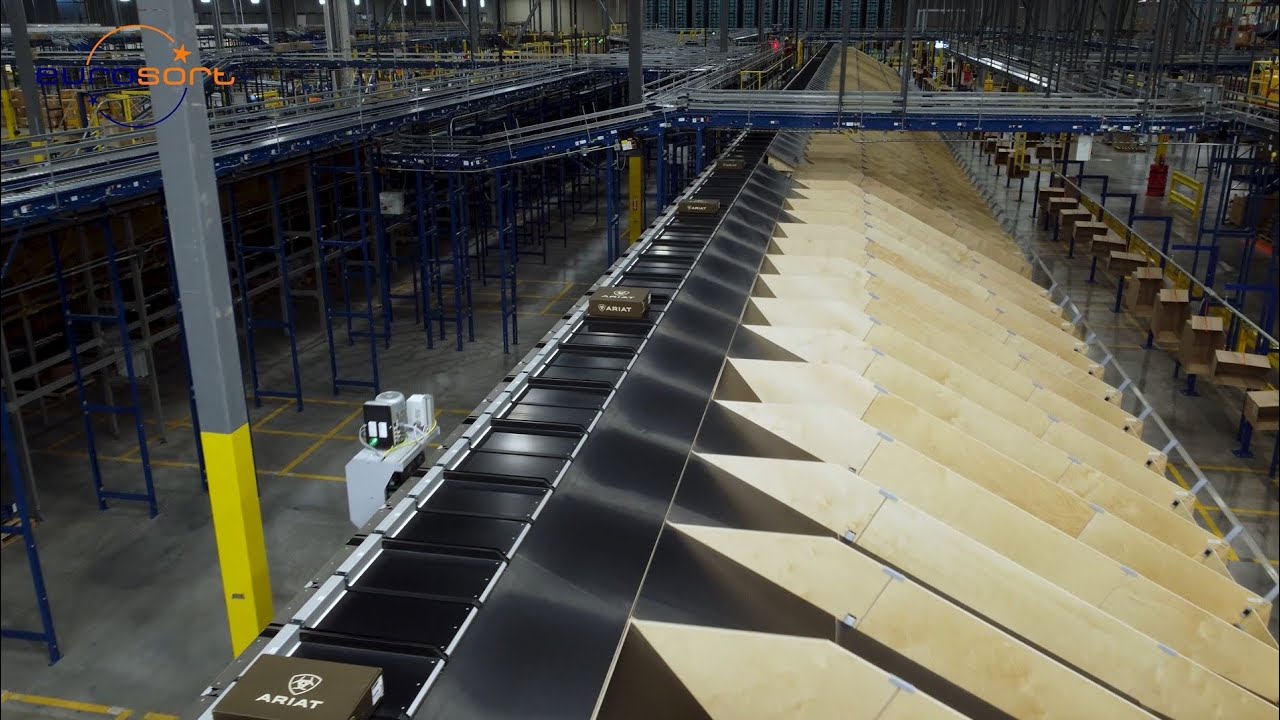
Ariat Wholesale Footwear & Apparel Order Fulfillment Center
EuroSort
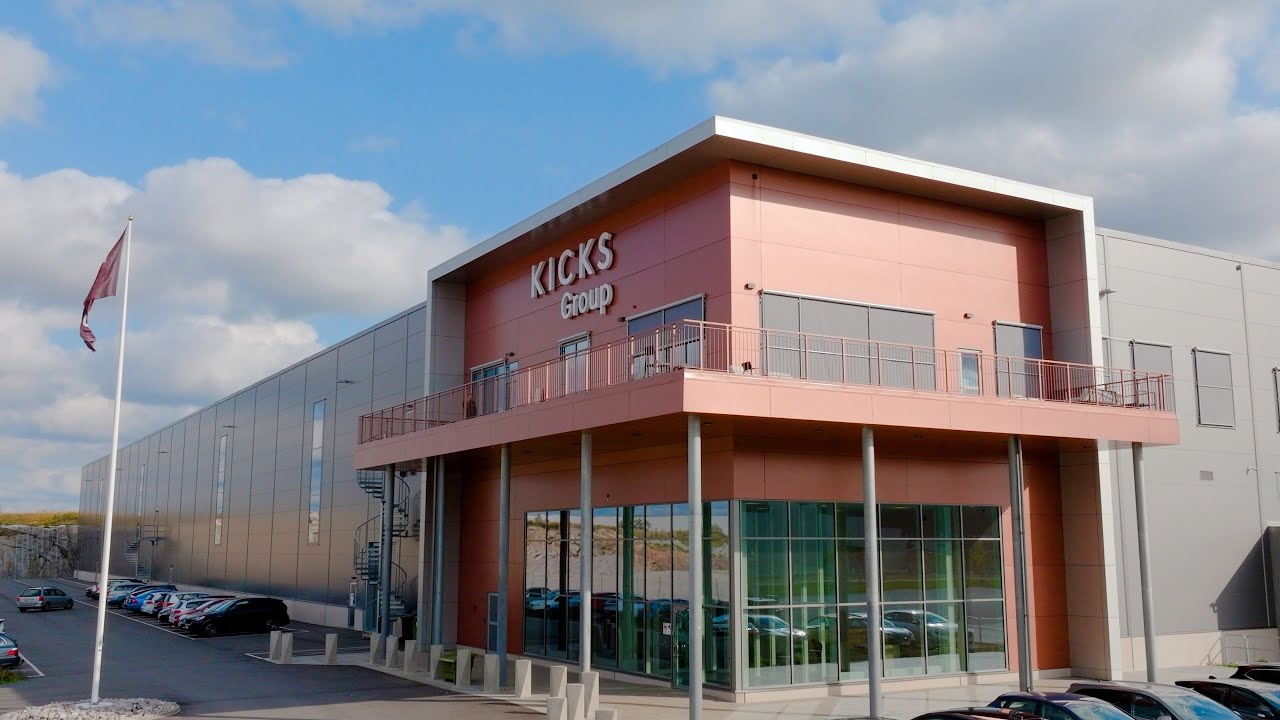
KICKS - Rosersberg Beauty Products Automated Distribution Center
Knapp
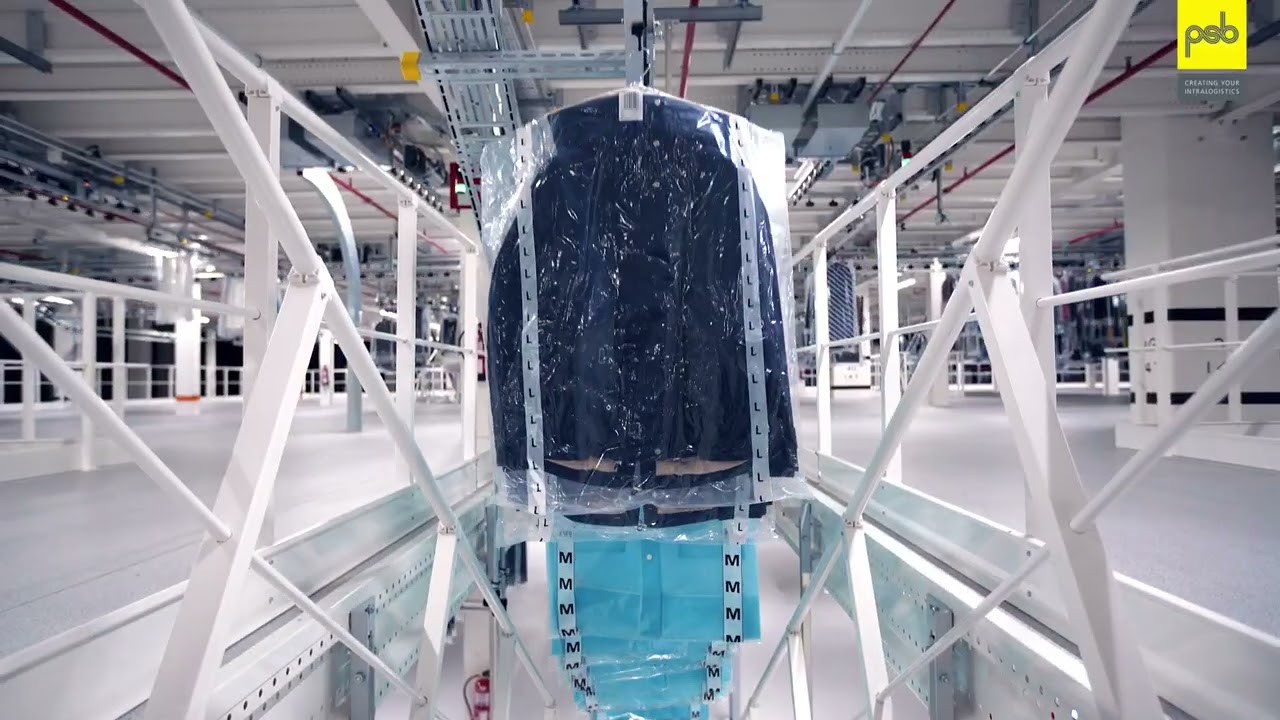
Fashion Retail Automated Hanging Garment Warehouse
psb intralogistics GmbH
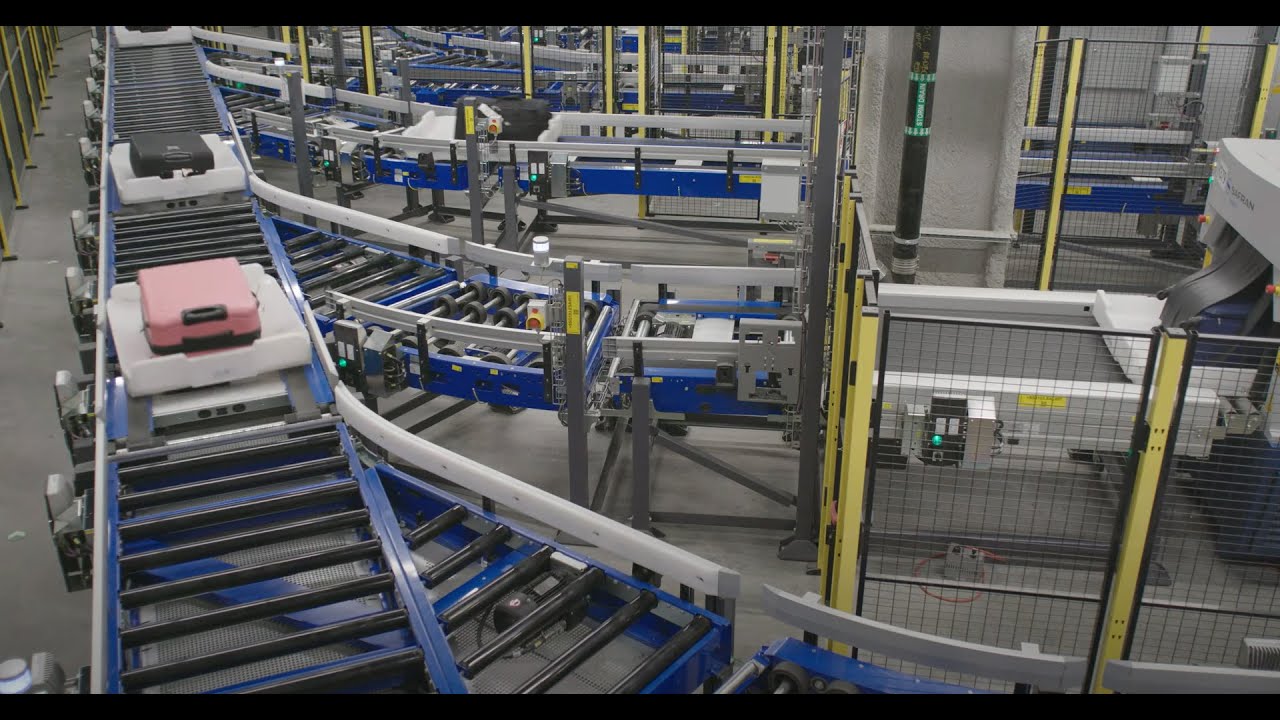
San Francisco International Airport Harvey Milk Terminal 1 Baggage Handling System
Beumer Group
Bastian Solutions Corporate Profile: Toyota Advanced Logistics
Bastian Solutions

Addverb 3PL Omnichannel Fulfillment Center
Addverb
