Pouch/Pocket Sorter
Pouch Sorters use suspended fabric pouches or pockets traveling on an overhead track to sort individual items with exceptional gentleness and flexibility. Ideal for fashion, apparel, and omnichannel retail operations, these systems excel at handling soft goods, hanging garments, and irregularly shaped items while providing dynamic buffering and sequencing capabilities.
Pouch/Pocket Sorter System Architecture
System Components
- ▸Overhead Track: 50-200m loop length
- ▸Fabric Pouches: Suspended carriers
- ▸Bottom Opening: Gravity discharge
- ▸RFID Tracking: Continuous visibility
Performance
- ▸Throughput: 3,000-10,000 items/hr
- ▸Accuracy: 99.9%+ with RFID
- ▸Buffering: Dynamic storage capacity
- ▸Destinations: Multiple discharge points
Item Handling
- ▸Weight: Up to 3 kg per pouch
- ▸Size: 600x400x300mm max
- ▸Types: Soft goods, irregulars, GOH
- ▸Handling: Exceptionally gentle
Key Applications
- ▸Fashion: Apparel & accessories
- ▸Omnichannel: Multi-channel fulfillment
- ▸Returns: Processing & routing
- ▸Retail: Store replenishment
Induction Options
- ▸Manual: 400-800 items/hr/station
- ▸Semi-Auto: Powered assistance
- ▸Quality Check: Inspection at induction
- ▸Robotic: For standardized items
Investment & ROI
- ▸Cost: $2M-$6M installed
- ▸Payback: 3-5 years typical
- ▸Labor: 30-50% reduction
- ▸Space: Overhead utilization
Pouch/Pocket Sorter System Architecture
System Components
- ▸Overhead Track: 50-200m loop length
- ▸Fabric Pouches: Suspended carriers
- ▸Bottom Opening: Gravity discharge
- ▸RFID Tracking: Continuous visibility
Performance
- ▸Throughput: 3,000-10,000 items/hr
- ▸Accuracy: 99.9%+ with RFID
- ▸Buffering: Dynamic storage capacity
- ▸Destinations: Multiple discharge points
Item Handling
- ▸Weight: Up to 3 kg per pouch
- ▸Size: 600x400x300mm max
- ▸Types: Soft goods, irregulars, GOH
- ▸Handling: Exceptionally gentle
Key Applications
- ▸Fashion: Apparel & accessories
- ▸Omnichannel: Multi-channel fulfillment
- ▸Returns: Processing & routing
- ▸Retail: Store replenishment
Induction Options
- ▸Manual: 400-800 items/hr/station
- ▸Semi-Auto: Powered assistance
- ▸Quality Check: Inspection at induction
- ▸Robotic: For standardized items
Investment & ROI
- ▸Cost: $2M-$6M installed
- ▸Payback: 3-5 years typical
- ▸Labor: 30-50% reduction
- ▸Space: Overhead utilization
System Overview and Operating Principles
The pouch sorter represents a uniquely elegant solution to one of retail's most challenging sorting problems: how to handle soft, flexible, and irregularly shaped items without damage while maintaining high throughput and accuracy. Picture an overhead track system where hundreds of individual fabric pouches or pockets hang suspended, traveling continuously through the facility like a gentle aerial conveyor. Each pouch can carry a single item—whether a folded sweater, a pair of shoes in a box, a poly-bagged accessory, or even a garment on a hanger using a built-in hook. When an item reaches its destination, the pouch simply opens at the bottom, allowing the item to drop gently into a collection chute or onto a packing station. This overhead design and gravity-based discharge make pouch sorters particularly well-suited for the diverse product mix and space constraints characteristic of modern omnichannel retail operations.
What sets pouch sorters apart from traditional sortation technologies is their exceptional flexibility and gentle handling. Unlike rigid conveyor-based systems that require items to have flat, stable bottoms, pouches can accommodate virtually any item that fits within their dimensions—typically up to 600mm x 400mm x 300mm and weighing up to 3 kilograms per pouch. The fabric construction provides cushioning that protects delicate items, while the suspended design eliminates the sliding and impacts associated with belt-based sorters. Each pouch travels independently on a rolling adapter that rides along the overhead track, powered by a continuous chain or friction drive system. The track can be configured in complex layouts with multiple levels, curves, and merges, utilizing vertical space that would otherwise go unused and allowing the system to fit into facilities with irregular floor plans or limited ground-level space.
The buffering capability of pouch sorters delivers strategic value beyond simple sorting. Because pouches circulate continuously on the track, the system inherently provides dynamic storage for items awaiting their turn in the fulfillment process. This buffering smooths out peaks and valleys in order flow, allowing downstream packing stations to work at consistent rates even when picking operations deliver items in bursts. The system can hold hundreds or even thousands of items in circulation, with loop lengths ranging from 50 to 200 meters depending on capacity requirements and facility layout. This distributed inventory creates a form of just-in-time sequencing, where items arrive at packing stations in the exact order needed to complete orders efficiently, eliminating the need for separate staging areas or manual sorting activities.
Performance and Throughput Capabilities
Performance characteristics of pouch sorters reflect their optimization for single-item handling and order consolidation rather than raw speed. Modern systems typically achieve sorting rates of 3,000 to 8,000 items per hour, with some high-density configurations reaching 10,000 items per hour. While these numbers may seem modest compared to high-speed parcel sorters, they're well-matched to the picking rates typical of fashion and apparel operations, where items must be individually selected from storage locations. The sort accuracy typically exceeds 99.9%, with RFID technology enabling even higher accuracy rates by providing continuous tracking of each item throughout the system without relying solely on barcode scanning.
The gentle handling characteristic of pouch sorters proves particularly valuable for fashion and apparel operations where product presentation matters as much as operational efficiency. Items emerge from pouches in the same condition they entered, without the wrinkles, scuffs, or package damage that can result from rougher handling methods. This protection extends to hanging garments, which can be transported on hangers using built-in hooks in specialized pouches, eliminating the need for folding and rehanging that adds labor cost and risks damaging delicate fabrics. The system's ability to handle mixed item types in the same flow—folded items, boxed items, poly-bagged items, and hanging garments—provides operational flexibility that's difficult to achieve with traditional sortation technologies.
Dematic Pouch Sorter: Flexible Omni-Channel Fulfillment System
Vendor: Dematic
Economic Considerations and ROI
Investment in pouch sortation requires careful financial analysis, with typical system costs ranging from $2 million to $6 million depending on track length, pouch count, number of destinations, and level of automation. A mid-sized installation serving an omnichannel distribution center might cost $3 to $4 million including equipment, installation, structural supports, controls, and integration with existing warehouse systems. The overhead installation often requires building modifications to support track structures, adding to implementation costs but delivering long-term value through space optimization. Despite substantial upfront investment, return on investment typically materializes within 3 to 5 years for operations processing more than 5,000 items daily, driven by labor savings, space efficiency, and improved order accuracy.
Labor cost reduction represents a primary economic driver, though the savings manifest differently than with traditional sorters. Rather than simply replacing manual sorters, pouch systems eliminate multiple handling steps including manual sorting, order staging, item sequencing, and walking between locations. By delivering items directly to packing stations in the correct sequence, the system can reduce total fulfillment labor by 30 to 50% while simultaneously improving throughput and accuracy. For an omnichannel retailer processing 10,000 items per day, annual labor savings of $200,000 to $400,000 are achievable, providing a clear path to payback even accounting for maintenance costs and system depreciation.
System Integration and Control
Successful pouch sorter operation depends on sophisticated integration between multiple system layers working in concert. The warehouse management system (WMS) provides high-level orchestration, determining which items should go to which destinations based on order data, packing station assignments, and fulfillment priorities. The warehouse control system (WCS) manages the physical system, tracking each pouch's position, coordinating item induction, and triggering pouch opening at precise moments to deliver items to the correct destinations. Modern systems employ RFID technology extensively, with tags attached to pouches enabling continuous tracking without line-of-sight requirements, providing unprecedented visibility into system status and item locations.
Intelligent algorithms optimize system performance by managing the complex choreography of hundreds of independent pouches. Predictive assignment algorithms anticipate item arrivals and pre-position empty pouches near induction points to minimize wait times. Dynamic routing adjusts pouch paths based on real-time conditions, directing items through the fastest available routes to their destinations. Batch optimization groups items for the same order or destination, ensuring they arrive at packing stations in efficient sequences that minimize handling time. Some advanced systems use machine learning to continuously refine these algorithms based on actual performance data, gradually improving efficiency as the system learns from experience.
Dematic Pouch Sorter System: Flexible Omnichannel Fulfillment
Vendor: Dematic
Facility Requirements and Infrastructure
Physical infrastructure requirements for pouch sorters differ significantly from ground-based systems. The overhead design requires ceiling heights of typically 4 to 6 meters to accommodate the track structure and provide adequate clearance for pouches and their contents. Structural supports must be engineered to carry the distributed load of track, pouches, and items, though these loads are generally modest compared to high-bay storage systems. The overhead installation actually provides a space advantage, as the area beneath the sorter remains available for other uses like packing stations, staging areas, or even storage racks, effectively creating a two-level operation within a single-story building.
Track layout flexibility enables pouch sorters to adapt to challenging facility constraints. The system can navigate around columns, follow irregular building perimeters, and even span multiple floors using vertical lifts or spiral sections. Modular track sections simplify installation and enable future expansion, with new sections added to existing systems without major disruption. The track can be configured in single-loop, multi-loop, or network layouts depending on operational requirements, with merge and divert points enabling complex routing strategies. This flexibility makes pouch sorters particularly attractive for retrofit installations in existing buildings where ground-level space is limited or where the facility layout doesn't accommodate traditional linear sorters.
Induction Methods and Item Flow
The induction process for pouch sorters emphasizes flexibility and quality control over raw speed. Manual induction remains the dominant approach, with operators placing items into pouches at ergonomic workstations positioned along the track. This manual process enables handling of the diverse item types characteristic of fashion and apparel operations, provides a quality control checkpoint where items can be inspected before entering the system, and accommodates items that might challenge automated induction systems. Typical manual induction rates range from 400 to 800 items per hour per station, with multiple stations operating in parallel to achieve required system throughput.
Semi-automated induction combines human judgment with mechanical assistance to improve efficiency while maintaining flexibility. Powered induction stations automatically present empty pouches to operators at optimal heights and angles, reducing physical strain and improving ergonomics. Barcode scanning or RFID reading at induction captures item identity and communicates it to the control system, enabling automatic routing without manual data entry. Weight verification systems confirm that items match expected specifications, catching errors before they propagate through the fulfillment process. Some operations employ robotic induction for standardized items like boxed shoes or folded basics, reserving manual stations for irregular items that require human handling.
Maintenance and Operational Support
Preventive maintenance programs for pouch sorters focus on the mechanical components that enable continuous operation. Daily routines typically include visual inspections of pouches, track sections, and discharge mechanisms, checking for any signs of wear or damage. Weekly maintenance involves lubrication of rolling adapters and track components, cleaning of sensors and readers, and verification of pouch opening mechanisms. Monthly service includes detailed inspections of drive systems, replacement of worn pouches, and calibration of RFID readers and control systems. Quarterly comprehensive service addresses major components like drive motors, structural supports, and control electronics, ensuring long-term reliability.
The modular nature of pouch systems facilitates maintenance activities. Individual pouches can be removed from circulation for repair or replacement without shutting down the system, with spare pouches maintained in inventory to enable quick swaps. Predictive maintenance capabilities leverage RFID data to track individual pouch usage and identify units approaching end-of-life before failures occur. Most operators maintain service contracts with equipment suppliers that include remote monitoring, performance analytics, and guaranteed response times, providing operational peace of mind for facilities where system downtime directly impacts customer service commitments and revenue.
Industry Applications and Use Cases
Fashion and apparel retail represents the primary application for pouch sorters, where the technology's unique capabilities align perfectly with operational requirements. The system handles the diverse product mix characteristic of fashion operations—from small accessories to bulky outerwear, from delicate lingerie to sturdy denim—all within the same sorting flow. The gentle handling preserves product presentation, critical for retailers where customer perception of quality begins with the condition of items upon arrival. The buffering capability smooths out the inherent variability in picking operations, enabling consistent packing station productivity even when upstream processes deliver items in irregular patterns.
Omnichannel fulfillment operations leverage pouch sorters to manage the complexity of serving multiple channels from a single facility. The system can simultaneously handle store replenishment (sorting by store and department), e-commerce orders (sorting by customer and carrier), and ship-from-store transfers (sorting by destination store), all within the same operational flow. The dynamic routing capability enables real-time prioritization, expediting urgent orders while buffering less time-sensitive items. The sequencing capability ensures items arrive at packing stations in optimal order, whether that means grouping by customer, organizing by size for efficient packing, or arranging by carrier for streamlined shipping.
Returns processing benefits significantly from pouch sorter capabilities. Returned items can be inducted into the system after inspection and immediately routed to appropriate destinations—back to stock, to quality control, to vendor returns, or to liquidation—based on their condition and disposition. The RFID tracking provides complete visibility into returns flow, enabling accurate inventory updates and rapid restocking of saleable items. The buffering capability allows returns processing to operate independently of forward fulfillment, with items held in circulation until downstream resources become available to process them, smoothing out the peaks and valleys typical of returns operations.
Technology Variants and Configurations
Standard pouch systems feature fabric pouches with bottom-opening mechanisms, ideal for folded items, boxed products, and poly-bagged goods. The pouches typically measure 400mm x 300mm x 250mm and can accommodate items weighing up to 2 kilograms. Large pouch systems extend capacity to 600mm x 400mm x 300mm and 3 kilograms, handling bulkier items like winter coats, boots, or multiple items grouped together. Garment-on-hanger (GOH) pouches incorporate built-in hooks that support hanging garments, eliminating the need for folding and enabling direct transfer from storage to packing without additional handling.
Hybrid systems combine pouches with other sortation technologies to optimize for different item types. Some installations use pouches for soft goods and tilt-trays for boxed items, with items automatically routed to the appropriate system based on characteristics identified during induction. Multi-level systems stack multiple track loops vertically, maximizing capacity within limited floor space while providing operational redundancy—if one level requires maintenance, others continue operating. Network configurations create complex routing topologies with multiple induction points, numerous destinations, and interconnected loops, enabling sophisticated fulfillment strategies for large, complex operations.
Future Trends and Technology Evolution
Artificial intelligence and machine learning are enhancing pouch sorter capabilities in multiple dimensions. Predictive algorithms analyze historical data to optimize pouch assignment, anticipating demand patterns and pre-positioning resources to maximize throughput. Computer vision systems supplement RFID tracking, enabling identification and measurement of items even when tags are missing or damaged. Some advanced systems use AI to detect item characteristics like size, shape, and fragility, automatically adjusting handling parameters to ensure optimal treatment of each item type.
RFID technology evolution continues to improve tracking accuracy and reduce costs. Passive UHF RFID tags now cost pennies each, making item-level tagging economically viable for even low-value products. Reader technology improvements enable more reliable reading in challenging environments with metal or liquid interference. Integration with item-level RFID on products themselves eliminates the need for separate pouch tracking, with the system reading product tags directly to determine routing, providing perfect inventory visibility throughout the fulfillment process.
Sustainability initiatives are driving design improvements that reduce environmental impact. Recyclable pouch materials replace traditional fabrics, enabling end-of-life recycling rather than disposal. Energy-efficient drives with regenerative braking reduce power consumption by 20 to 30%. Modular designs enable easier system reconfiguration and component reuse, extending system life and reducing waste. Circular economy approaches see manufacturers offering pouch take-back programs, refurbishing and reusing components across multiple installations, reducing both cost and environmental footprint.
Implementation Considerations and Decision Criteria
Selecting pouch sortation requires careful analysis of operational requirements and item characteristics. The technology excels with operations handling diverse item types, particularly soft goods and irregularly shaped items that challenge traditional sorters. The overhead design makes pouch sorters particularly attractive for facilities with limited floor space or irregular layouts where ground-based systems would be impractical. The volume threshold for justifying pouch sorter investment typically falls around 3,000 to 5,000 items per day, though this varies based on labor costs, space constraints, and the value of improved accuracy and product protection.
Item characteristics significantly influence system design and performance. Items must fit within pouch dimensions and weight limits, with maximum dimensions typically 600mm x 400mm x 300mm and maximum weight around 3 kilograms. Items should have sufficient structural integrity to withstand the gentle drop from pouch to destination, though the system handles fragile items far better than most alternatives. Hanging garments require specialized GOH pouches, adding cost but delivering significant labor savings by eliminating folding and rehanging. Operations with predominantly rigid, flat-bottomed items might find traditional conveyor-based sorters more cost-effective, while those handling mixed, flexible, or irregular items will benefit from pouch technology's flexibility.
Integration complexity deserves careful attention. Successful pouch sorter implementation requires seamless coordination between the sorter, upstream processes like picking and induction, downstream activities like packing and shipping, and overarching systems like WMS and order management. The project timeline typically spans 12 to 18 months from initial planning through full operational deployment, including design, structural engineering, equipment procurement, installation, testing, and ramp-up. Organizations should plan for change management activities including operator training, process redesign, and performance monitoring to ensure smooth transition and realize the full potential of the technology.
Success with pouch sorters demands more than equipment installation—it requires commitment to operational excellence, continuous improvement, and system optimization. The most successful implementations treat the sorter as part of an integrated fulfillment strategy rather than a standalone solution, redesigning processes to leverage the system's unique capabilities like buffering, sequencing, and gentle handling. When properly planned, implemented, and maintained, pouch sorters deliver decades of reliable service, processing millions of items annually with the flexibility, accuracy, and gentle handling that modern omnichannel retail operations demand.
Related Technologies (6)
Dematic Pouch Sorter: Flexible Omni-Channel Fulfillment System
Dematic
Dematic Pouch Sorter System: Flexible Omnichannel Fulfillment
Dematic
Peerless Clothing USA Apparel Distribution Warehouse
Element Logic
BG Pouch System: Low-Touch Overhead Multi-Use Sortation
BEUMER Group
Sitma Speedy Sort: High-Speed Pocket Sorter for Flat Items
Sitma Machinery
Pouch Sorter: Overhead Handling for Flat-Packed Items
psb intralogistics GmbH
Related Sortation Topics
Bomb-Bay Sorter
Bomb-Bay Sorters use gravity-fed drop mechanisms where packages travel on carriers with bottom doors that open to release items into chutes below. Ideal for high-speed parcel operations, these systems excel at handling uniform packages with exceptional throughput rates while maintaining gentle handling through controlled gravity discharge.
Cross-Belt Sorter
Cross-Belt Sorters are high-speed automated sorting systems that use individual carrier vehicles with miniature conveyor belts to gently divert packages to their designated destinations. These systems excel at handling diverse package types with exceptional accuracy and throughput, making them ideal for e-commerce, parcel, and distribution operations.
Sliding Shoe Sorter
Sliding Shoe Sorters use rows of sliding diverter shoes mounted on a conveyor belt to gently push items onto discharge lanes at precise angles. Known for their gentle handling and ability to sort at high speeds, these systems excel at handling cases, cartons, and totes in distribution and fulfillment operations.
Tilt-Tray Sorter
Tilt-Tray Sorters are high-speed automated sorting systems featuring individual tilting trays mounted on a continuous loop that discharge items by tilting at precise moments. Known for their exceptional speed and reliability, these systems are ideal for handling small to medium-sized items in high-volume parcel, postal, and e-commerce operations.
About This Topic
Related Projects(6)
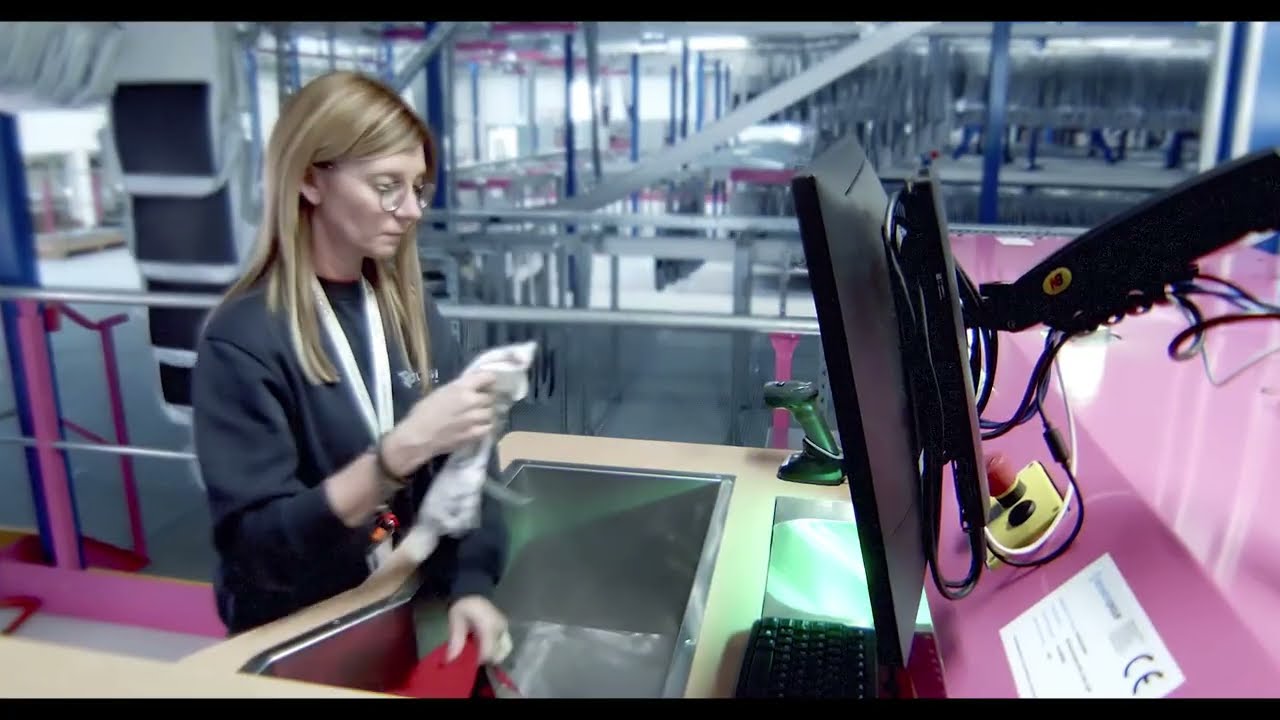
Calzedonia Group Italian Distribution Center Pouch System
Beumer Group
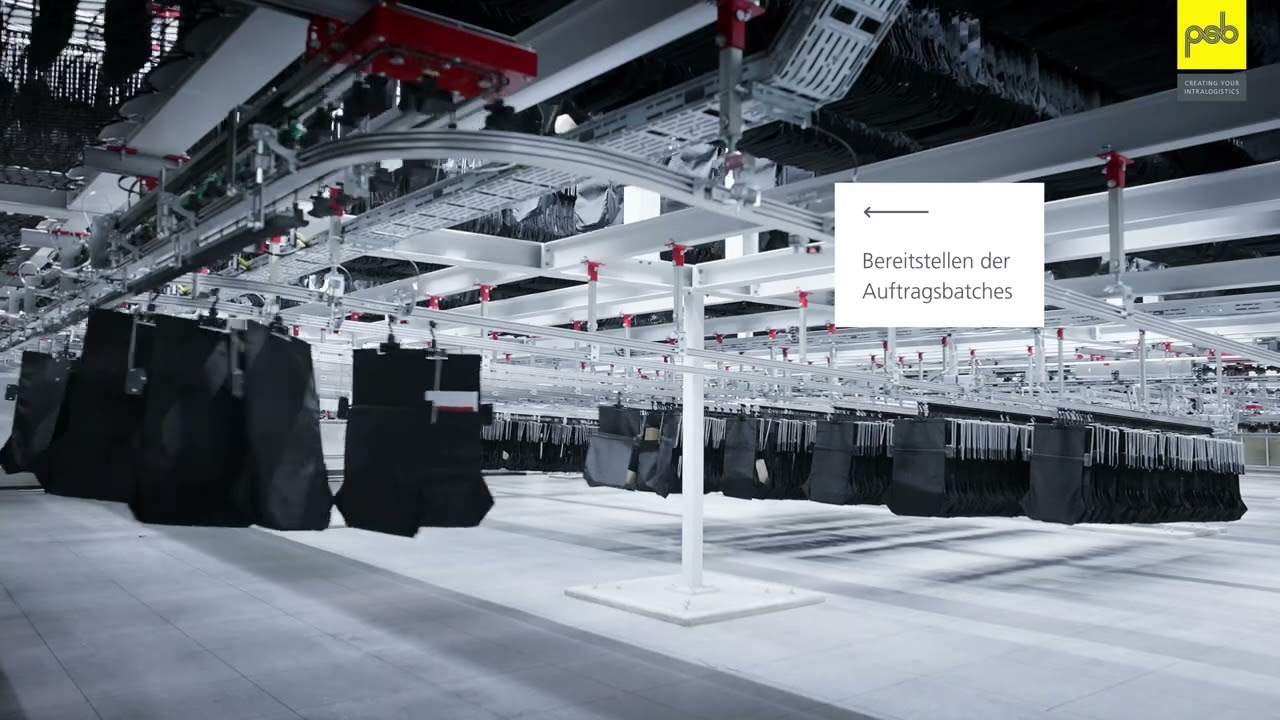
CEWE Stiftung - Oldenburg Production & Distribution Center Automation
psb intralogistics GmbH

Bastian Solutions Corporate Profile: Toyota Advanced Logistics
Bastian Solutions
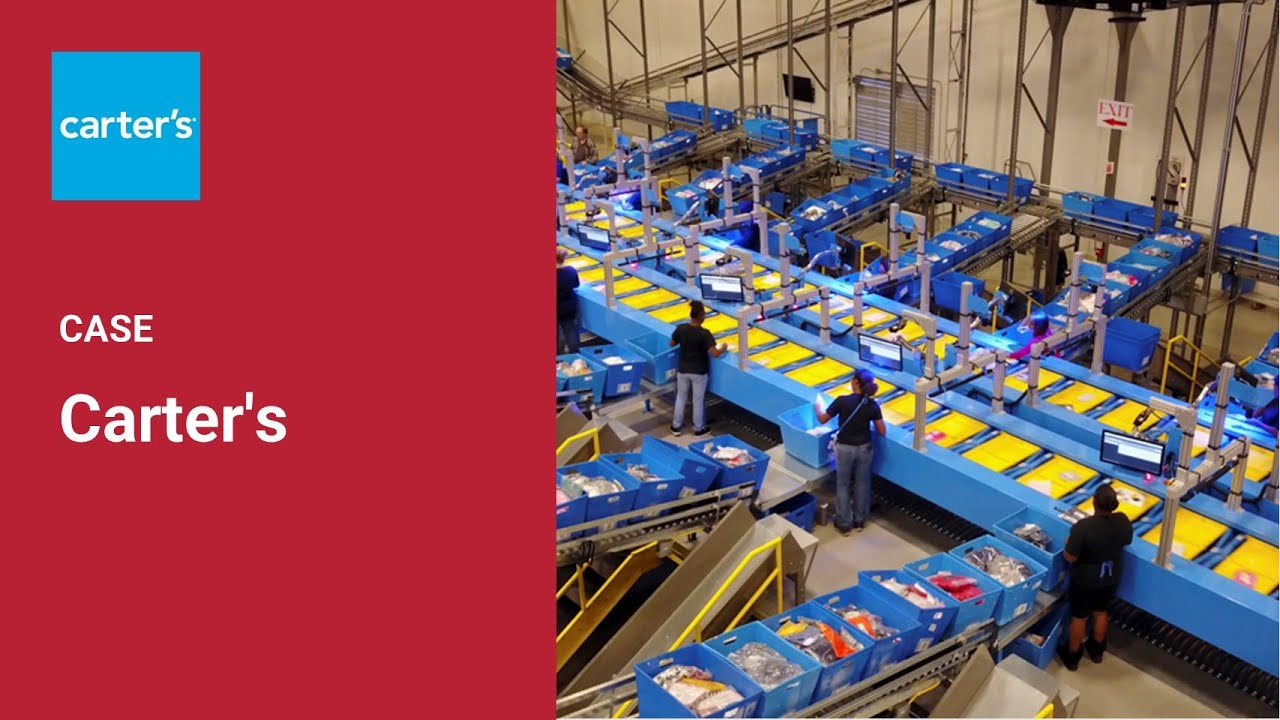
Carter's / OshKosh USA Distribution Center
Element Logic
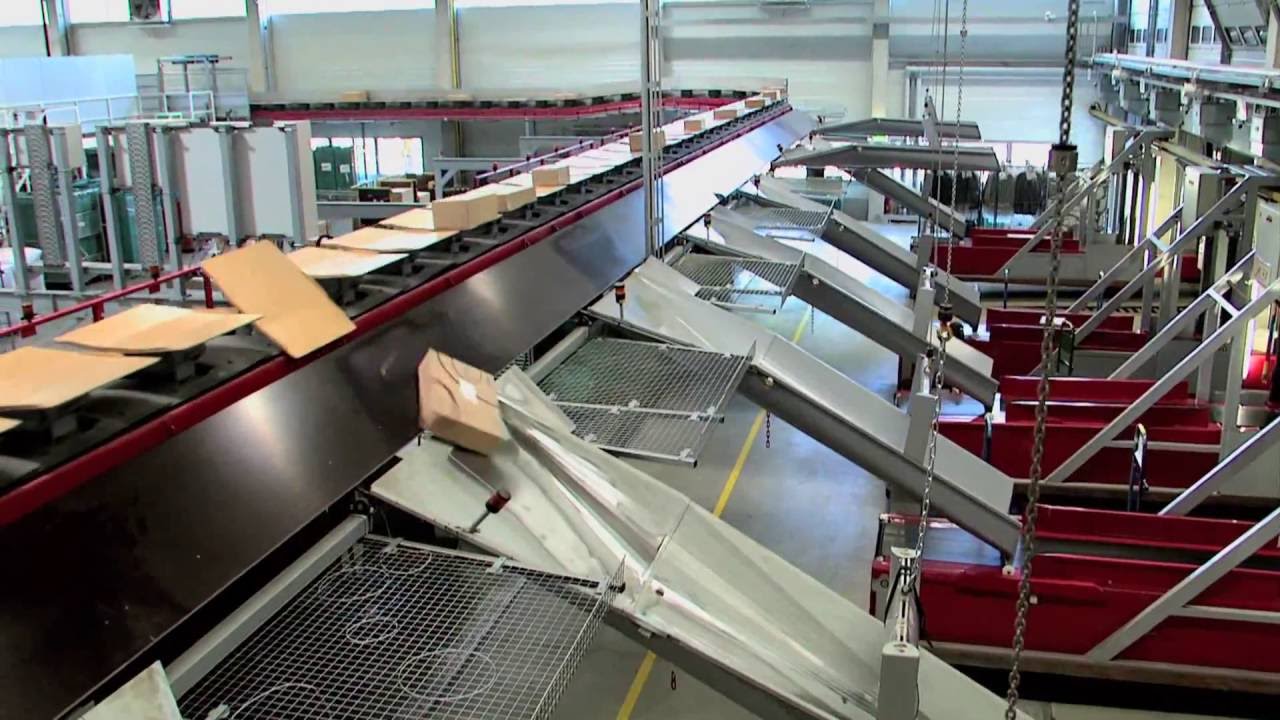
Witt-Gruppe Weiden Distribution Center
Beumer Group

Addverb 3PL Omnichannel Fulfillment Center
Addverb
Related Suppliers(3)

Manhattan Associates
Technology That Moves Life and Commerce Forward

Boston Dynamics
Advanced robotics company developing mobile robots for industrial automation and logistics applications.

Exotec
Elegant Solutions to Simplify Logistic Operations