Dual Split Tray (Bomb Bay) Sorter for Apparel E-Commerce
Quick Facts
Technology Performance Metrics
⭐Key Features
Benefits
Applications
Detailed Information
Technology Overview
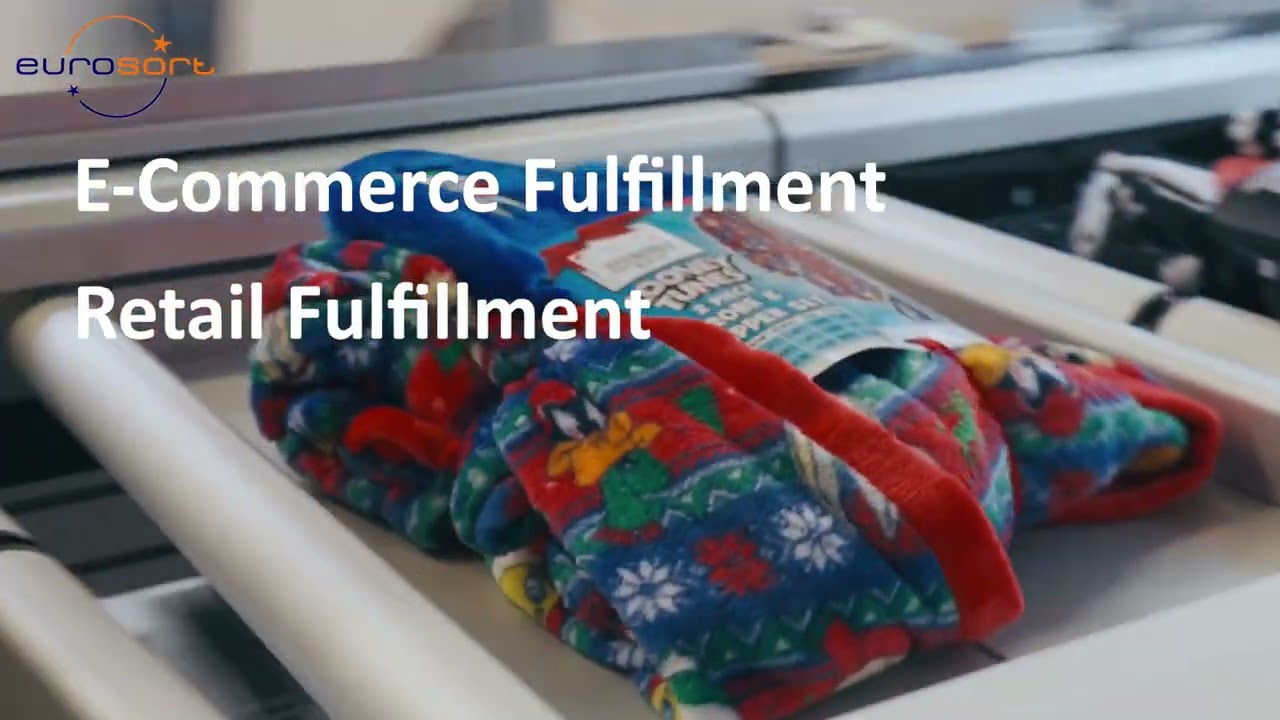
The Dual Split Tray Sorter, commonly known as a Bomb Bay Sorter, is a high-speed mechanical sortation system widely used in e-commerce and distribution environments. This specific implementation by EuroSort is showcased for apparel e-commerce fulfillment. The system is designed to efficiently consolidate batch-picked items into discrete customer orders. After workers pick multiple items for different orders in a batch (zone or wave picking), those items are brought to the sorter induction area. The sorter's role is to identify each item and route it to the specific destination (chute or tote) corresponding to its customer order. This technology is critical for achieving scalability and speed in direct-to-consumer logistics, particularly for high-volume sectors like fashion and apparel.
How It Works
Core Principles
The core principle is carrier-based sortation with a bottom-opening mechanism. Items are placed into individual carriers (trays) that travel along a fixed loop conveyor. At the predetermined discharge location for that item's order, the bottom of the tray splits open (like a bomb bay door), allowing the item to drop directly down into a designated order container or chute below.
Key Features & Capabilities
High-Speed Throughput: The system is rated for up to 14,400 items per hour. This high speed is achieved through continuous movement of many trays and rapid discharge action, making it suitable for peak e-commerce volumes.
Bomb Bay Discharge Mechanism: The dual split tray design provides a positive, reliable discharge. The item is contained until directly over the target, then drops cleanly and quickly, minimizing the risk of items bouncing or missing the chute, which is ideal for soft goods like apparel.
Customizable Discharge Chutes: The system features custom chutes that can be configured for different needs. Chutes can be designed to guide items directly into a shipping tote for a single order or into accumulation chutes that serve multiple orders sequentially, offering layout flexibility.
Advantages & Benefits
The primary benefit is the dramatic acceleration of the order consolidation process, which is a major bottleneck in batch-pick e-commerce operations. It reduces manual sorting labor, minimizes errors in order assembly, and increases overall fulfillment center throughput. The system's reliability and speed directly translate to faster order cycle times and the ability to handle higher daily order volumes, which is crucial for meeting customer delivery promises in competitive markets like apparel.
Implementation Considerations
The system's throughput is capped by its mechanical design and the speed of manual induction. Adding more induction stations can increase input but requires more labor. The system is best suited for lightweight, relatively uniform items like garments; very heavy, large, or fragile items may not be suitable. It is a fixed infrastructure investment, so future changes to the layout or order profile may require physical reconfiguration of the discharge chutes. A steady, high volume is required to justify the capital expenditure.
Use Cases & Applications
Ideal For
This technology is ideal for medium to large e-commerce retailers, omnichannel fulfillment centers, and 3PLs specializing in apparel, footwear, accessories, and other soft goods where order volumes are high and items are conducive to tray-based handling.
Performance Metrics
The key performance metric is the sortation rate: up to 14,400 items per hour. Other important metrics include induction accuracy, mis-sort rate, and system uptime. The efficiency gain is measured by the reduction in labor hours spent on manual order sorting and the increase in orders processed per day.
Conclusion
For apparel e-commerce operations struggling with manual order consolidation, the EuroSort Dual Split Tray Sorter offers a proven, high-speed automation solution. By reliably and rapidly sorting discrete orders, it eliminates a significant operational bottleneck, improves accuracy, and enhances scalability. While requiring a notable investment and being best suited for specific product types, its performance in handling high volumes of soft goods makes it a compelling choice for fashion retailers and fulfillment providers aiming to streamline their outbound logistics and meet the demands of modern online shopping.
Vendor
OthersRelated Technologies
Mini FlyPick Robot: Compact High-Speed Sorting AMR
Others
Sorting Technology Demonstration and Testing
EuroSort

Split Tray (Bomb Bay) Sorter Compilation: Versatile High-Speed Sortation
Others