Pallet Conveyor Handling Systems: Versatile Intralogistics Transport
Quick Facts
Technology Performance Metrics
⭐Key Features
Benefits
Applications
Detailed Information
Technology Overview
Pallet conveyor handling systems are the backbone of automated material flow for unit loads in modern warehouses and distribution centers. These systems provide a continuous, controlled method of moving pallets between critical nodes such as receiving docks, storage systems (like AS/RS), workstations, and shipping areas. Designed to handle the rigors of industrial environments, they replace manual forklift transport with a predictable, high-throughput, and space-efficient alternative. Their role is particularly crucial in large automated facilities, where they serve as the vital arteries connecting high-density storage with the rest of the operation, but their scalability makes them equally valuable in smaller, semi-automated settings.
How It Works
Core Principles
The core principle involves using a series of powered rollers, chains, or belts to create a defined path for pallets to travel. Pallets are placed onto the conveyor at an induction point and are propelled along the track. The system is controlled to route, merge, divert, and accumulate pallets based on signals from sensors and integrated warehouse management software.
Key Features & Capabilities
A defining feature is the availability of a full range of systems applicable to warehouses of all sizes, ensuring that both massive distribution centers and smaller operations can find a suitable automated transport solution. In large facilities, they serve as the ideal connection between stacker cranes (AS/RS) and entry/dispatch/handling areas, creating a seamless automated loop from dock to rack and back. Their highly configurable layouts are achieved by combining different conveyor elements, allowing engineers to design a system that fits the unique constraints and flow requirements of any building.
This modularity enables the creation of both simple circuits and complex networks, from a straight transport line to a multi-branch system with sortation. Furthermore, the systems include integrated buffer lines for accumulation, such as the example line shown with a capacity for four pallets, which is essential for decoupling processes and managing peaks in workflow.
Advantages & Benefits
These systems meet diverse intralogistics transport needs for palletized goods, providing a reliable and scalable alternative to variable manual handling. They enable efficient integration and workflow in automated warehouses by ensuring a constant, synchronized flow of goods to and from high-speed storage systems. The modular design provides flexibility to design custom transport circuits that optimize space and minimize travel distance. Crucially, they support workflow smoothing through integrated buffering and accumulation, preventing bottlenecks and allowing different areas of the warehouse to operate at their optimal pace.
Implementation Considerations
Considerations include the need for detailed facility layout planning to design an efficient conveyor path that avoids obstacles and minimizes turns. The system must be correctly sized for the expected peak throughput and pallet weight. Integration with the Warehouse Management System (WMS) and/or Warehouse Control System (WCS) is critical for automated routing and tracking. Installation can be complex, especially for extensive networks, requiring significant time and coordination.
Use Cases & Applications
Ideal For
These systems are ideal for medium to large warehouses and distribution centers with high pallet volumes, especially those employing Automated Storage and Retrieval Systems (AS/RS) where a high-speed, reliable connection to the storage system is non-negotiable.
Conclusion
Pallet conveyor handling systems from suppliers like Interlake Mecalux are a fundamental technology for achieving high levels of automation and efficiency in pallet-based logistics. Their versatility, from serving as simple transport lines to forming the complex circulatory system of a fully automated warehouse, makes them an indispensable component of modern intralogistics. By providing reliable, high-throughput transport and essential buffering capabilities, they directly contribute to increased throughput, reduced labor costs, improved safety, and better space utilization. For any operation looking to scale its pallet handling efficiently, investing in a well-designed conveyor system is a critical step.
Related Projects

Didactic - Normandy France Healthcare Storage Expansion with Pallet Shuttle
Mecalux designed a customized semi-automatic Pallet Shuttle solution for Didactic (Normandy, France) to address 92% storage capacity utilization, delivering 11,000 pallet capacity with FIFO/LIFO functionality for medical device distribution.
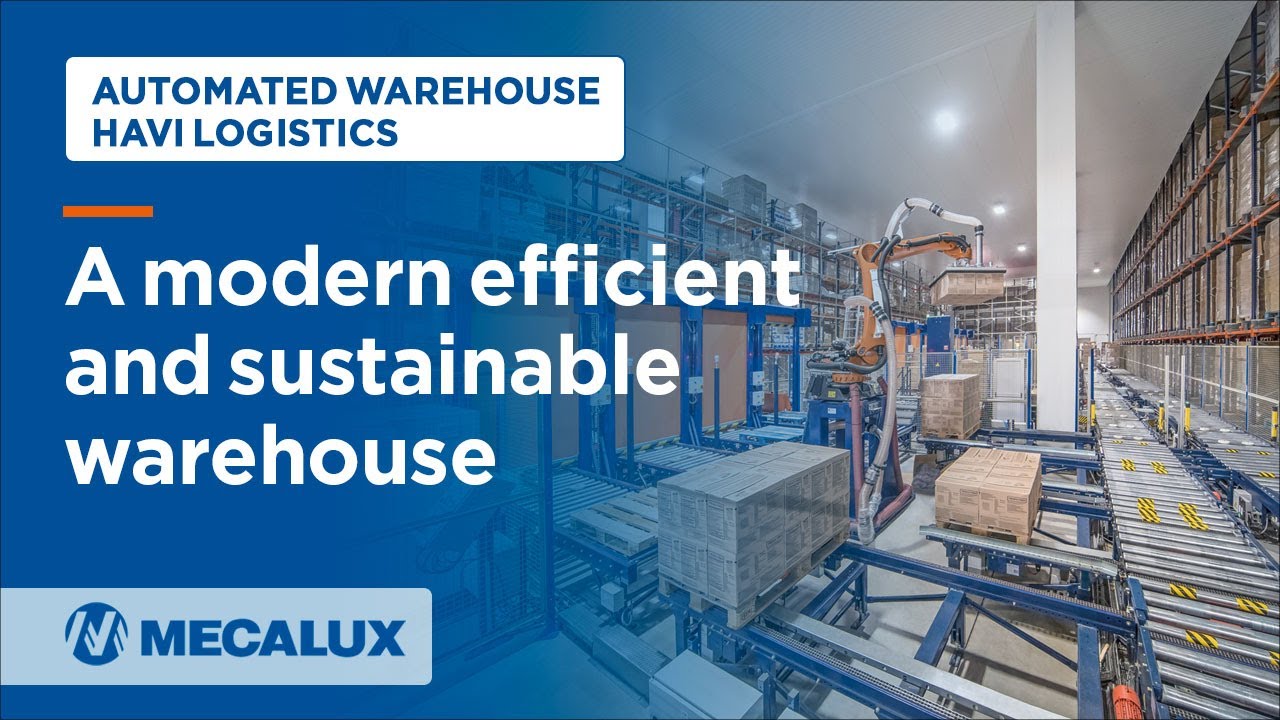
HAVI Lisbon Multi-Temperature Logistics Center
Mecalux delivers a multi-temperature logistics center for HAVI in Lisbon, Portugal, featuring two automated warehouses, Pallet Shuttle systems and Easy WMS integration, supporting daily supply to over 150 restaurants.

Michelin Vitoria Tire Plant Automated Warehouse
Mecalux delivers a 27-meter high automated clad rack warehouse for Michelin's Vitoria tire plant in Spain, supporting three production lines and a planned fourth with 4,600 container capacity and 120 containers per hour throughput.
Related Knowledge
Storage
Storage is the warehouse process of holding inventory in organized locations until needed, balancing space utilization, accessibility, and inventory control to support efficient operations.
Transport
Transport is the warehouse process of moving materials, products, and equipment between locations within the facility to support receiving, storage, picking, and shipping operations.
Cold Storage Strategy
Cold storage and temperature-controlled warehousing are critical for preserving perishable goods throughout the supply chain. From frozen foods to pharmaceuticals, these specialized facilities maintain precise temperature conditions while optimizing energy efficiency and operational performance.
Vendor
MecaluxRelated Technologies
Piolax Canton Georgia Automotive Parts Distribution Center
Daifuku
Meyer Corporation USA Cookware Distribution Center
Daifuku
Intralogistics Innovation Center: Integrated Solutions Showcase
Daifuku