Shigemasa Co., Ltd. Deploys MiR250 Hook AMR to Automate Cart Transport After Warehouse Expansion
⭐Key Features
- •MiR250 Hook autonomously identifies carts via April Tags and tows them from designated yard locations to shipping bases — no manual loading or unloading required
- •WMS / inventory system integration: the robot receives collection and delivery instructions directly from Shigemasa's inventory management system, enabling accurate, system-driven transport without manual mission assignment
- •No infrastructure changes required — no magnetic tape, floor markers, or layout modifications needed, enabling deployment into the existing warehouse without physical reconfiguration
- •Multi-device remote operation: the robot can be operated and monitored from iPads, PCs, or other terminals — eliminating the need to be physically present at a dedicated control station
- •Simple, one-click / one-touch user interface — mission instructions issued with a single touch, minimizing operator training requirements
- •Pre-installation verification at DAIKI ROBOTICS Robotics Lab in Osaka — cart jig attachment, dolly and frame simulation, and real-situation caster testing conducted before purchase commitment
- •Scalable platform: MiR's scalability was identified as an important factor for future expansion of the robot fleet as automation needs grow
- •Safety-certified autonomous navigation — laser scanners and 3D cameras enable safe operation alongside human workers without barriers
Results & Benefits
- Automated cart transport between yard and shipping base — replacing manual human-carried transport that became unsustainable after warehouse expansion increased transport distances significantly
- Labor reallocation: human workers freed from repetitive cart transport tasks to focus on work that only humans can do — consistent with Shigemasa's stated philosophy of 'letting robots do what robots can do, and letting people do what only people can do'
- WMS-integrated, system-driven transport operations — accurate inventory-status-aware cart collection and delivery without manual coordination
- No infrastructure change costs — deployment executed without magnetic tape installation, layout modification, or dedicated robot zones
- Multi-device operational flexibility — robot manageable from any terminal in the facility, eliminating the dedicated remote control constraint of competing solutions
- Pre-installation confidence — DAIKI ROBOTICS lab verification eliminated deployment risk by confirming safety and operational performance with Shigemasa's actual cart types before system purchase
Challenges & Solutions
The expansion of Shigemasa's warehouse significantly increased both the volume of products handled and the distances over which goods needed to be transported between the yard and the shipping base. The previous manual transport model — in which human workers carried goods — became operationally unsustainable as distances grew. The company faced a labor shortage relative to the increased transport demand, and identified a need to redirect human effort away from repetitive transport tasks toward work that genuinely requires human judgment and capability. The challenge was to find an automated transport solution that could handle the full cart towing cycle — collection, transport, and delivery — without manual loading or unloading at either end
The MiR250 Hook was selected as the solution because it is the only AMR-based cart transport system that automates the complete towing cycle without requiring manual intervention for cart attachment or detachment. The MiR Hook 250 top module autonomously identifies carts via April Tags, connects to them, tows them to the designated delivery location, and releases them — all without human assistance. This end-to-end automation of the transport cycle matched Shigemasa's requirement for genuine labor reduction rather than partial automation that still required human loading and unloading at each end
Shigemasa evaluated AGV and AMR solutions from multiple vendors before selecting MiR. The competing solutions presented two disqualifying constraints. First, AGVs and some AMRs required infrastructure changes — magnetic tape installation or layout modifications — that would have added cost and complexity to the deployment and reduced flexibility for future warehouse reconfiguration. Second, AMRs from other vendors required manual human intervention for loading and unloading at each cart pickup and delivery point, which did not meet Shigemasa's requirement for genuine labor reduction. A third operational requirement was the ability to integrate with Shigemasa's existing inventory management system to enable system-driven, inventory-status-aware transport missions — rather than manually assigned robot tasks
MiR was selected because it satisfied all three requirements simultaneously: no infrastructure changes (the MiR250 navigates autonomously without floor markers), no manual loading or unloading (the MiR Hook 250 autonomously connects to and releases carts via April Tag identification), and WMS integration capability (the robot receives and executes missions triggered by the inventory management system). The discovery of MiR's solution came through a video that Ritsuo Kosaka viewed — specifically the demonstration of an AMR with a towing hook — which he described as 'exactly what I was looking for,' leading to the decision to proceed with MiR
As a first-time AMR adopter, Shigemasa needed to validate the safety and operational performance of the MiR250 Hook with its specific cart types — including frames and dollies with casters — before committing to the purchase. Standard product demonstrations or specification sheets were insufficient to confirm that the system would perform reliably with Shigemasa's actual equipment in real operating conditions. The risk of deploying an unverified system in a live warehouse environment — where unexpected behavior could disrupt operations or create safety incidents — was a significant concern
DAIKI ROBOTICS, MiR's local partner in Japan, conducted a pre-installation verification at the DAIKI ROBOTICS Robotics Lab in Osaka. The verification involved attaching jigs to Shigemasa's actual frames and dollies, and simulating real-situation caster behavior to confirm that the MiR250 Hook could reliably connect to, tow, and release Shigemasa's specific cart types. The verification also demonstrated setup speed and confirmed safety performance. According to Masaru Takemura, this on-site verification was 'a major factor in their understanding of the safety and operational aspects of the system' and was decisive in Shigemasa's purchase decision
Project Overview
Project Overview
Shigemasa Co., Ltd., a machinery parts and tools supplier founded in 1954 in Fukuyama-shi, Hiroshima, Japan, deployed a MiR250 Hook autonomous mobile robot to automate internal cart transport operations following a warehouse expansion. The expansion significantly increased both the volume of products handled and the distances over which goods needed to be moved between the yard and the shipping base — making the previous manual transport model operationally unsustainable.
The MiR250 Hook — combining the MiR250 AMR base with the patented MiR Hook 250 top module — autonomously identifies carts via April Tags, connects to them, tows them from designated yard locations to designated shipping base locations, and releases them, all in response to instructions from Shigemasa's inventory management system. The deployment was implemented with the support of DAIKI ROBOTICS, MiR's local partner in Japan, who conducted pre-installation verification at their Robotics Lab in Osaka before the system went live.
The case was published by Mobile Industrial Robots on August 1, 2024, and is documented on the official MiR case study page at mobile-industrial-robots.com/cases/shigemasa.
Related Technologies (6)
MiR MC600 Mobile Cobot: Advanced Collaboration in Motion for Intralogistics and Production Workflows
byMiR
Mecalux Autonomous Mobile Robots (AMRs): Flexible and Intelligent Warehouse Transport
byMecalux
Fox Robotics FoxBot ATL Mark 3: Next-Generation Autonomous Trailer Loader/Unloader with Bidirectional Dock Automation
byFox Robotics
Brightpick Gridpicker: The Fastest and Highest-Throughput AI Warehouse Robot Ever Developed
byBrightpick
Brightpick Gridpicker: The Fastest and Highest-Throughput AI Warehouse Robot Ever Developed
byBrightpick
Autopicker: AI-Powered Mobile Picking Robot
byBrightpick
Related Knowledge Articles (3)
Multi-Robot Orchestration
Intelligent fleet management systems that coordinate multiple autonomous robots to work together efficiently, optimizing task allocation, traffic management, and resource utilization across complex warehouse environments.
Sorting Robot
Sorting Robots use mobile autonomous robots equipped with intelligent vision systems and manipulation capabilities to sort packages, parcels, and items with exceptional flexibility. These systems combine AMR technology with advanced AI to enable dynamic sortation without fixed infrastructure, adapting to changing operational needs and handling diverse item types with human-like dexterity.
Mixed Case Fulfillment Strategy
Mixed case fulfillment is a sophisticated warehouse strategy that handles orders containing multiple different products (SKUs) within the same case, pallet, or shipment. This approach requires advanced automation, intelligent software, and flexible processes to efficiently pick, pack, and ship diverse product combinations while maintaining high accuracy and productivity.
Related Projects
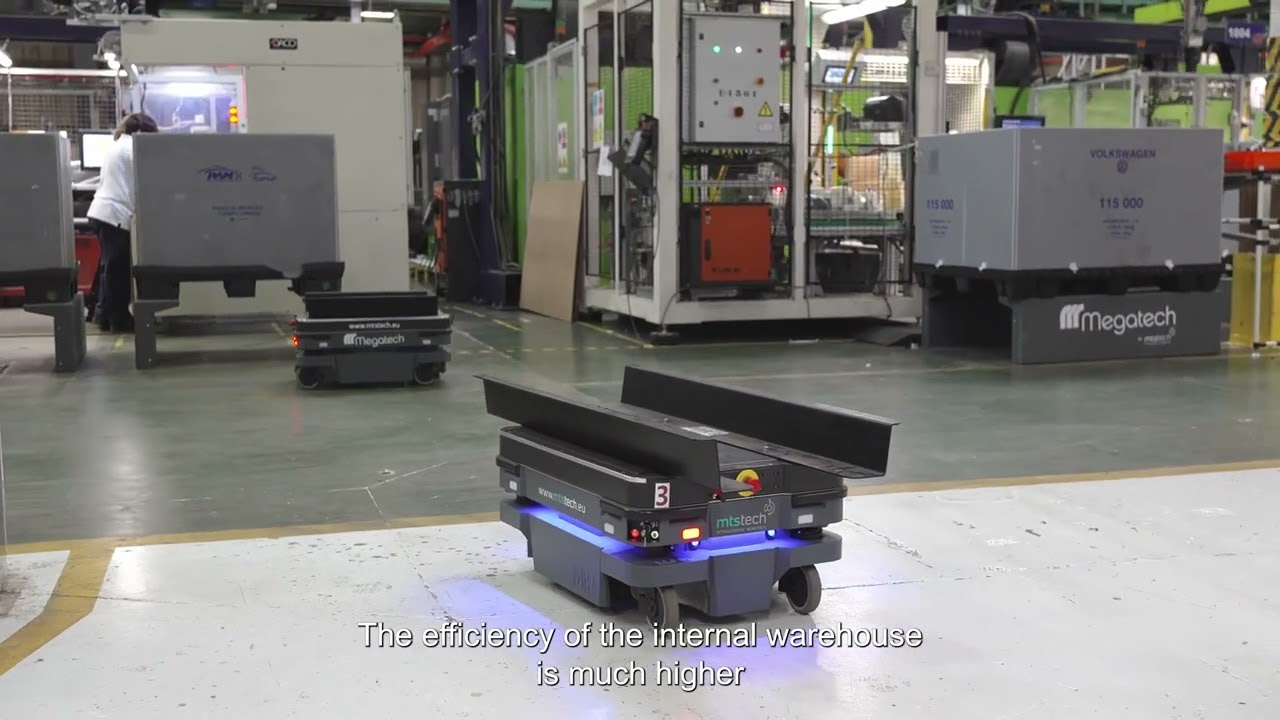
Megatech Industries Deploys 4 MiR250 AMRs to Automate Internal Logistics in Automotive Plastics Manufacturing
MiR

AirRob System: Boosting Deployment Efficiency and Multi-Category Sorting in Japan — Second Deployment
Libiao Robotics
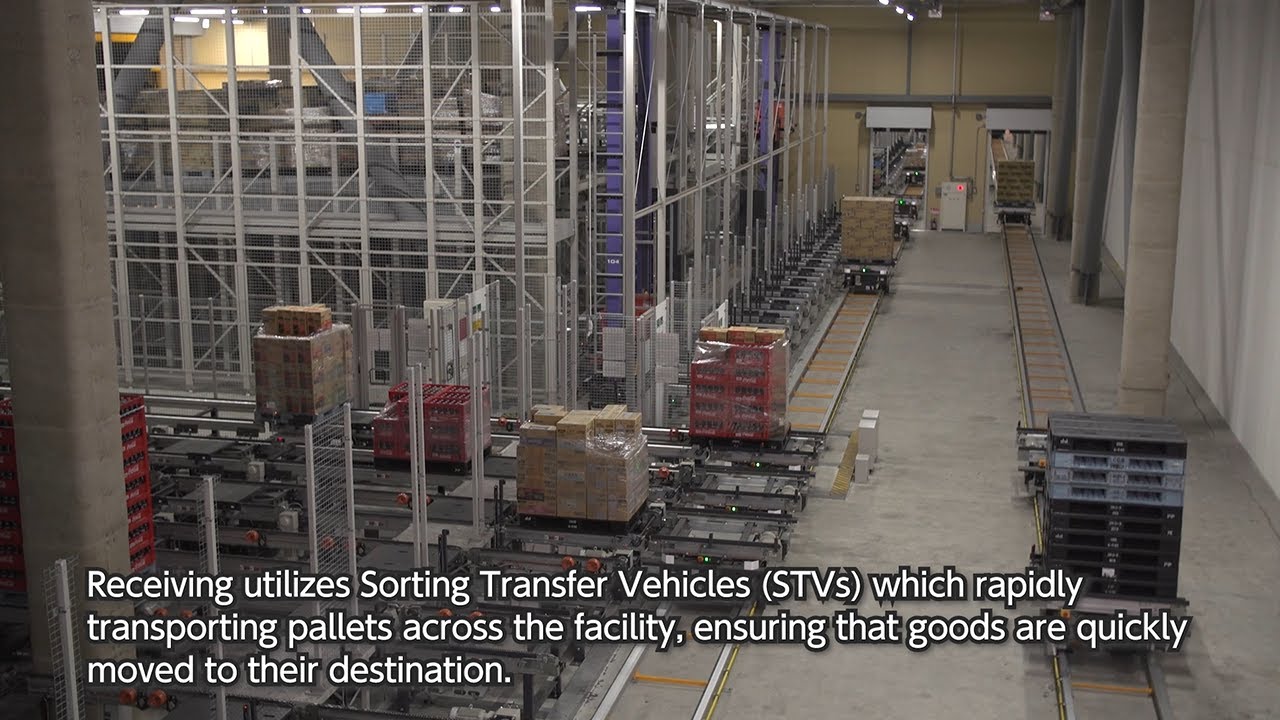
Coca-Cola Bottlers Japan Akashi Mega Distribution Center
Daifuku