Fox Robotics FoxBot ATL Mark 3: Next-Generation Autonomous Trailer Loader/Unloader with Bidirectional Dock Automation
Quick Facts
Technology Performance Metrics
⭐Key Features
Detailed Information
Product Overview
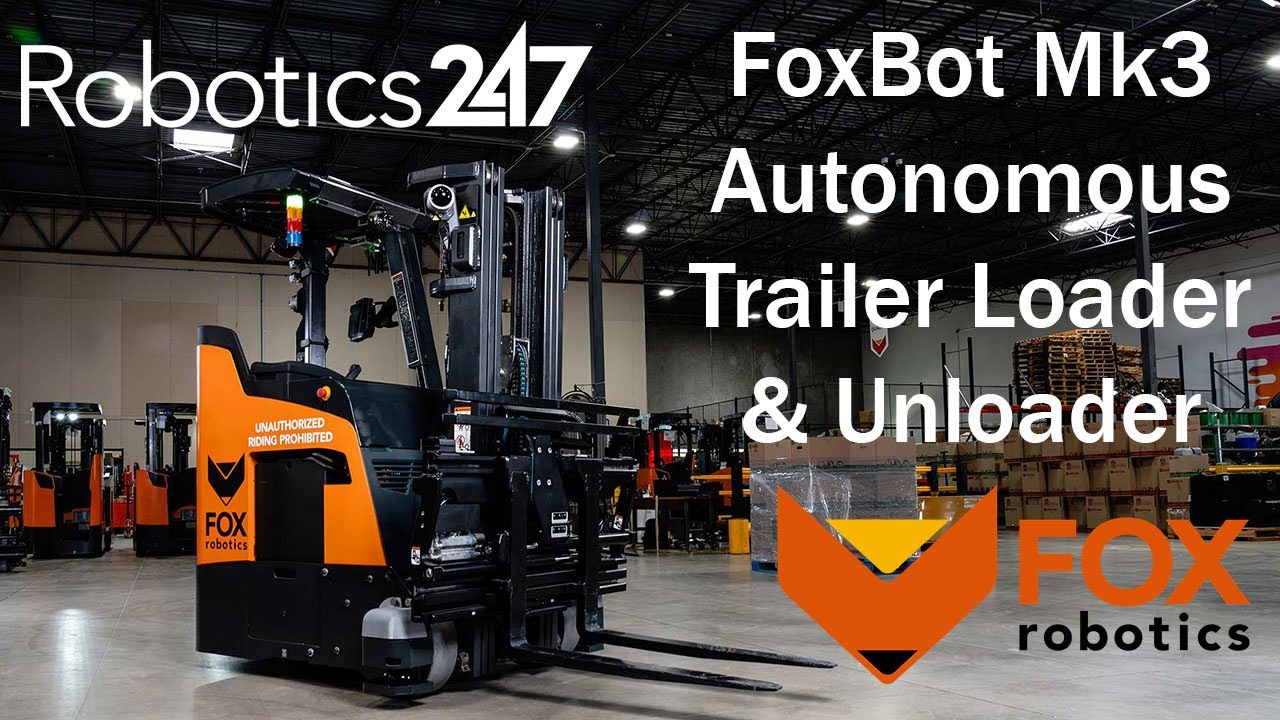
Fox Robotics introduced the FoxBot ATL Mark 3 (Mk3) on February 6, 2025, with a 63-second product launch video, followed by a full press release and ProMat 2025 debut on March 12, 2025. The Mk3 is the third generation of the FoxBot autonomous trailer loader/unloader — a Class 1 three-wheeled counterbalance electric forklift equipped with safety-certified sensors, deep learning vision, and proprietary firmware — and represents the most significant capability expansion in the FoxBot product line's history.
The defining advancement of the Mk3 is the addition of autonomous trailer loading to the existing unloading capability, enabling full bidirectional dock automation from a single robot platform. Combined with three other major new capabilities — auto-adjusting fork tines, an expanded sensor suite, and new software integrations connecting the dock to WMS, conveyor, and ASRS systems — the Mk3 transforms the FoxBot from an inbound-only dock automation tool into a comprehensive autonomous dock workflow platform.
Fox Robotics was founded in 2017 in Austin, Texas, and introduced the original FoxBot autonomous trailer unloader in 2018 — the first autonomous forklift capable of unloading pallets from trailers. By the time of the Mk3 launch, the company had deployed over 115 FoxBot ATLs across more than 50 customer sites in the USA and Canada, completing over 5 million lifetime pallet pulls in customer facilities. Named customers include DHL Supply Chain, Walmart, and BJ's Wholesale Club. The company is backed by BMW i Ventures and Zebra Technologies Corp. Manufacturing of the FoxBot Mk3 is handled by KION North America — manufacturer of Linde Material Handling equipment — at its Summerville, South Carolina facility, under a non-exclusive strategic partnership announced in May 2024.
System Integrator Note
System Integrator: N/A — Fox Robotics Direct Deployment
Fox Robotics deploys the FoxBot ATL directly to end customers without third-party system integrator involvement. The system connects via cellular and Wi-Fi networks and is designed to be operational within hours of arrival at a customer site — a rapid deployment model that does not require extended installation, infrastructure modification, or multi-party project coordination. Manufacturing and assembly of the Mk3 hardware is handled by KION North America under a non-exclusive partnership, but customer-facing deployment and support are managed directly by Fox Robotics.
Industry Context: The Loading Dock Automation Gap
The warehouse loading dock is simultaneously one of the most critical and most difficult areas to automate. It sits at the intersection of the controlled warehouse interior and the uncontrolled exterior world — where trailer interiors vary by manufacturer, condition, and load configuration, where pallets may be oriented in any direction and stacked in multiple configurations, and where the operating environment changes with every trailer that backs into the dock.
This variability is precisely what has made the loading dock resistant to conventional automation. AGVs and early autonomous mobile robots that navigate predictable warehouse floors cannot handle the chaotic interior of an unfamiliar trailer. Traditional fixed automation — conveyors, robotic palletizers — stops at the dock door. The gap between the trailer and the warehouse automation infrastructure has historically required a human forklift operator to bridge it.
Fox Robotics built its entire product line around closing this gap. The original FoxBot (2018) was the first autonomous forklift capable of entering a trailer, identifying pallets using computer vision and LiDAR, and unloading them to a receiving dock — a capability that no other company had achieved at commercial scale. The Mk2 refined this capability and expanded the deployment base. The Mk3 closes the remaining half of the dock automation problem by adding loading, and connects the dock to the broader warehouse automation infrastructure through WMS, conveyor, and ASRS integrations.
Technical Solution
FoxBot ATL Mark 3 Platform
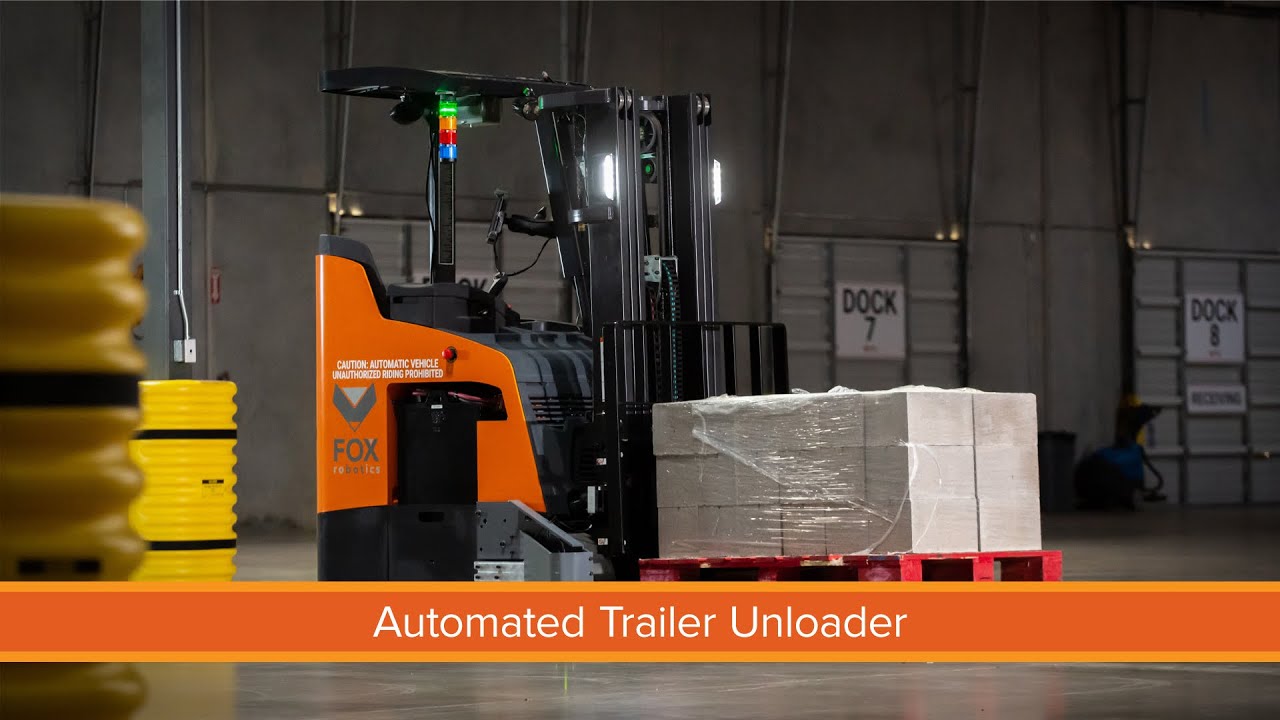
The FoxBot Mk3 is built on a standard three-wheeled Class 1 counterbalance electric forklift base — the same category of forklift used by human operators for pallet handling at loading docks. Fox Robotics equips this base with a suite of safety-certified sensors and proprietary firmware, transforming it into a fully autonomous system that requires no human operator during pallet handling cycles.
The sensor suite on the Mk3 has been expanded relative to earlier generations to provide 360-degree monitoring and improved dynamic tracking of the warehouse environment. The system combines LiDAR sensors (for spatial mapping, obstacle detection, and navigation) with multiple cameras (for pallet identification, pocket detection, and obstacle avoidance) to create a comprehensive real-time perception of the dock environment. The Mk3 operates down to 14°F (−10°C), making it suitable for cold storage and refrigerated dock environments.
Deep Learning Vision System
The FoxBot's perception system is powered by deep learning-trained visual models that identify pallets, detect pallet pockets, and recognize obstacles in real time. The critical capability this enables is generalization: the FoxBot can pick pallets in any orientation from trailers it has never previously encountered, using trained perception models that handle the variability of real-world trailer interiors without requiring pre-configuration for specific trailer types. The system handles single-stacked, double-stacked, pyramid-loaded, and plastic-wrapped pallets, as well as both block and whitewood pallet formats.
Auto-Adjusting Fork Tines
A new hardware innovation in the Mk3 is auto-adjusting fork tines, driven by new cameras built into the robot's mast. These cameras identify the width of pallet pockets and automatically adjust the fork tine spacing to match — enabling the robot to pick pallets in any orientation without manual fork repositioning. This capability is particularly valuable in industrial and manufacturing warehouse environments where pallet configurations and load profiles vary more widely than in standardized retail distribution settings.
Bidirectional Dock Automation
The Mk3's trailer loading capability — new in this generation — enables the robot to pick pallets from a staging area or elevated conveyor, transport them to the trailer, and load them in the correct position. Combined with unloading, this creates a fully automated dock workflow: the FoxBot can handle the complete inbound and outbound pallet cycle at the dock without human forklift operator involvement.
The Mk3 unloads over 50 double-stacked or 25 single-stacked 40×48 pallets per hour — a throughput rate that Fox Robotics positions as competitive with or superior to human forklift operators, without the fatigue, shift change interruptions, or injury risk associated with manual dock operations.
Software Integrations and Fleet Management
The Mk3 introduces new software integrations that connect the FoxBot to the broader warehouse automation ecosystem. The robot can interface with warehouse management systems (WMS) for fleet-level coordination, pick up and drop off pallets from elevated conveyors, and automatically move pallets between ASRS systems and conveyors. A fleet of Mk3 units can be managed collectively through Fox Robotics' fleet management software, with cellular and Wi-Fi connectivity enabling remote monitoring and deployment configuration.
Key Performance Metrics
Throughput: Over 50 double-stacked or 25 single-stacked 40×48 pallets per hour — enabling high-velocity dock operations without human forklift staffing.
Battery Life: 16–18 hours per charge — enabling multi-shift autonomous operation without mid-shift recharging interruptions.
Operating Temperature: Down to 14°F (−10°C) — qualifying for cold storage and refrigerated distribution environments.
Deployment Speed: Hours — connects via cellular or Wi-Fi and is operational within hours of arrival at the customer site.
Fleet Scale: Over 115 units deployed at 50+ sites across the USA and Canada with 5+ million lifetime pallet pulls (at time of Mk3 launch).
Competitive Positioning
Fox Robotics holds a uniquely strong competitive position in autonomous dock automation by virtue of being the category creator. The company introduced the first autonomous trailer unloader in 2018 — seven years before the Mk3 launch — and has built a production track record of 115+ deployed units and 5+ million pallet pulls that no competitor has matched at the loading dock. This track record represents both a commercial validation of the technology and a data asset: the perception models trained on millions of real-world pallet pulls in diverse trailer environments are progressively more capable than models trained on smaller production datasets.
The Mk3's bidirectional capability closes the most significant remaining gap in the FoxBot's competitive positioning — the limitation to inbound-only automation. With loading added, the FoxBot can now automate the complete dock workflow, removing the last manual forklift dependency at sites that had already deployed FoxBots for unloading. The auto-adjusting forks and expanded sensor suite extend the addressable market into manufacturing and industrial distribution environments where pallet and load variability is higher than in standardized retail distribution. businesswire.com
Company Context: Fox Robotics
Fox Robotics was founded in 2017 in Austin, Texas, by a team combining expertise in robotics, machine learning, optimization, and planning. The company introduced the original FoxBot autonomous trailer unloader in 2018 — the world's first autonomous forklift capable of unloading pallets from trailers — and has since built the FoxBot into the most widely deployed autonomous dock automation platform in the industry.
The company is backed by BMW i Ventures and Zebra Technologies Corp. In May 2024, Fox Robotics announced a non-exclusive strategic partnership with KION North America (manufacturer of Linde Material Handling equipment) for manufacturing and assembly of FoxBot ATLs at KION NA's Summerville, South Carolina facility — a partnership that strengthens the manufacturing capacity and supply chain resilience behind the Mk3 launch.
Named customers include DHL Supply Chain (handling 90% of inbound freight at a distribution center with FoxBots), Walmart (19 FoxBots deployed across distribution centers under a multi-year partnership), and BJ's Wholesale Club. More information is available at foxrobotics.com.
Note on Data Availability
The performance metrics and fleet statistics cited in this document are drawn from the Fox Robotics YouTube video published February 6, 2025 (video description) and the official Fox Robotics press release published March 12, 2025 via BusinessWire. The "115 FoxBot ATLs" and "5 million pallet pulls" figures are from the February 2025 video description; the "50+ sites" and "6 million pallet pulls" figures are from the March 2025 press release. These are Fox Robotics' own published claims. This is a product launch video rather than a named customer case study; named customer deployment details are documented in separate Fox Robotics case study videos, including the DHL Supply Chain case study available on the Fox Robotics YouTube channel.
Related Projects
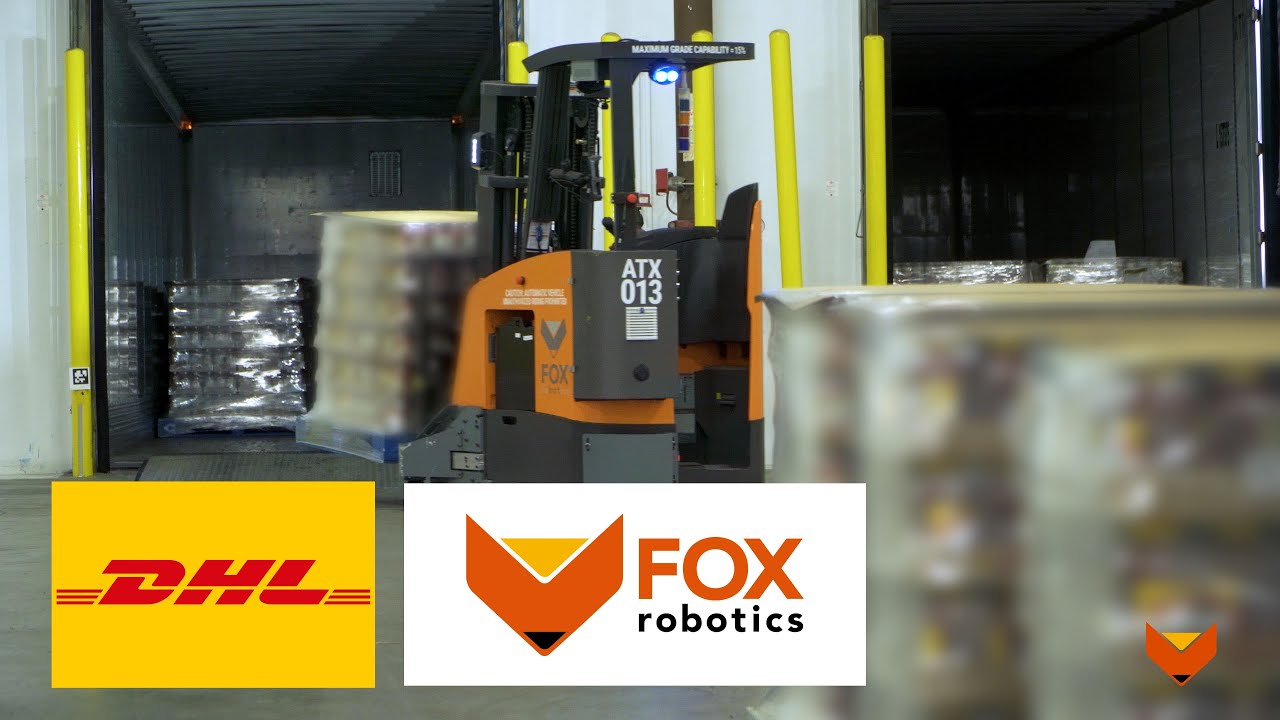
DHL Supply Chain FoxBot Autonomous Forklift Deployment – Louisville Distribution Center
DHL Supply Chain deployed Fox Robotics' FoxBot autonomous forklifts at its Louisville distribution center to address staffing challenges, with the robots now handling 90% of all inbound freight autonomously while significantly reducing product damage claims.
Dongfeng Motor R&D Center Smart Logistics Warehouse
A compact 470㎡ intelligent warehouse with 15-level high-density storage supporting 10,000+ SKUs for automotive R&D supply chain optimization.
Vendor
Fox RoboticsRelated Technologies
Supplier Profile

Fox Robotics
Robots That Work.