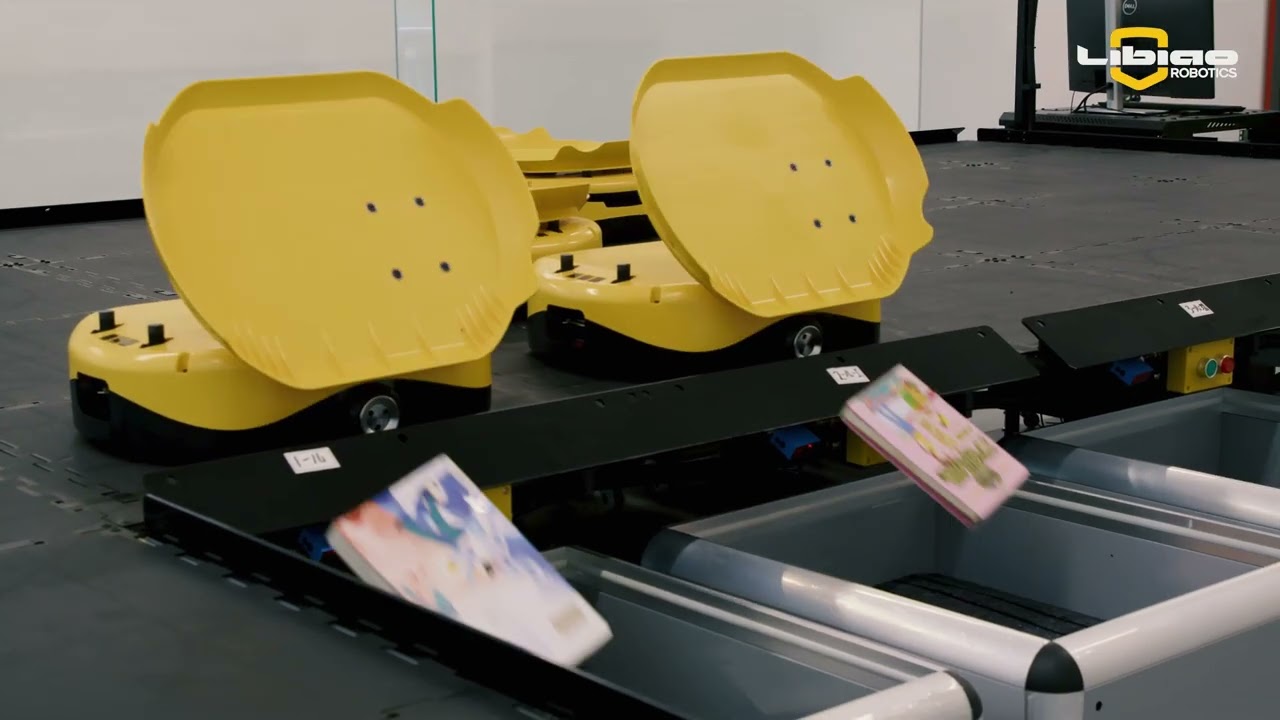
AirRob System: Boosting Deployment Efficiency and Multi-Category Sorting in Japan — Second Deployment
⭐Key Features
- •Second AirRob system deployment in Japan — validating platform repeatability in the Japanese market
- •Fast deployment execution — rapid go-live from project initiation to operational status
- •Multi-category sorting capability — handling a wide variety of item types and sizes on a single platform
- •Streamlined logistics operations replacing manual or less efficient sorting workflows
- •Enhanced productivity across fulfillment and distribution workflows
- •Significant impact on logistics performance — throughput and operational efficiency improvements
- •Scalable AirRob platform architecture — expandable as sorting volume grows
- •Demonstrates Libiao Robotics' growing Japan market presence with sequential deployments
Results & Benefits
- Second AirRob system live and operational in Japan
- Fast deployment timeline achieved from project initiation to go-live
- Multi-category sorting capability validated in Japanese logistics environment
- Streamlined operations replacing previous manual or conventional sorting workflows
- Enhanced productivity and logistics performance improvements confirmed
- Japan market sequential deployment milestone established for Libiao Robotics
Challenges & Solutions
Multi-category logistics operations — handling a wide variety of item types, sizes, weights, and packaging formats within a single sorting workflow — present a fundamental challenge for automation systems designed around uniform item profiles. Conventional sorting systems optimized for a narrow item range struggle to maintain throughput and accuracy when confronted with the diverse product mix that characterizes general merchandise distribution, e-commerce fulfillment, and multi-category logistics operations. Manual sorting can accommodate item diversity but at the cost of speed, accuracy, and labor efficiency
The AirRob system is engineered for broad item profile compatibility, enabling reliable automated sorting across the wide variety of items that characterize multi-category logistics operations. The system's design accommodates diverse item types and sizes within a single automated platform — eliminating the need for separate sorting lines or manual handling exceptions for non-standard items. This multi-category capability is the defining operational advantage of the AirRob platform in the Japanese logistics context, where distribution operations frequently handle mixed product categories within the same facility
The Japanese logistics market has specific requirements around deployment speed, operational reliability, and system integration that international automation providers must address to succeed. Lengthy deployment timelines create operational disruption, extend the period before ROI is realized, and increase project risk. For Japanese logistics operators accustomed to high service quality standards and minimal operational disruption, the ability to deploy and commission automation systems rapidly is a critical selection criterion — and a common pain point with complex automation projects that require extended installation and commissioning periods
The AirRob system's deployment efficiency is explicitly highlighted as a key value driver in this case. The fast deployment capability enables Japanese logistics operators to transition from conventional operations to automated sorting with minimal disruption and a compressed timeline from project decision to operational go-live. This deployment speed advantage is particularly significant in the Japanese market context, where operational continuity and project execution reliability are highly valued. The fact that this is Libiao's second AirRob deployment in Japan — following the first deployment documented in the company's video library — demonstrates that the deployment model has been refined and validated for the Japanese market
Japan's logistics sector faces acute structural labor challenges — an aging workforce, persistent labor shortages in warehouse and distribution roles, and rising labor costs — that are more severe than in most other major markets. Japanese logistics operators are under sustained pressure to automate manual sorting and handling operations to compensate for labor availability constraints and to maintain service quality as workforce demographics shift. The combination of labor scarcity and high operational quality standards creates strong demand for automation solutions that can reliably replace manual sorting without compromising the accuracy and consistency that Japanese logistics customers expect
The AirRob system addresses Japan's labor challenge by automating the sorting workflow with a platform that delivers consistent, high-accuracy performance independent of workforce availability. The system's multi-category capability ensures that automation covers the full breadth of items in the sorting workflow — not just a subset that can be handled by narrow-profile systems — maximizing the labor displacement benefit. The productivity enhancement confirmed in this deployment demonstrates that the AirRob platform delivers the operational quality standard that Japanese logistics operators require as a prerequisite for automation adoption
Project Overview
Project Overview
This case study documents the second AirRob system deployment by Libiao Robotics in Japan, published on February 6, 2025. The deployment is notable on two dimensions: it confirms the repeatability of the AirRob platform in the Japanese market — with a second customer adopting the system following the first Japanese deployment documented in Libiao's video library — and it highlights two specific operational value drivers that define the AirRob's positioning in Japan: fast deployment execution and multi-category sorting capability.
The client is not named in the published video description. The deployment is positioned as a transformative logistics efficiency improvement for a Japan-based logistics operator, with the video framing the AirRob system as a solution that "streamlines operations and enhances productivity" and makes "a significant impact on logistics performance." These qualitative benefit descriptions, while lacking specific quantitative metrics, are consistent with the operational outcomes documented in Libiao's broader AirRob Japan portfolio — which includes at least three Japan-market videos in the channel library (the first AirRob deployment, the second deployment covered here, and an "AirRob: Mastering Multitasking in Japan" short).
The AirRob system represents a distinct product line within the Libiao Robotics portfolio, separate from the Yellow Robot sorting platform and the T-sort conveyor-based system. The AirRob's positioning around multi-category handling and deployment speed differentiates it from the Yellow Robot platform's high-volume homogeneous item sorting strength, making it particularly well-suited to the diverse item profiles and operational flexibility requirements of Japanese general logistics and distribution operations.
Technical Solution
AirRob System Architecture
The AirRob is Libiao Robotics' multi-category sorting platform, designed for operational environments where item diversity, deployment speed, and operational flexibility are the primary requirements. Unlike the Yellow Robot platform — which operates on a flat grid optimized for high-volume homogeneous item sorting — the AirRob system is engineered to handle a wide variety of item types and sizes within a single automated sorting workflow.
The system's multi-category capability is its defining technical characteristic. The AirRob can sort items across diverse product categories — different sizes, weights, packaging formats, and handling requirements — without requiring item-specific hardware configurations or manual exception handling for non-standard items. This breadth of item compatibility is the critical enabler for adoption in Japanese logistics environments where product diversity is the norm rather than the exception.
Fox Robotics FoxBot ATL Mark 3: Next-Generation Autonomous Trailer Loader/Unloader with Bidirectional Dock Automation
Vendor: Fox Robotics
Key Features
Second Japan Deployment — Market Validation The sequential nature of Libiao's AirRob deployments in Japan is a significant market signal. A second customer adopting the same platform in the same market within a short timeframe indicates that the first deployment delivered results that generated positive market reference — and that Libiao Robotics has established sufficient local presence and support capability to execute repeat deployments in Japan with confidence.
Fast Deployment Execution The deployment speed advantage is one of two explicitly stated value drivers in the video description. For Japanese logistics operators, fast deployment translates directly to earlier ROI realization, reduced operational disruption during the transition period, and lower project execution risk. The AirRob's ability to go live quickly — relative to more complex automation systems — makes it accessible to operators who cannot accommodate extended installation and commissioning timelines.
Multi-Category Sorting Capability The ability to sort a wide variety of items is the other explicitly stated value driver. This capability directly addresses the item diversity challenge that has historically limited automation adoption in Japanese general logistics operations. By handling diverse product categories on a single automated platform, the AirRob eliminates the need for manual exception handling and enables automation coverage across the full breadth of the sorting workflow.
Streamlined Operations and Enhanced Productivity The deployment delivers the operational outcomes that Japanese logistics operators require to justify automation investment: streamlined sorting workflows that reduce manual labor dependency and enhanced productivity that improves throughput per labor hour. These outcomes are particularly valuable in the Japanese market context, where labor scarcity makes productivity improvement a strategic priority rather than simply a cost optimization exercise.
Results & Benefits
Operational Outcomes:
- Second AirRob system live and operational in Japan
- Fast deployment timeline achieved — rapid transition from project initiation to operational go-live
- Multi-category sorting capability validated across the client's item profile
- Streamlined logistics operations replacing previous manual or conventional sorting workflows
- Enhanced productivity confirmed — significant impact on logistics performance
- Continuous automated sorting operation reducing manual labor dependency
Strategic Outcomes for Libiao Robotics:
- Japan market sequential deployment milestone — second AirRob installation confirms platform repeatability
- Growing Japan market reference base supporting future customer acquisition
- AirRob platform validated for Japanese logistics operational requirements and item diversity
- Local deployment and support capability demonstrated through successful second execution
Challenges & Solutions
The Japan AirRob deployment addresses three converging challenges that define the automation opportunity in Japanese logistics: the item diversity barrier that has historically prevented automation from covering the full sorting workflow, the deployment speed requirement that reflects Japan's operational culture and project risk management priorities, and the structural labor shortage that is the primary driver of automation investment urgency across the Japanese logistics sector.
The AirRob platform's design directly addresses all three. Multi-category capability eliminates the item diversity barrier. Fast deployment architecture meets Japan's operational continuity requirements. And the productivity enhancement delivered by automated sorting addresses the labor shortage challenge by reducing dependence on a workforce that is structurally constrained in availability and growing in cost.
Related Technologies (6)
The Frozen Revolution: How Mini Yellow Robots Are Reshaping Cold Storage Logistics
byLibiao Robotics
Fox Robotics FoxBot ATL Mark 3: Next-Generation Autonomous Trailer Loader/Unloader with Bidirectional Dock Automation
byFox Robotics
Brightpick Autopicker Lights-Out Warehouse: Fully Automated Night Shifts with Zero Incremental Labor Cost
byBrightpick
3D Sorting System for World-Renowned Footwear & Apparel Brand — Libiao Robotics
byUnknown
FoxBot Mk3: Third-Generation Autonomous Trailer Loader/Unloader
byFox Robotics
Sliding Shoe Sorter: High-Speed and Gentle Sortation Solution
byOthers
Related Projects
Shigemasa Co., Ltd. Deploys MiR250 Hook AMR to Automate Cart Transport After Warehouse Expansion
MiR
Serbian Post's First Robotic Sorting System by Libiao | 3D AI-Powered Automation
Libiao Robotics
From Operational Bottlenecks to Growth Freedom: LT Apparel's Warehouse Transformation with T-sort
Libiao Robotics
More from Libiao Robotics
Serbian Post's First Robotic Sorting System by Libiao | 3D AI-Powered Automation
From Operational Bottlenecks to Growth Freedom: LT Apparel's Warehouse Transformation with T-sort