Automated Book Return & Sorting System at Sanya Library — Libiao Robotics
⭐Key Features
- •Automated book return processing — patrons drop off books and leave immediately without waiting
- •Libiao AGV/robot platform handles all downstream sorting without librarian intervention
- •Smart logistics technology applied to a public cultural institution context
- •Eliminates repetitive manual book sorting workload for library staff
- •Faster patron turnaround at the return point — improved visitor experience
- •Scalable automation architecture applicable to libraries of varying sizes
Results & Benefits
- Book return process simplified for patrons — drop-off and go
- Manual sorting burden eliminated for librarians
- Faster processing of returned books through automated sorting
- Improved operational efficiency for Sanya Library staff
Challenges & Solutions
In a conventional library, returned books must be manually collected, sorted by category, floor, or shelf zone, and transported to the correct shelving area — a repetitive, labor-intensive process that occupies significant librarian time and can create backlogs during peak return periods (such as the end of loan periods or school holidays). This manual sorting workload diverts librarian time away from patron-facing services and collection management
Libiao Robotics' automated sorting system takes over the entire downstream process after patron drop-off: books are received, identified, and automatically routed to their designated sort destinations by the robot fleet, eliminating the need for manual librarian intervention in the sorting workflow and freeing staff time for higher-value activities
Library patrons returning books during busy periods may face queues or delays if the return counter is staffed manually and processing speed is limited by human sorting capacity. This friction at the return point degrades the patron experience and can discourage timely book returns, affecting the library's overall collection availability and circulation efficiency
The automated return system decouples the patron drop-off action from the sorting process — patrons can deposit books and leave immediately, without waiting for a librarian to process or sort the return. This eliminates the queue friction at the return point and improves the overall patron experience
Public institutions such as libraries operate under tight staffing budgets and face the same labor availability pressures as commercial organizations, but with less flexibility to increase headcount or wages in response to demand peaks. Manual book sorting is a task that is well-suited to automation — repetitive, rule-based, and physically demanding — making it a strong candidate for replacement with robotic systems that can operate consistently without fatigue or staffing constraints
Libiao's AGV-based sorting platform provides a cost-effective automation solution that replaces the manual sorting workflow with a consistent, tireless robotic process, enabling Sanya Library to maintain efficient book return operations without proportional increases in staffing
Project Overview
Project Overview
Sanya Library, located in Sanya, Hainan Province, China, has deployed Libiao Robotics' automated book return and sorting system to transform one of the most labor-intensive recurring tasks in library operations: the sorting and routing of returned books. Published in December 2025, the case study showcases Libiao's application of its AGV-based sorting technology in a public cultural institution context — a deployment that extends the company's platform beyond its established commercial logistics base into the public services sector.
The core value proposition is elegantly simple: patrons drop off their returned books and leave immediately, while the automated system handles everything that happens next. The downstream sorting — categorizing books by subject area, floor, or shelving zone and routing them to the correct destination — is performed entirely by Libiao's robots without librarian intervention. For Sanya Library, this means staff time previously consumed by repetitive manual sorting is freed for patron-facing services, collection management, and other higher-value activities.
This deployment is notable within the Libiao Robotics portfolio as one of the few publicly documented applications of the company's sorting technology outside of commercial logistics. It demonstrates the platform's adaptability to non-warehouse environments and positions Libiao as a technology provider capable of serving public sector clients alongside its established commercial customer base in e-commerce, postal, retail, and 3PL sectors.
Technical Solution
Libiao AGV Sorting Platform for Library Operations
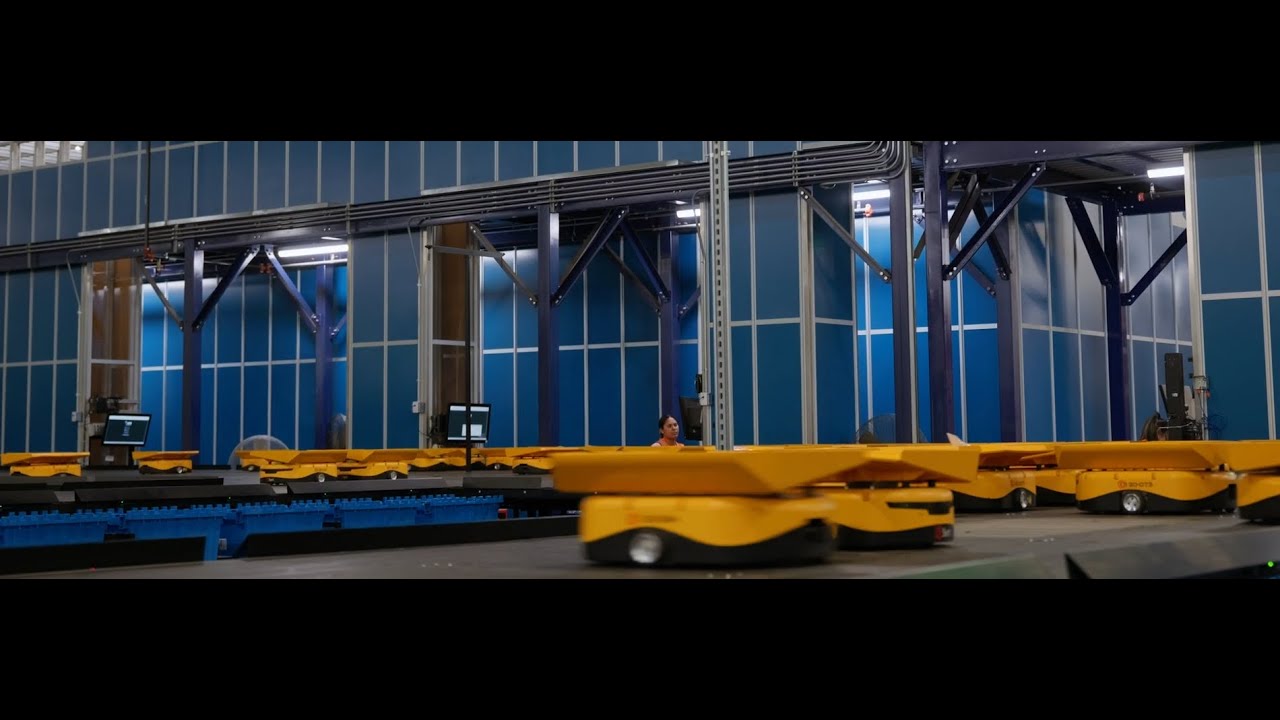
The Libiao Robotics system deployed at Sanya Library applies the company's AGV (Automated Guided Vehicle) and robot sorting platform to the specific workflow of library book return processing. While the commercial logistics deployments of Libiao's technology focus on parcel sorting, e-commerce fulfillment, and retail distribution, the underlying sorting logic — receive an item, identify its destination category, route it to the correct sort location — is directly applicable to library operations.
In the library context, the "destination category" is defined by the book's classification — typically a combination of subject category (Dewey Decimal or Chinese Library Classification system), floor, and shelving zone within the library's physical layout. The sorting control software maps each returned book's classification to a physical sort destination, and the AGV fleet executes the routing accordingly.
The Frozen Revolution: How Mini Yellow Robots Are Reshaping Cold Storage Logistics
Vendor: Libiao Robotics
Key Features
Patron Drop-Off and Immediate Departure The primary patron-facing benefit is the elimination of waiting at the return point. The automated system processes returns continuously and immediately, enabling patrons to deposit books and proceed to their next activity without delay. This frictionless return experience is explicitly highlighted in Libiao's case study framing: "So you can drop off your reads and head to your next story quicker."
Elimination of Manual Librarian Sorting The system removes the manual sorting workload from library staff entirely. Once a book is deposited at the return station, the automated system handles all subsequent steps — identification, categorization, routing, and delivery to the sort destination — without requiring any librarian intervention. This is the core operational benefit for Sanya Library as an institution.
AGV-Based Sorting Technology The deployment uses Libiao's AGV robot platform — the same underlying technology applied in the company's commercial logistics deployments, adapted for the library environment. The AGV platform provides reliable, consistent sorting performance in a public facility setting, with the robot fleet managed by Libiao's fleet control software to coordinate routing and avoid conflicts.
Smart Logistics for Public Cultural Institutions The Sanya Library deployment demonstrates that smart logistics automation is not limited to commercial warehouses and distribution centers. Public cultural institutions — libraries, archives, museums — manage physical collections that require ongoing sorting, routing, and location management, and can benefit from the same automation principles that drive efficiency in commercial logistics. Libiao's ability to adapt its platform to this context expands the addressable market for its technology beyond traditional logistics buyers.
Results & Benefits
For Library Patrons:
- Faster, friction-free book return — deposit and leave immediately
- No queuing at return counters during peak periods
- Improved overall library visit experience
For Library Staff:
- Repetitive manual sorting workload eliminated
- Staff time freed for patron-facing services, collection management, and programming
- Reduced physical demands associated with manual book handling and trolley pushing
- More consistent and reliable book processing regardless of return volume fluctuations
For Sanya Library as an Institution:
- Improved operational efficiency in the return and sorting workflow
- More reliable shelving turnaround — returned books reach their shelving zones faster
- Reduced dependence on staffing levels for return processing throughput
- Demonstration of smart technology adoption in a public cultural institution context
Challenges & Solutions
The central challenge of this deployment is translating commercial logistics automation technology into a public library context. The physical environment, operational workflow, and user population of a public library differ significantly from a commercial warehouse: the "items" are books rather than parcels or totes, the "customers" are library patrons rather than order recipients, and the "sort destinations" are shelving zones rather than dispatch lanes or carrier chutes.
Libiao's solution addresses this translation challenge by applying the same core sorting logic — receive, identify, route — to the library-specific workflow, with the sorting destinations and classification logic configured for Sanya Library's collection structure and physical layout. The AGV platform's adaptability to different physical environments enables deployment in a library setting without requiring fundamental changes to the underlying technology.
The public-facing nature of the deployment also introduces considerations that are less prominent in commercial logistics: the system must operate safely and reliably in an environment shared with library patrons of all ages, including children. The AGV platform's navigation and safety systems must be appropriate for a public space context, operating predictably and avoiding conflict with patron movement throughout the library.
Related Technologies (6)
The Frozen Revolution: How Mini Yellow Robots Are Reshaping Cold Storage Logistics
byLibiao Robotics
FoxBot Mk3: Third-Generation Autonomous Trailer Loader/Unloader
byFox Robotics
Fox Robotics FoxBot ATL Mark 3: Next-Generation Autonomous Trailer Loader/Unloader with Bidirectional Dock Automation
byFox Robotics
Brightpick Autopicker Lights-Out Warehouse: Fully Automated Night Shifts with Zero Incremental Labor Cost
byBrightpick
3D Sorting System for World-Renowned Footwear & Apparel Brand — Libiao Robotics
byUnknown
Autonomous Trailer Unloading Forklift: Technology Guide
byOthers
Related Projects

AirRob System: Boosting Deployment Efficiency and Multi-Category Sorting in Japan — Second Deployment
Libiao Robotics
Serbian Post's First Robotic Sorting System by Libiao | 3D AI-Powered Automation
Libiao Robotics
From Operational Bottlenecks to Growth Freedom: LT Apparel's Warehouse Transformation with T-sort
Libiao Robotics
More from Libiao Robotics
AirRob System: Boosting Deployment Efficiency and Multi-Category Sorting in Japan — Second Deployment
Serbian Post's First Robotic Sorting System by Libiao | 3D AI-Powered Automation