FoxBot Mk3: Third-Generation Autonomous Trailer Loader/Unloader
Quick Facts
Technology Performance Metrics
⭐Key Features
Benefits
Applications
Detailed Information
Technology Overview
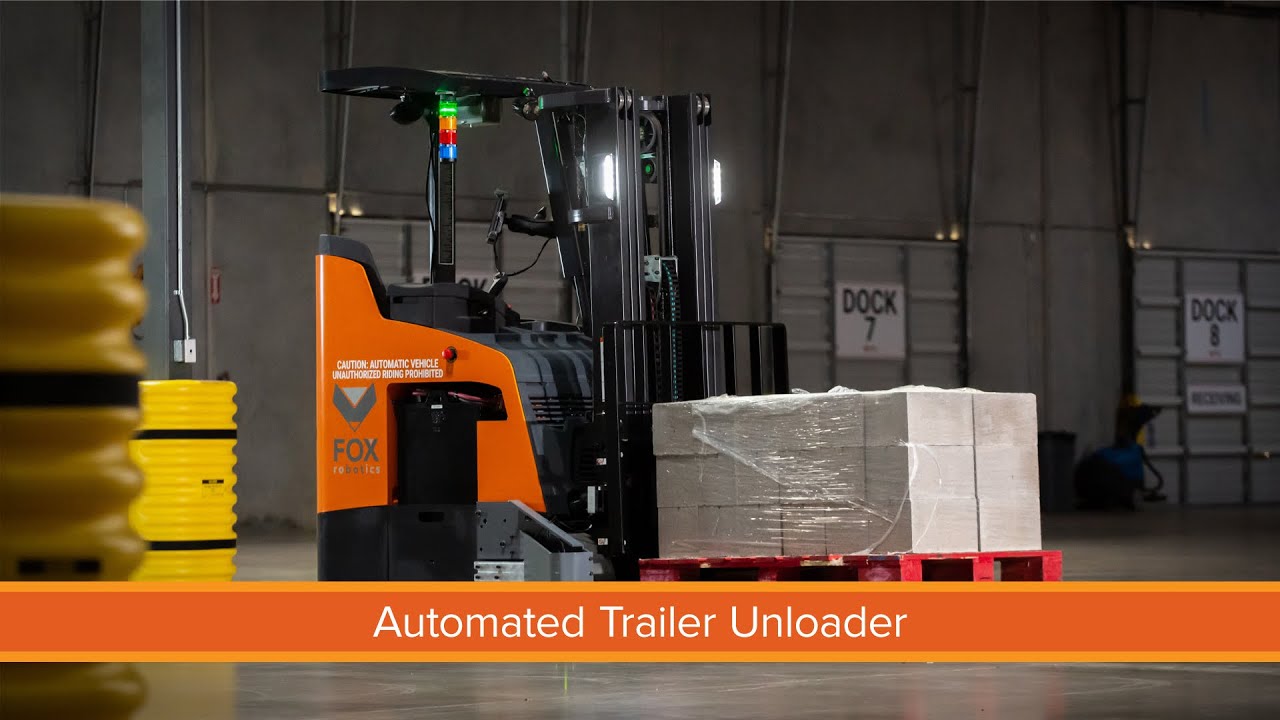
The FoxBot Mk3 represents the third generation of Fox Robotics' autonomous trailer loader/unloader (ATL) platform, released in March 2025 and publicly demonstrated at ProMat 2025 (booth N7963, McCormick Place Convention Center, Chicago, March 17–20). The Mk3 builds directly on the commercial foundation established by its predecessors — which have accumulated over 2.5 million pallet pulls in real-world deployments with enterprise customers including DHL Supply Chain and Walmart — while introducing four meaningful capability expansions that broaden the platform's applicability and addressable market.
Where the original FoxBot focused exclusively on autonomous trailer unloading (inbound freight), the Mk3 extends the platform to cover the full loading dock workflow by adding autonomous trailer loading on the outbound side. Combined with auto-adjusting fork tines, deeper software integrations, and an enhanced sensor suite, the Mk3 positions Fox Robotics to serve new industries and more complex operational environments that were previously outside the platform's scope.
The Mk3 announcement signals Fox Robotics' intent to evolve from a single-application autonomous forklift provider into a comprehensive autonomous dock automation platform — one capable of handling both ends of the trailer workflow and connecting more deeply with the broader warehouse technology stack.
How It Works
Core Principles
The FoxBot Mk3 operates on the same foundational principle as its predecessors: a standard lift truck chassis augmented with an onboard sensor suite and Fox Robotics' proprietary autonomous navigation, perception, and motion planning software. The robot independently enters a trailer, identifies and retrieves (or places) pallets, and transports loads to or from designated dock areas — all without a human operator in the cab. The Mk3 extends this core capability with four new features that address limitations of earlier generations.
Key Features & Capabilities
Autonomous Trailer Loading (New in Mk3) The most strategically significant addition in the Mk3 is bidirectional dock capability. Previous FoxBot generations were limited to unloading trailers on the inbound side. The Mk3 now supports autonomous loading on the outbound side, meaning a single FoxBot unit can in principle handle both the receiving and shipping dock workflows. This doubles the potential operational scope of a FoxBot deployment and opens the platform to customers whose primary automation need is on the outbound side.
Auto-Adjusting Fork Tines (New in Mk3) Earlier autonomous forklift systems typically required manual reconfiguration of fork tine spacing when switching between different load profiles — a step that interrupts automation and requires operator intervention. The Mk3's auto-adjusting tines eliminate this friction by allowing the robot to automatically adapt its fork geometry to the load it is about to handle. This is particularly valuable in facilities that receive or ship diverse product types on pallets of varying dimensions.
Additional Software Integrations (New in Mk3) The Mk3 expands the FoxBot's connectivity with warehouse software ecosystems. This is a critical capability for enterprise deployments, where the autonomous forklift must receive task assignments from, and report status back to, a WMS or WES platform. Broader integration support reduces the custom engineering required to connect the FoxBot to a customer's existing technology stack, lowering deployment complexity and time-to-value.
Expanded Sensor Suite (New in Mk3) The Mk3 features an enhanced sensor configuration that improves the robot's ability to detect and respond to its environment during transit through the warehouse — not just within the trailer. This addresses safety and efficiency in the travel segments of the robot's cycle, which are particularly important in active facilities where humans and other equipment share the same floor space.
Advantages & Benefits
The Mk3's bidirectional capability is the clearest commercial differentiator: customers who previously needed separate solutions for inbound and outbound dock automation can now address both with a single platform. This simplifies vendor management, reduces integration complexity, and improves the economics of a FoxBot deployment by spreading the investment across a larger share of dock operations.
The auto-adjusting fork tines directly improve operational flexibility. In real-world distribution centers, product mixes change regularly — seasonal inventory, new supplier relationships, or shifting customer demand can all alter the pallet profiles a facility handles. A system that adapts automatically to these changes without operator intervention is meaningfully more resilient than one that requires manual reconfiguration.
The expanded software integration layer is a response to a practical barrier that has limited autonomous forklift adoption: the difficulty of connecting robot operations to existing warehouse IT systems. By broadening its integration capabilities, Fox Robotics reduces one of the most common friction points in enterprise deployment.
Implementation Considerations
The Mk3's trailer loading capability is new as of the March 2025 release, and while it represents a logical extension of the proven unloading platform, customers evaluating this feature for production deployment should account for the fact that real-world scale data is still accumulating. The auto-adjusting fork tines expand load profile compatibility, but facilities with highly non-standard or fragile loads should conduct a compatibility assessment during the scoping phase.
Software integration breadth has increased, but specific compatibility with a given customer's WMS or WES platform should be confirmed early in the deployment process. The expanded sensor suite improves warehouse-floor safety, but site layout, traffic patterns, and mixed human-robot workflows still require careful evaluation as part of any deployment planning effort.
Use Cases & Applications
Ideal For
The FoxBot Mk3 is best suited for distribution centers and warehouses that need to automate both inbound and outbound dock operations, handle diverse load profiles, and integrate autonomous forklift operations with existing warehouse software systems. Facilities that have already deployed earlier FoxBot generations and want to expand their automation coverage are also natural candidates for Mk3 upgrades.
Performance Metrics
Specific throughput or cycle time figures for the Mk3 were not disclosed in the source material. Based on the prior-generation FoxBot's documented performance:
- Throughput (prior gen): 25+ pallets per hour
- Operator attention required (prior gen): A few minutes per trailer
- Cumulative pallet pulls (platform-wide, as of ~2024): 2.5 million+
The Mk3's performance metrics in production deployments are expected to be confirmed through ongoing customer rollouts following the ProMat 2025 launch.
Future Trends
The FoxBot Mk3 reflects a broader trend in warehouse automation: the evolution of single-function autonomous robots into multi-function platforms capable of covering larger portions of the operational workflow. By adding trailer loading to unloading, auto-adapting to load variability, and deepening software connectivity, Fox Robotics is positioning the FoxBot as a dock automation platform rather than a point solution. The emphasis on software integration also aligns with the industry's movement toward orchestrated, software-defined warehouse operations where autonomous mobile equipment must function as a coordinated layer within a larger technology ecosystem.
Conclusion
The FoxBot Mk3 is a meaningful generational step for Fox Robotics' autonomous forklift platform. The addition of trailer loading capability, auto-adjusting fork tines, expanded software integrations, and an enhanced sensor suite collectively address the most significant limitations of earlier generations and open the platform to a broader range of industries and use cases. For organizations already familiar with the FoxBot's proven unloading performance — validated through millions of real-world pallet pulls — the Mk3 represents a natural expansion path toward more comprehensive dock automation. New customers evaluating the platform should prioritize a thorough site and integration assessment to ensure the Mk3's capabilities align with their specific operational requirements.
Related Projects
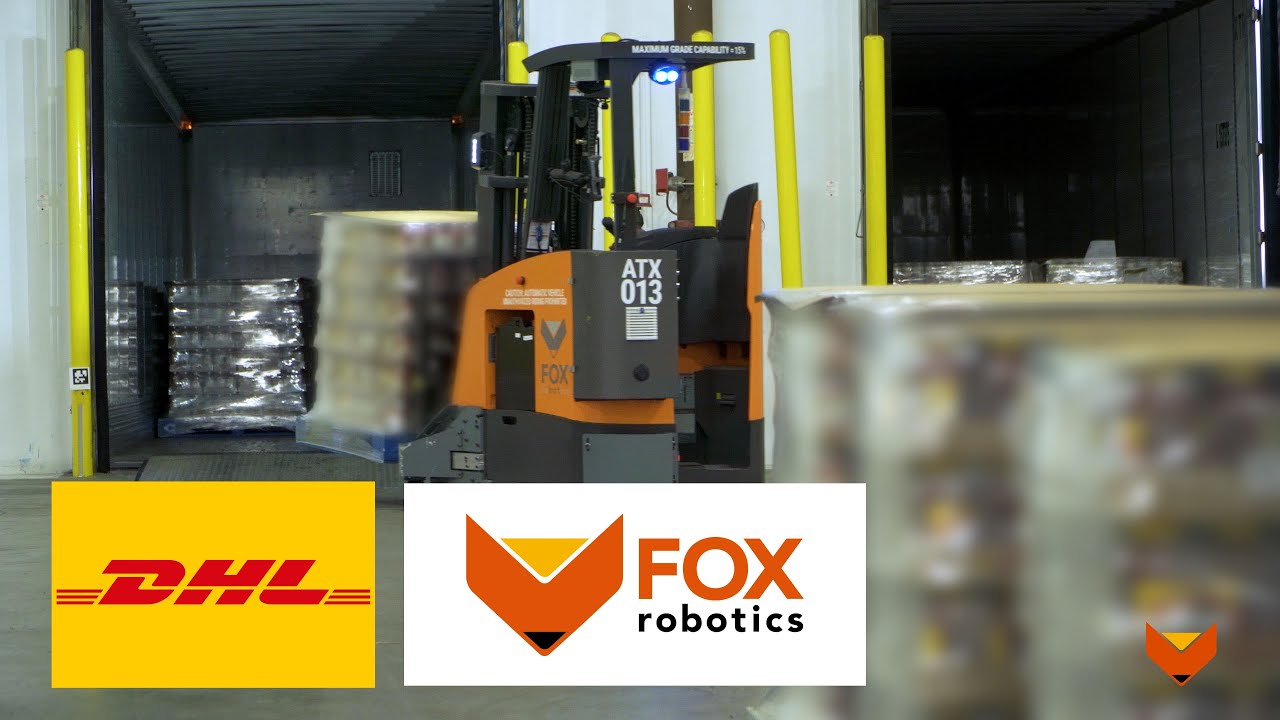
DHL Supply Chain FoxBot Autonomous Forklift Deployment – Louisville Distribution Center
DHL Supply Chain deployed Fox Robotics' FoxBot autonomous forklifts at its Louisville distribution center to address staffing challenges, with the robots now handling 90% of all inbound freight autonomously while significantly reducing product damage claims.
Dongfeng Motor R&D Center Smart Logistics Warehouse
A compact 470㎡ intelligent warehouse with 15-level high-density storage supporting 10,000+ SKUs for automotive R&D supply chain optimization.
Related Knowledge
Robotic Case Picking
Advanced robotic case picking systems that combine industrial robotics with intelligent vision systems to automate the handling of full cases and cartons, delivering exceptional speed, precision, and reliability in high-volume distribution operations.
Robotic Piece Picking
Advanced robotic systems that use AI and computer vision to automatically select and pick individual items from diverse inventory, revolutionizing warehouse fulfillment operations with human-like dexterity and intelligence.
Voice Picking Systems
Voice picking systems revolutionize warehouse operations by enabling hands-free, eyes-free order fulfillment through speech recognition technology. Workers receive spoken instructions through wireless headsets and confirm actions verbally, dramatically improving productivity, accuracy, and safety while reducing training time.
Vendor
Fox RoboticsRelated Technologies
Fox Robotics FoxBot ATL Mark 3: Next-Generation Autonomous Trailer Loader/Unloader with Bidirectional Dock Automation
Fox Robotics
Autonomous Trailer Unloading Forklift: Technology Guide
Others
Intralogistics Innovation Center: Integrated Solutions Showcase
Daifuku
Supplier Profile

Fox Robotics
Robots That Work.