Pallet Shuttle: Semi-Automated High-Density Storage System
Quick Facts
Technology Performance Metrics
⭐Key Features
Benefits
Applications
Detailed Information
Technology Overview
The Mecalux Pallet Shuttle is a semi-automated high-density storage system that represents a significant evolution from traditional drive-in racking. It is designed to optimize the movement of pallets in and out of deep storage lanes while enhancing safety and efficiency. The core innovation is the use of a remotely controlled, battery-powered shuttle that operates inside the storage channels, performing the task of transporting pallets to the back of the lane or retrieving them to the front. This eliminates the need for forklift operators to navigate into the narrow, confined aisles, reducing the risk of accidents and product damage. The system is controlled via an intuitive tablet interface, making it accessible for operators. It is positioned as a productivity-boosting solution for warehouses looking to substantially increase storage capacity, particularly for homogeneous goods with high turnover, and is especially beneficial in environments like cold storage where space optimization translates directly into energy savings.
How It Works
Core Principles
The system operates on the principle of lane-based, shuttle-assisted storage. A dedicated shuttle device is placed into a storage channel by a forklift. Once inside, the shuttle operates autonomously under wireless command to store incoming pallets at the first available position or retrieve the frontmost pallet, effectively automating the most time-consuming and risky part of deep-lane storage.
Key Features & Capabilities
Tablet-Based Wireless Control is a user-centric feature. The intuitive touch interface on a Wi-Fi-connected tablet allows operators to command the shuttle easily from a safe distance, issuing all necessary functions like store, retrieve, and position without complex training.
Lithium Battery Power with Long Autonomy ensures operational continuity. With up to 10 hours of runtime at full performance, the shuttle can work through long shifts without frequent charging interruptions, supporting high-volume operations, even in temperature-controlled environments.
Modular System Architecture allows it to serve as a flexible buffer or permanent storage. The system can be implemented in specific areas of a warehouse (e.g., as a production buffer or for seasonal goods) without requiring a full-facility automation overhaul.
Advantages & Benefits
The primary advantage is a substantial increase in storage density and safety. By enabling deep-lane storage without forklift entry, it safely packs more pallets into the same footprint than selective racking and is safer than manual drive-in operations.
It streamlines operations for high-volume, homogeneous goods. The system significantly speeds up the put-away and retrieval process compared to manual drive-in, making it ideal for businesses with fast turnover of similar products, such as in FMCG or food distribution.
The system delivers significant energy savings in cold storage applications. By maximizing storage density, it reduces the total volume of air that needs to be cooled, leading to lower refrigeration costs—a critical operational expense in cold chain logistics.
Implementation Considerations
The system operates in a semi-automated mode, meaning it still relies on a forklift and operator to position the shuttle and handle pallets at the lane ends. This limits ultimate throughput compared to fully automated systems and requires coordinated labor.
It is ideally suited for LIFO (Last-In, First-Out) or batch storage patterns within each lane. While offering more SKU flexibility per lane than drive-in, it is not designed for strict FIFO (First-In, First-Out) across deep lanes without complex lane management.
Battery management and shuttle positioning are ongoing operational tasks. Planning for charging schedules and efficient shuttle transfer between lanes by forklift is necessary to maintain smooth workflow.
Use Cases & Applications
Ideal For
This system is ideal for food and beverage distributors, manufacturing plants with raw material or finished goods buffers, third-party logistics (3PL) providers handling homogeneous pallets, and any operation in cold storage seeking to maximize space and efficiency.
Performance Metrics
Key performance aspects include:
- Operational Autonomy: Up to 10 hours of shuttle operation on a single battery charge.
- Space Efficiency: Positioned as a high-density evolution of drive-in racking, enabling more SKU variety and compact storage.
- Process Improvement: Notably speeds up pallet storage/retrieval for homogeneous goods compared to manual methods.
Future Trends
The content outlines an evolution path from Drive-in Racking -> (Semi-Automated) Pallet Shuttle -> Automated Pallet Shuttle (APS) -> 3D Automated Pallet Shuttle. This shows the trend towards greater automation, with the 3D system using fully autonomous multi-directional shuttles and lifts to eliminate all manual vehicle intervention, aiming for unparalleled efficiency and precision.
Conclusion
The Mecalux Pallet Shuttle system offers a practical and highly effective step into automation for high-density pallet storage. It strikes an excellent balance between the low cost of manual drive-in racking and the high performance (and cost) of fully automated systems. For operations struggling with space constraints, safety concerns in deep lanes, or inefficiencies in handling large volumes of similar pallets, this semi-automated solution provides a clear upgrade path. Its particular strength in cold storage, due to space-driven energy savings, makes it a compelling choice for the food and pharmaceutical industries. Businesses should evaluate their inventory flow (favoring LIFO/batch), throughput needs, and labor model to ensure it aligns with this technology's capabilities. For the right application, it is a powerful tool to boost capacity, safety, and productivity.
Related Projects

Didactic - Normandy France Healthcare Storage Expansion with Pallet Shuttle
Mecalux designed a customized semi-automatic Pallet Shuttle solution for Didactic (Normandy, France) to address 92% storage capacity utilization, delivering 11,000 pallet capacity with FIFO/LIFO functionality for medical device distribution.
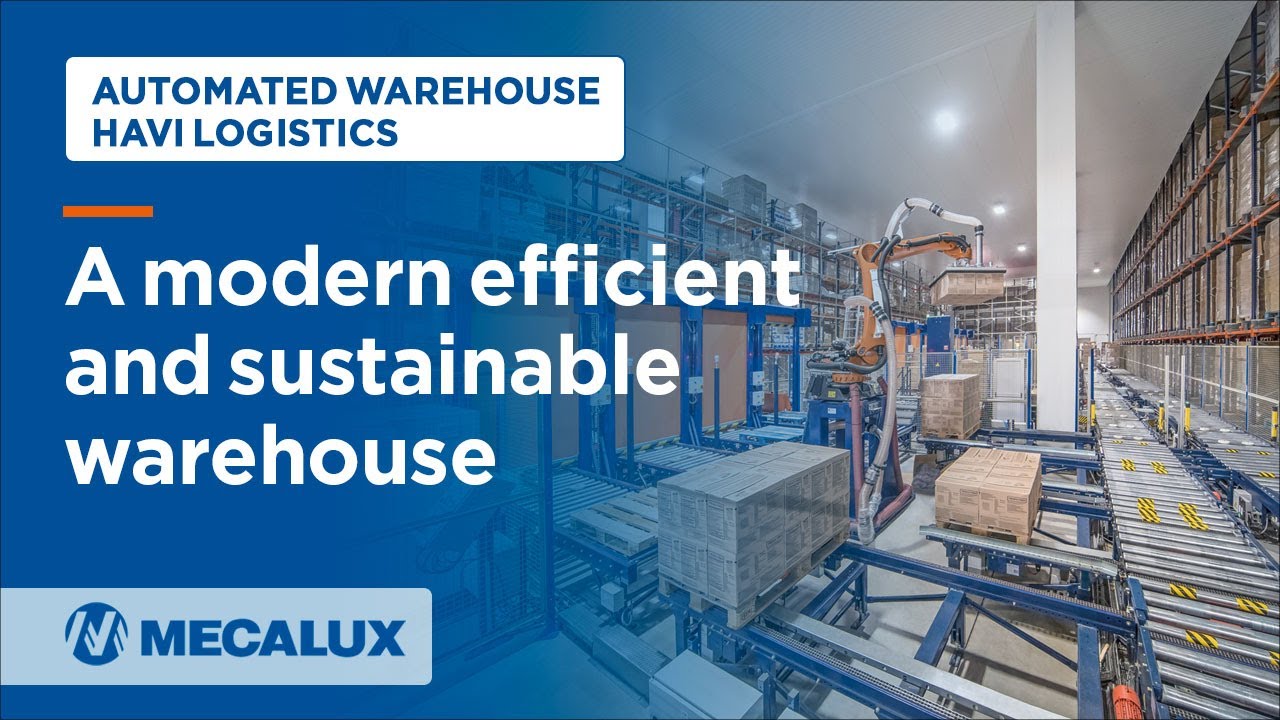
HAVI Lisbon Multi-Temperature Logistics Center
Mecalux delivers a multi-temperature logistics center for HAVI in Lisbon, Portugal, featuring two automated warehouses, Pallet Shuttle systems and Easy WMS integration, supporting daily supply to over 150 restaurants.

Michelin Vitoria Tire Plant Automated Warehouse
Mecalux delivers a 27-meter high automated clad rack warehouse for Michelin's Vitoria tire plant in Spain, supporting three production lines and a planned fourth with 4,600 container capacity and 120 containers per hour throughput.
Related Knowledge
Storage
Storage is the warehouse process of holding inventory in organized locations until needed, balancing space utilization, accessibility, and inventory control to support efficient operations.
Cold Storage Strategy
Cold storage and temperature-controlled warehousing are critical for preserving perishable goods throughout the supply chain. From frozen foods to pharmaceuticals, these specialized facilities maintain precise temperature conditions while optimizing energy efficiency and operational performance.