4-Way Shuttle System: Flexible Multi-Directional AS/RS
Quick Facts
Technology Performance Metrics
⭐Key Features
Benefits
Applications
Detailed Information
Technology Overview
The Enfon 4-Way Shuttle System represents a modern and highly adaptable approach to automated pallet storage, addressing the complex needs of today's diverse inventory profiles. Unlike traditional unidirectional shuttle or ASRS systems, the core of this technology is a shuttle vehicle capable of moving in four directions: longitudinally along aisles, laterally across aisles, and vertically between levels. This multi-directional freedom allows for a truly three-dimensional, grid-based storage system. It is currently regarded as a popular automated warehousing solution due to its exceptional flexibility and scalability. The system is specifically designed to excel in environments characterized by a high number of stock-keeping units (SKUs) but with a low number of pallets per SKU, random access requirements, and significant reverse logistics activity, making it a strong fit for omnichannel retail, spare parts, and manufacturing component storage.
How It Works
Core Principles
The system operates on the principle of a grid-based, multi-directional shuttle network. Individual shuttle vehicles operate autonomously on a network of tracks within a dense storage structure. They can travel forward/backward within a lane, move left/right to switch lanes at intersections, and use integrated lifts to change levels, allowing them to access any storage location in the three-dimensional grid without being confined to a single aisle or level.
Key Features & Capabilities
Four-Directional Movement is the transformative feature. This capability allows a single shuttle to service a vast storage volume without being restricted to a fixed aisle, enabling extremely high space utilization and random access to any pallet position.
Modular and Scalable Architecture is a core design principle. The system can be initially deployed with a minimal number of shuttles and lifts. As throughput or storage requirements grow, additional shuttles and lift modules can be added incrementally, allowing the automation investment to scale precisely with business needs.
Software-Defined Performance and Efficiency is critical. The system's throughput is not fixed by a single crane's speed but is dynamically determined by the size of the shuttle fleet and the number of lifts. The WCS intelligently allocates tasks and manages the 3D traffic of the shuttle fleet to maximize collective efficiency.
Advantages & Benefits
The primary advantage is unmatched flexibility for high-SKU, low-depth inventory. The system efficiently handles the "long tail" of inventory where each product has only a few pallets, storing them densely without sacrificing direct access to each one, which is inefficient for deep-lane systems.
It enables true random access and efficient reverse logistics. The ability to store and retrieve from any location at any time is ideal for mixed inbound/outbound flows and processing returns, as there is no need to reorganize lanes to access specific pallets.
The system offers exceptional investment protection through scalability. Companies can start with a core system and expand it shuttle-by-shuttle as their operations grow, avoiding oversized initial investments and ensuring the system always matches current throughput demands.
Implementation Considerations
Success is heavily dependent on sophisticated control software. Managing the movement of multiple independent vehicles in a 3D space without collisions and optimizing for shortest travel time is a complex computational task requiring a robust and intelligent WCS.
The economic model is based on fleet sizing. The total cost and performance are directly tied to the number of shuttles and lifts. Accurate forecasting of throughput requirements is essential to right-size the initial fleet and plan for cost-effective expansion.
While flexible, the system's density is achieved through a dense grid structure, which requires a significant upfront investment in the rail infrastructure and racking, even before shuttles are added.
Use Cases & Applications
Ideal For
This system is ideal for third-party logistics (3PL) providers, retail distribution centers supporting omnichannel sales, manufacturing plants with vast component inventories, and any operation where the inventory profile is characterized by many unique items, each with low to medium pallet quantities.
Performance Metrics
The content specifies that system efficiency is determined by the number of 4-way shuttles and lifts. This means throughput is not a fixed number but a scalable characteristic. Key performance is its suitability for many SKUs with small pallet counts per SKU and effectiveness in random inbound/outbound and returns processing.
Conclusion
The Enfon 4-Way Shuttle System represents the cutting edge of flexible, dense pallet storage automation. Its multi-directional capability breaks free from the constraints of traditional aisle-based systems, offering a future-proof solution for the complex, high-variety inventory challenges of modern commerce. For businesses struggling with space utilization for thousands of SKUs, needing random access, or planning for growth, this system provides a scalable and efficient path forward. Implementation requires careful software selection and a clear understanding of the fleet-based performance model. However, for the right application, it delivers a powerful combination of high density, direct access, and investment scalability that is difficult to match with other technologies.
Related Knowledge
Storage
Storage is the warehouse process of holding inventory in organized locations until needed, balancing space utilization, accessibility, and inventory control to support efficient operations.
Cold Storage Strategy
Cold storage and temperature-controlled warehousing are critical for preserving perishable goods throughout the supply chain. From frozen foods to pharmaceuticals, these specialized facilities maintain precise temperature conditions while optimizing energy efficiency and operational performance.
Vendor
EnfonRelated Technologies

Dark Warehouse: Fully Automated Warehouse Operations
Addverb
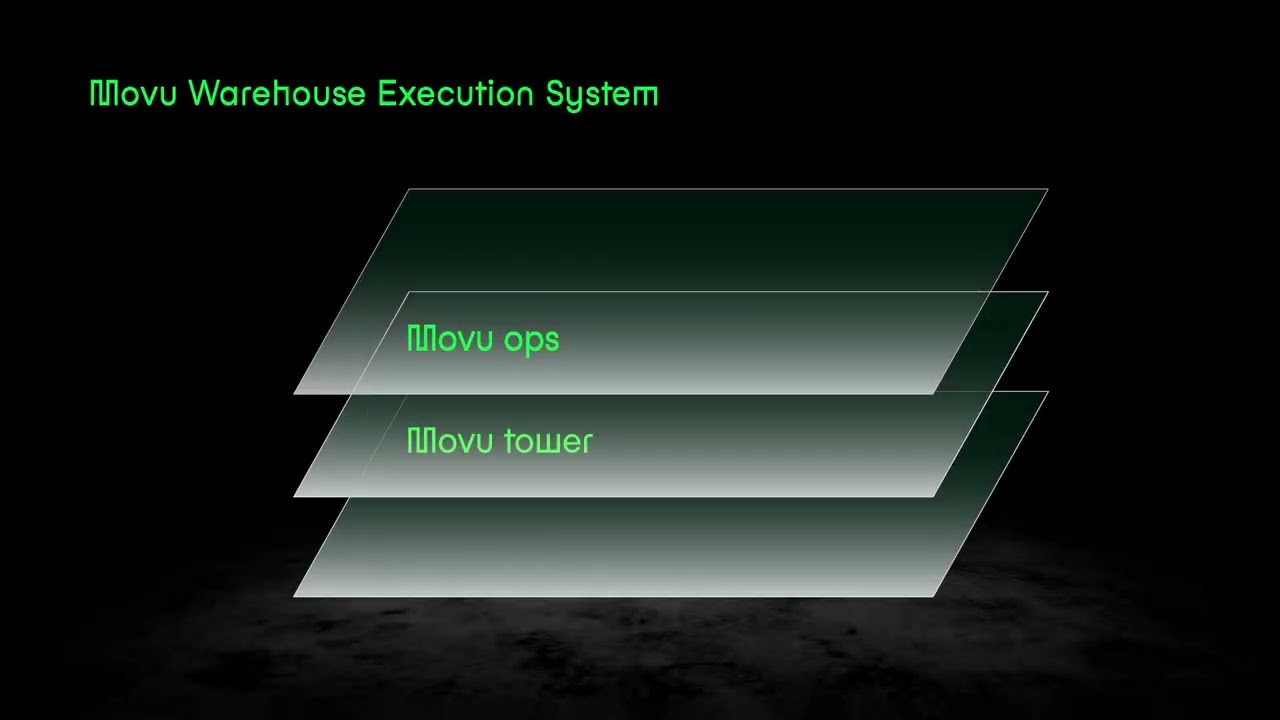
Movu Warehouse Execution System (WES): For Shuttle and AMR Management
Movu Robotics
Momentum WES: Next-Generation Warehouse Execution and Control
Honeywell Intelligrated