Simulation Software
Advanced modeling and simulation platforms that create virtual replicas of warehouse operations to test scenarios, optimize processes, validate automation designs, and predict performance outcomes before physical implementation, reducing risk and enabling data-driven decision-making.
Simulation Platform Architecture
Model Building
- ▸3D Layout: Virtual facility design
- ▸Equipment Library: Pre-built components
- ▸Process Logic: Operational rules
- ▸Data Integration: Real-world parameters
Analysis & Results
- ▸Performance Metrics: KPI tracking
- ▸Statistical Analysis: Confidence intervals
- ▸Bottleneck Detection: Constraint identification
- ▸Scenario Comparison: Alternative evaluation
Risk Mitigation
Identify design flaws and performance issues before costly physical implementation.
Capital Optimization
Right-size investments with 10-30% capital savings through validated design decisions.
Performance Validation
Verify system throughput and capacity under realistic operational scenarios.
What is Simulation Software?
Simulation Software for warehouse and logistics operations creates dynamic virtual models that replicate real-world material handling processes, equipment behavior, and operational workflows to enable risk-free testing, optimization, and validation before committing capital and resources to physical implementations. These sophisticated platforms employ discrete event simulation, 3D visualization, and statistical analysis to model complex interactions between people, equipment, inventory, and processes, providing insights into system performance, bottlenecks, capacity constraints, and operational efficiency under various scenarios and conditions.
Unlike static analysis tools that provide point-in-time calculations, simulation software captures the dynamic nature of warehouse operations including variability in order patterns, equipment failures, labor availability, and seasonal fluctuations. By running thousands of simulated hours in minutes or hours of computing time, organizations can explore design alternatives, test operational strategies, and quantify expected performance with statistical confidence before making irreversible decisions. This capability proves invaluable for greenfield facility design, automation system selection, process improvement initiatives, and capacity planning where mistakes carry substantial financial consequences.
Core Capabilities
3D Visualization and Animation provides intuitive graphical representation of warehouse layouts, equipment movements, and material flows that enable stakeholders to visualize proposed designs and understand complex operations without technical expertise. Modern simulation platforms render realistic 3D models of conveyors, sorters, robots, racking systems, and other equipment operating in virtual facilities, allowing observers to watch simulated operations unfold as if viewing security camera footage. This visualization capability proves essential for communicating designs to executives, validating layouts with operations teams, and identifying spatial conflicts or ergonomic issues that might not be apparent in 2D drawings.
Discrete Event Simulation Engine models warehouse operations as sequences of discrete events—order arrivals, pick completions, conveyor transfers, robot movements—that occur at specific points in simulated time, enabling accurate representation of complex system dynamics and interactions. The simulation engine tracks individual entities (pallets, cartons, orders) as they move through the system, queuing for resources, undergoing processing, and triggering subsequent events. This approach captures the stochastic nature of real operations including random arrival patterns, variable processing times, and equipment failures, producing realistic performance predictions that account for operational variability rather than idealized steady-state assumptions.
Statistical Analysis and Reporting transforms raw simulation data into actionable insights through comprehensive performance metrics, statistical distributions, and confidence intervals that quantify expected outcomes and their variability. Simulation platforms automatically collect detailed data on throughput, cycle times, utilization rates, queue lengths, and other key performance indicators throughout simulation runs, then apply statistical methods to determine mean values, standard deviations, and confidence bounds. This rigorous analysis enables evidence-based decision-making by quantifying the probability of meeting performance targets and identifying which design alternatives offer the best risk-adjusted outcomes.
Bastian Solutions Corporate Profile: Toyota Advanced Logistics
System Integrator: Bastian Solutions
Application Areas
Greenfield Facility Design represents the most comprehensive simulation application, where organizations model entire warehouse operations from scratch to optimize layout, equipment selection, staffing levels, and operational strategies before construction begins. Simulation enables comparison of fundamentally different design concepts—manual versus automated, goods-to-person versus person-to-goods, single-level versus multi-level—by quantifying their respective throughput, cost, flexibility, and scalability characteristics. This analysis typically occurs during the conceptual and detailed design phases, informing decisions about building dimensions, dock configurations, storage strategies, and automation investments that collectively determine facility performance for decades.
Automation System Validation uses simulation to verify that proposed automated material handling systems will meet performance requirements before equipment procurement and installation. System integrators and end users build detailed models incorporating conveyor speeds, sorter capacities, robot cycle times, and control logic to predict system throughput under various demand scenarios. The simulation identifies bottlenecks, validates buffer sizing, tests failure recovery procedures, and confirms that the integrated system achieves required performance levels. This validation reduces implementation risk by detecting design flaws and capacity shortfalls during the design phase when corrections are inexpensive rather than after equipment installation when changes carry enormous costs.
Process Improvement and Optimization applies simulation to existing operations seeking to enhance performance through layout modifications, process changes, or incremental automation additions. Organizations model current-state operations to establish baseline performance, then simulate proposed improvements to quantify expected benefits and compare alternatives. This approach supports decisions about adding pick stations, reconfiguring zones, implementing new picking strategies, or introducing automation into manual operations by predicting the impact on throughput, labor requirements, and service levels. The ability to test changes virtually before disrupting live operations reduces implementation risk and builds confidence in improvement initiatives.
Modeling Approaches
Throughput and Capacity Analysis focuses on determining maximum system capacity and identifying constraints that limit performance under peak demand conditions. Simulation models subject warehouse systems to increasing workload levels until throughput plateaus, revealing which resources—conveyors, sorters, pick stations, dock doors—become bottlenecks that prevent further capacity increases. This analysis guides capacity planning decisions by quantifying how much additional volume existing facilities can absorb, what equipment upgrades would provide the greatest capacity improvements, and how system performance degrades as utilization approaches maximum capacity. Understanding these relationships enables proactive capacity management rather than reactive crisis responses when demand exceeds capability.
Labor Planning and Productivity models the interaction between workforce size, productivity rates, and operational performance to optimize staffing levels and work assignments. Simulation incorporates labor availability, shift schedules, break patterns, learning curves, and productivity variability to predict how many workers are needed to achieve throughput targets under different demand scenarios. The models can test alternative shift structures, evaluate cross-training strategies, and quantify the impact of productivity improvements on overall system performance. This analysis proves particularly valuable for operations with significant labor components where staffing decisions directly impact both operating costs and service levels.
Equipment Selection and Sizing employs simulation to determine optimal equipment specifications and quantities by testing various configurations against operational requirements. Rather than relying on vendor-provided capacity ratings that assume ideal conditions, simulation evaluates equipment performance under realistic operational scenarios including variable demand, mixed product profiles, and system interactions. This approach answers questions like how many robots are needed to achieve target throughput, what conveyor speeds are required to prevent bottlenecks, or whether a single high-speed sorter outperforms multiple slower units. The analysis considers not just peak capacity but also flexibility, redundancy, and performance under partial equipment failures.
Intralogistics Innovation Center: Integrated Solutions Showcase
Vendor: Daifuku
Implementation Process
Data Collection and Model Building establishes the foundation for accurate simulation through comprehensive gathering of operational data and construction of representative models. Organizations must collect information on order profiles, SKU characteristics, processing times, equipment specifications, layout dimensions, and operational policies to build models that reflect reality. The model building process involves creating the physical layout in 3D, defining equipment behavior and capacities, programming control logic and decision rules, and incorporating variability and randomness that characterize real operations. Model fidelity must balance accuracy against complexity, including sufficient detail to capture important behaviors while avoiding unnecessary complications that increase development time without improving insights.
Validation and Verification ensures that simulation models accurately represent real-world operations and produce reliable predictions before using them for decision-making. Verification confirms that the model behaves as intended—equipment operates at specified speeds, logic executes correctly, entities flow through proper paths—through systematic testing and debugging. Validation compares model outputs against actual operational data to confirm that simulated performance matches observed reality within acceptable tolerances. This validation process builds confidence that insights derived from simulating proposed changes will translate to actual performance improvements, addressing the fundamental question of whether the model can be trusted for decision support.
Scenario Analysis and Experimentation leverages validated models to explore design alternatives and operational strategies through systematic experimentation. Simulation practitioners define scenarios representing different demand levels, product mixes, equipment configurations, or operational policies, then execute multiple replications of each scenario to account for random variability. Statistical experimental design techniques help efficiently explore large solution spaces by identifying which factors significantly impact performance and how they interact. The experimentation phase generates the insights that drive decision-making, revealing which alternatives best balance competing objectives like throughput, cost, flexibility, and risk.
Advanced Features
Emulation and Hardware-in-the-Loop extends simulation capabilities by connecting virtual models to real control systems to test warehouse control software and automation logic before deployment. Emulation creates a virtual warehouse that responds to commands from actual WCS or WES software, allowing control system testing and operator training without physical equipment. This approach validates that control logic correctly handles normal operations, exception conditions, and failure scenarios, reducing commissioning time and startup issues when real equipment arrives. Hardware-in-the-loop testing goes further by connecting physical controllers to simulated equipment, enabling comprehensive system integration testing before facility construction completes.
Optimization Integration combines simulation with mathematical optimization algorithms to automatically search for best-performing designs rather than manually evaluating alternatives. These hybrid approaches use optimization methods to propose candidate solutions—equipment configurations, layout arrangements, operational parameters—then employ simulation to evaluate their performance under realistic conditions including variability and constraints that optimization alone cannot easily model. Iterative cycles of optimization and simulation converge toward high-performing solutions that balance multiple objectives while satisfying operational constraints, automating the search for designs that might not be discovered through manual experimentation.
Real-Time Decision Support applies simulation to operational decision-making by rapidly modeling near-term scenarios to guide daily management choices. Rather than only supporting strategic design decisions, real-time simulation helps operations managers evaluate options like whether to call in additional labor, how to respond to equipment failures, or which orders to prioritize when capacity is constrained. These applications require fast-running models that can evaluate scenarios in minutes rather than hours, trading some model detail for speed to provide timely insights. As computing power increases, real-time simulation becomes increasingly practical for operational decision support beyond its traditional strategic planning role.
Technology Landscape
Specialized Warehouse Simulation Tools include platforms specifically designed for material handling and logistics applications with built-in libraries of warehouse equipment, pre-configured analysis templates, and industry-specific functionality. Leading solutions like Dematic Simulation, Siemens Tecnomatix, FlexSim, and AutoMod provide extensive equipment libraries covering conveyors, sorters, AS/RS, AGVs, and other warehouse technologies, reducing model development time compared to general-purpose simulation tools. These platforms understand warehouse-specific concepts like order waves, pick paths, and zone assignments, enabling rapid model development and analysis focused on logistics-relevant metrics. The specialized nature makes them accessible to material handling engineers without extensive simulation expertise.
General-Purpose Simulation Platforms offer broader modeling capabilities that extend beyond warehousing to manufacturing, supply chain, and business process applications. Tools like AnyLogic, Arena, and Simio provide flexible modeling frameworks that can represent virtually any system but require more effort to build warehouse-specific models compared to specialized tools. These platforms excel when simulation scope extends beyond the warehouse to encompass broader supply chain networks, manufacturing operations, or business processes where specialized warehouse tools lack necessary capabilities. The choice between specialized and general-purpose tools depends on project scope, required flexibility, and available expertise.
Cloud-Based and SaaS Solutions represent the emerging trend toward accessible simulation platforms that reduce barriers to adoption through browser-based interfaces, subscription pricing, and reduced IT infrastructure requirements. Cloud simulation enables collaboration across distributed teams, provides scalable computing resources for large models or extensive experimentation, and lowers upfront costs compared to traditional software licensing. These platforms increasingly incorporate AI and machine learning to automate model building, suggest optimization opportunities, and make simulation accessible to users without specialized training. As cloud capabilities mature, simulation transitions from specialized expertise requiring significant investment toward mainstream decision support tools accessible to broader audiences.
Business Value
Risk Mitigation represents simulation's most compelling value proposition by identifying design flaws and performance shortfalls before costly physical implementation. The ability to discover that a proposed automation system won't meet throughput requirements during the design phase—when corrections involve CAD changes rather than equipment modifications—prevents expensive mistakes and project failures. Organizations report that simulation frequently identifies issues that would have caused significant problems if discovered during commissioning or operations, with the cost of simulation typically representing a tiny fraction of the losses prevented. This risk reduction alone often justifies simulation investment for major capital projects.
Capital Optimization enables right-sizing investments by determining the minimum equipment and infrastructure needed to meet performance requirements rather than over-building based on conservative assumptions. Simulation quantifies how much capacity is truly needed, whether expensive automation is justified versus manual alternatives, and which equipment specifications provide the best cost-performance tradeoffs. This analysis prevents both under-investment that results in inadequate capacity and over-investment in unnecessary capability, optimizing capital deployment. Organizations using simulation report capital savings of 10-30% compared to traditional design approaches that rely on rules of thumb and vendor recommendations without rigorous validation.
Stakeholder Alignment facilitates communication and consensus-building among diverse stakeholders through compelling 3D visualizations and quantitative performance predictions. Simulation helps executives understand proposed designs and their expected performance, enables operations teams to provide input on practical considerations, and supports vendor selection by objectively comparing competing proposals. The visual and quantitative nature of simulation outputs makes complex technical decisions accessible to non-technical stakeholders, building confidence in recommendations and accelerating approval processes. This alignment reduces project delays and conflicts that arise when stakeholders lack shared understanding of proposed solutions.
Future Directions
AI-Enhanced Simulation will leverage machine learning and artificial intelligence to automate model building, accelerate scenario analysis, and generate optimization recommendations without extensive manual effort. AI algorithms will learn from historical simulation results to suggest promising design alternatives, automatically calibrate models from operational data, and identify patterns in simulation outputs that indicate optimization opportunities. Natural language interfaces will enable users to describe scenarios in plain language rather than manually configuring simulation parameters, making simulation accessible to operations managers without specialized training. These AI enhancements will dramatically reduce the time and expertise required for simulation analysis.
Continuous Simulation and Digital Twins will evolve simulation from periodic strategic analysis toward continuous operational tools that maintain always-current models synchronized with real facility operations. Rather than building models for specific projects then discarding them, organizations will maintain living simulation models that automatically update as operations change, enabling ongoing what-if analysis and optimization. These continuously maintained models blur the line between simulation and digital twins, serving both strategic planning and operational decision support roles. The continuous approach maximizes simulation value by amortizing model development costs across many use cases over extended periods.
Integrated Planning Ecosystems will embed simulation within comprehensive planning and optimization platforms that seamlessly combine network design, facility planning, process optimization, and operational scheduling. Rather than standalone simulation tools requiring manual data exchange with other systems, integrated platforms will automatically flow data between planning layers, using simulation to validate higher-level plans and inform lower-level decisions. This integration enables end-to-end supply chain optimization where simulation ensures that strategic network designs translate to operationally feasible facility implementations, and facility designs support achievable daily operational plans. The holistic approach delivers better overall outcomes than optimizing each planning layer independently.
Related Technologies (6)
Intralogistics Innovation Center: Integrated Solutions Showcase
Daifuku
Automated Guided Vehicles (AGVs): Comprehensive Warehouse Automation
Jungheinrich
Four Way Shuttle System: Flexible High-Density AS/RS
Jiangsu NOVA Intelligent Logistics Equipment
AutoStore: Robotic Cube Storage ASRS for High-Density Fulfillment
AutoStore
Autopicker: Multi-Purpose AI-Powered Picking AMR
Brightpick
Dark Warehouse: Fully Automated Warehouse Operations
Addverb
Related Software Topics
Digital Twin
Virtual replica of physical warehouse operations that enables real-time monitoring, simulation, and optimization through synchronized data integration, providing unprecedented visibility and predictive capabilities for operational excellence.
Multi-Robot Orchestration
Intelligent fleet management systems that coordinate multiple autonomous robots to work together efficiently, optimizing task allocation, traffic management, and resource utilization across complex warehouse environments.
Slotting Optimization
AI-powered systems that strategically position products within warehouse storage locations to minimize travel time, maximize space utilization, and enhance picking efficiency through data-driven analysis of velocity, affinity, and operational patterns.
About This Topic
Related Projects(6)
Bastian Solutions Corporate Profile: Toyota Advanced Logistics
Bastian Solutions
Walmart - Next Generation Fulfillment Centers Automation
Knapp
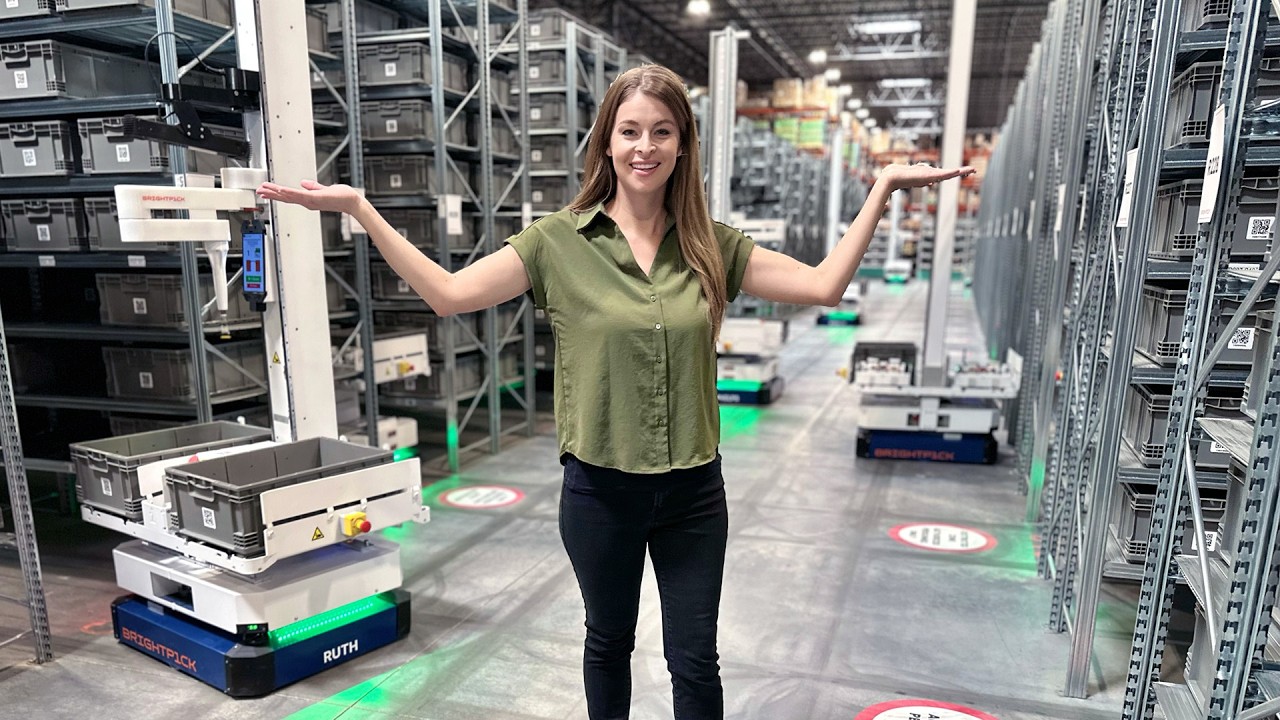
The Feed Sports Nutrition Automated Fulfillment Center with Brightpick
Brightpick
Sengkang General Hospital Singapore Central Sterile Supply Unit
Daifuku
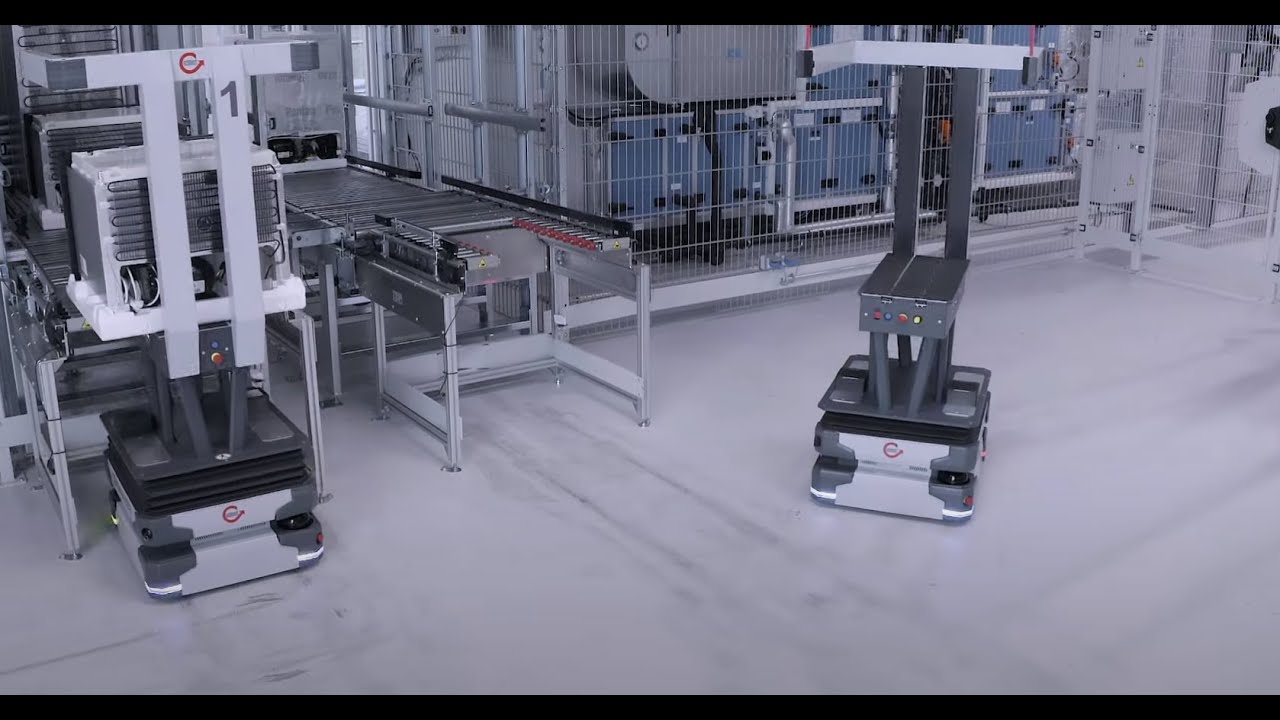
V-ZUG Kühltechnik Sulgen Refrigerator Factory
GEBHARDT Intralogistics Group

SEW-EURODRIVE Bruchsal Electronics Plant
GEBHARDT Intralogistics Group
Related Suppliers(3)

6 River Systems
The Seamless Fulfillment Automation Solution to Boost Efficiency and Productivity in Your Warehouse

Addverb
Warehouse Automation that delivers value!
AutoStore
The World's Fastest AS/RS Solution