Push-Back Racking: High-Density LIFO Storage Solution
Quick Facts
Technology Performance Metrics
⭐Key Features
Benefits
Applications
Detailed Information
Technology Overview
Push-back racking is a sophisticated high-density storage solution designed to significantly increase pallet storage capacity within a fixed warehouse footprint. It strikes a balance between the accessibility of selective racking and the density of drive-in systems. The system operates on a dynamic cart-and-rail mechanism, allowing multiple pallets of the same SKU to be stored deep within a single lane while maintaining access from a single aisle. As a Last-In, First-Out (LIFO) system, it is ideal for products with high turnover where the latest inventory is typically needed first. Its design is particularly valued in environments like cold storage, where maximizing density directly translates to energy and cost savings.
How It Works
Core Principles
The system uses a series of nested carts on slightly inclined rails within each storage lane. When a new pallet is loaded, it pushes the previously loaded pallets further back into the lane. Retrieval happens in reverse order, with the most recently stored pallet at the front being unloaded first.
Key Features & Capabilities
Deep Lane Storage allows each lane to hold up to 7 pallets, creating high density. Dynamic Cart System enables the pallets to move within the lane without forklift entry. Single-Aisle Operation means all loading and unloading happens from one side, saving aisle space. LIFO Inventory Management is inherent to the design. Forklift-Protected Structure reduces damage since lifts only interact with the front of the rack.
Advantages & Benefits
The primary advantage is a dramatic increase in storage density—2 to 3 times more than selective racking—by utilizing depth and minimizing aisles. This leads directly to better space optimization and lower facility costs. It improves productivity by reducing forklift travel distance. The system is ideal for cold storage as it maximizes pallet count in expensive temperature-controlled spaces. It also reduces maintenance costs by protecting uprights from forklift impacts.
Implementation Considerations
Push-back racking is most effective for high-volume SKUs where multiple pallets are stored and turned over regularly. The LIFO stock rotation must be acceptable for the products stored. While offering high density, it does not provide instant access to every pallet like selective racking. The cost is higher than basic racking, and the system requires consistent, good-quality pallets for smooth operation.
Use Cases & Applications
Ideal For
This system is ideal for warehouses with fast-moving inventory that is not date-sensitive, where space is at a premium, and high storage density with good accessibility is required.
Conclusion
Push-back racking offers a compelling solution for warehouses seeking to significantly boost storage capacity without sacrificing the selective access characteristic of drive-in systems. By providing 2-3 times the density of standard racking through its innovative cart-based design, it delivers excellent space utilization and operational efficiency, especially in cost-sensitive environments like cold storage. While the LIFO access and specialized design require careful inventory alignment, for operations with suitable product profiles, push-back racking is a strategic investment that maximizes warehouse potential and keeps long-term costs in check.
Related Knowledge
Storage
Storage is the warehouse process of holding inventory in organized locations until needed, balancing space utilization, accessibility, and inventory control to support efficient operations.
Cold Storage Strategy
Cold storage and temperature-controlled warehousing are critical for preserving perishable goods throughout the supply chain. From frozen foods to pharmaceuticals, these specialized facilities maintain precise temperature conditions while optimizing energy efficiency and operational performance.
Vendor
Atlantic RackRelated Technologies
Live Storage Systems: Gravity-Flow High-Density Storage
AR Racking
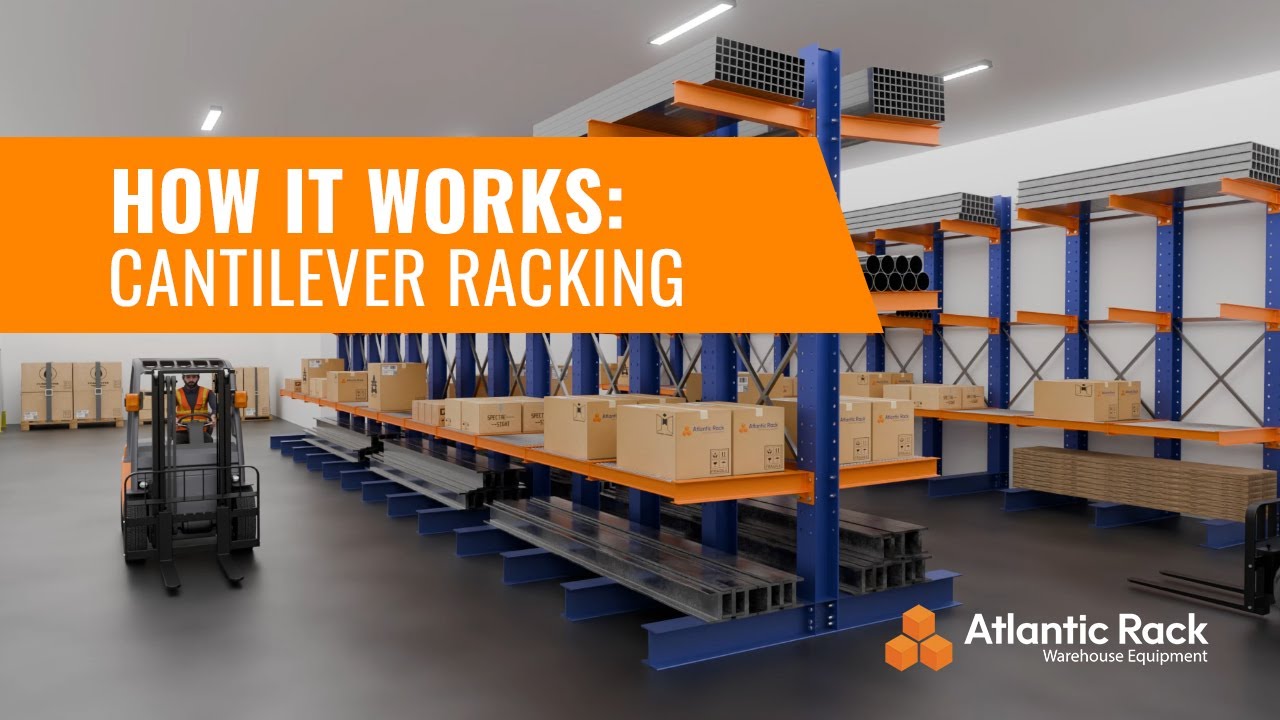
Cantilever Racking Systems: Storage for Long, Bulky & Heavy Items
Atlantic Rack

Pushback Pallet Rack: High-Density Multi-SKU Storage
Others