Pallet Shuttle System: High-Density Semi-Automated Storage
Quick Facts
Technology Performance Metrics
⭐Key Features
Benefits
Applications
Detailed Information
Technology Overview
The Pallet Shuttle System is a semi-automated material handling solution designed to significantly increase storage density while maintaining a degree of operational flexibility. It bridges the gap between traditional drive-in racking and fully automated storage systems. The core concept involves using a remotely controlled, battery-powered shuttle cart that travels inside the deep lanes of specially designed racking. This setup is functionally similar to drive-in or pallet-flow systems but replaces the forklift's journey into the aisle with the shuttle's automated movement. By keeping the forklift at the front of the rack, the system enhances safety, reduces aisle width requirements, and accelerates the storage and retrieval process, making it a cost-effective choice for operations needing high-density pallet storage without the full investment in automation.
How It Works
Core Principles
The system operates on the principle of dedicated lane automation. A single shuttle device is dedicated to one storage channel (lane) at a time. The shuttle is placed into the channel by a forklift, where it then operates autonomously to transport pallets to the back of the lane or retrieve them to the front, all controlled via a remote terminal.
Key Features & Capabilities
Semi-Automated, High-Density Channel Storage is the defining feature. It automates the most time-consuming and risky part of deep-lane storage—the travel of the load deep into the rack—while relying on a flexible forklift for shuttle positioning and interface handling.
Battery-Powered, Remotely Controlled Shuttle is the active component. The shuttle is an independent vehicle that runs on tracks within the racking, powered by rechargeable batteries, and controlled via wireless remote, allowing precise placement and retrieval without manual labor inside the lane.
Forklift-Agnostic Interface allows for integration with most standard forklifts. The system does not require specialized forklifts; any compatible forklift can be used to lift and position the shuttle and to handle pallets at the face of the rack, keeping implementation costs lower.
Advantages & Benefits
The primary advantage is a significant increase in storage density and space utilization. By enabling very deep lanes (often 10+ pallets deep) without the need for wide forklift aisles, it can store many more pallets in the same warehouse footprint compared to selective racking.
It delivers improved operational efficiency and safety. The process is faster than a forklift driver manually navigating a deep lane, and it eliminates the risk of product or rack damage from forklifts operating in confined spaces, while also reducing operator fatigue.
The system offers a cost-effective path to automation. It provides many benefits of automated storage (density, speed, safety) at a fraction of the cost and complexity of a fully automated AS/RS or shuttle system, making it accessible to a wider range of businesses.
Implementation Considerations
The system typically operates on a LIFO (Last-In, First-Out) basis within each lane. This makes it ideal for batch storage but less suitable for operations requiring strict FIFO (First-In, First-Out) inventory rotation across deep lanes without complex lane management.
Throughput is dependent on shuttle cycle time and operator coordination. While faster than manual drive-in, it is not as fast as a multi-shuttle system. The need to manually transfer the shuttle between lanes can become a bottleneck in multi-lane, high-throughput applications.
It requires trained forklift operators who are adept at using the remote control and handling the shuttle device. The success of the system relies on smooth coordination between the automated shuttle movement and manual forklift work.
Use Cases & Applications
Ideal For
This system is ideal for businesses with high-volume storage of homogeneous products, such as food and beverage distributors, manufacturing plants storing raw materials or finished goods, and cold storage facilities where maximizing cubic space and minimizing cold air loss are critical.
Performance Metrics
The content emphasizes qualitative performance gains: cost-effective and time-saving. Key operational metrics include increased storage density (often 40-60% more than selective racking), reduced pallet handling times compared to manual drive-in systems, and the elimination of forklift travel time within deep lanes.
Conclusion
The Pallet Shuttle System is a pragmatic and powerful solution for achieving high-density pallet storage with a moderate level of automation. It perfectly suits operations that have outgrown selective racking but are not ready or do not require the throughput of a fully automated AS/RS. Its strengths in safety, space savings, and cost-effectiveness make it a compelling choice for bulk storage applications. Companies considering this system should carefully evaluate their inventory profile (favoring batch or LIFO), throughput requirements, and operator readiness to ensure it aligns with their operational workflow and delivers the expected return on investment.
Related Knowledge
Storage
Storage is the warehouse process of holding inventory in organized locations until needed, balancing space utilization, accessibility, and inventory control to support efficient operations.
Cold Storage Strategy
Cold storage and temperature-controlled warehousing are critical for preserving perishable goods throughout the supply chain. From frozen foods to pharmaceuticals, these specialized facilities maintain precise temperature conditions while optimizing energy efficiency and operational performance.
Related Technologies
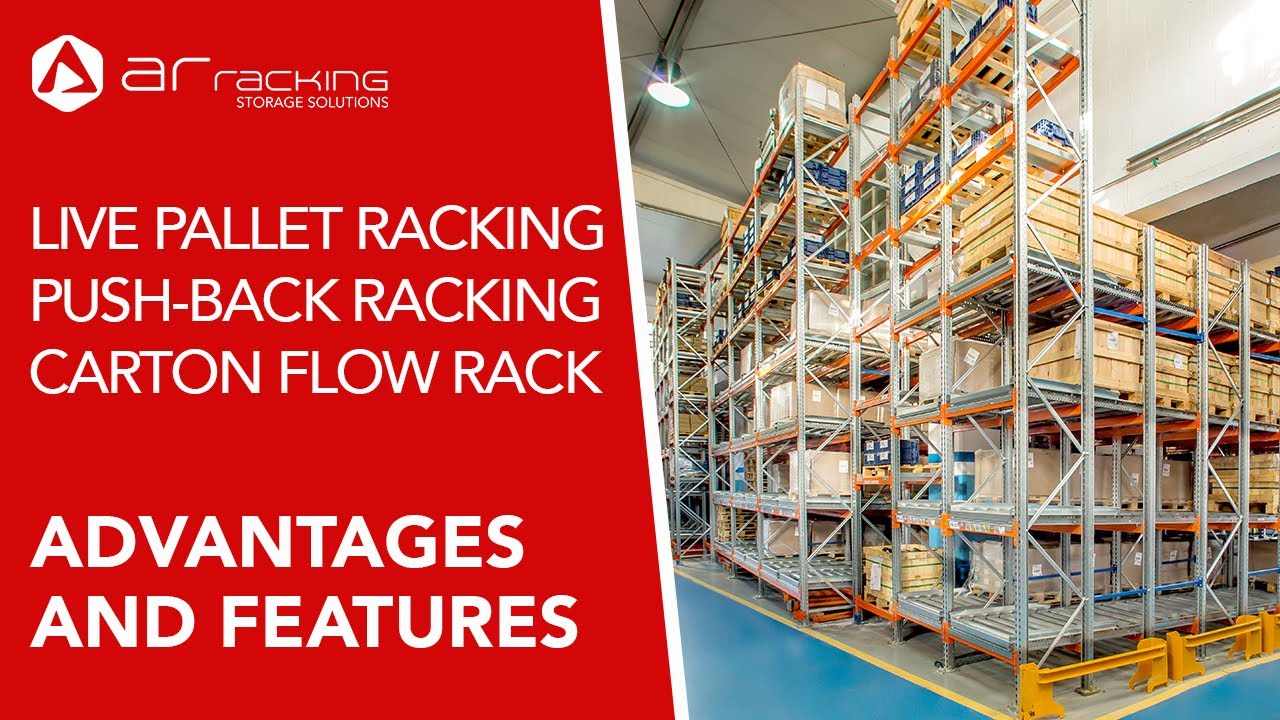
Live Storage Systems: Gravity-Flow High-Density Storage
AR Racking
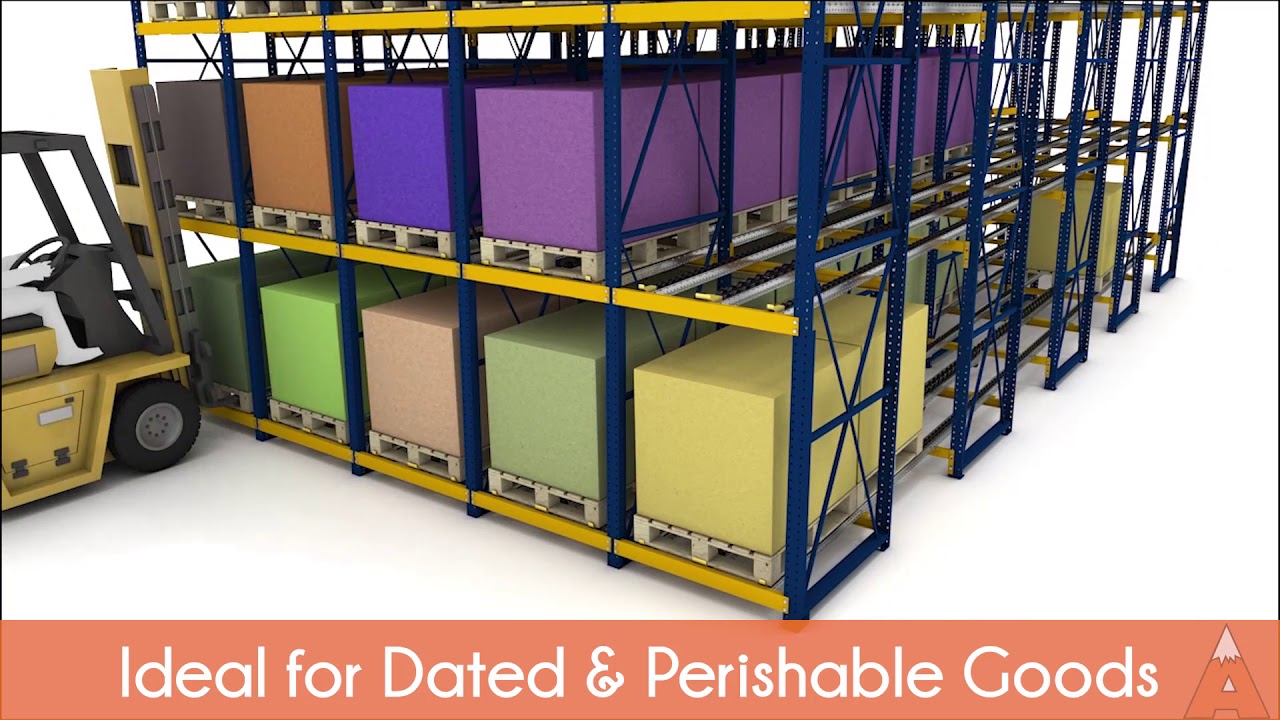
Pallet Flow Racking: High-Density FIFO Storage Solution
Others
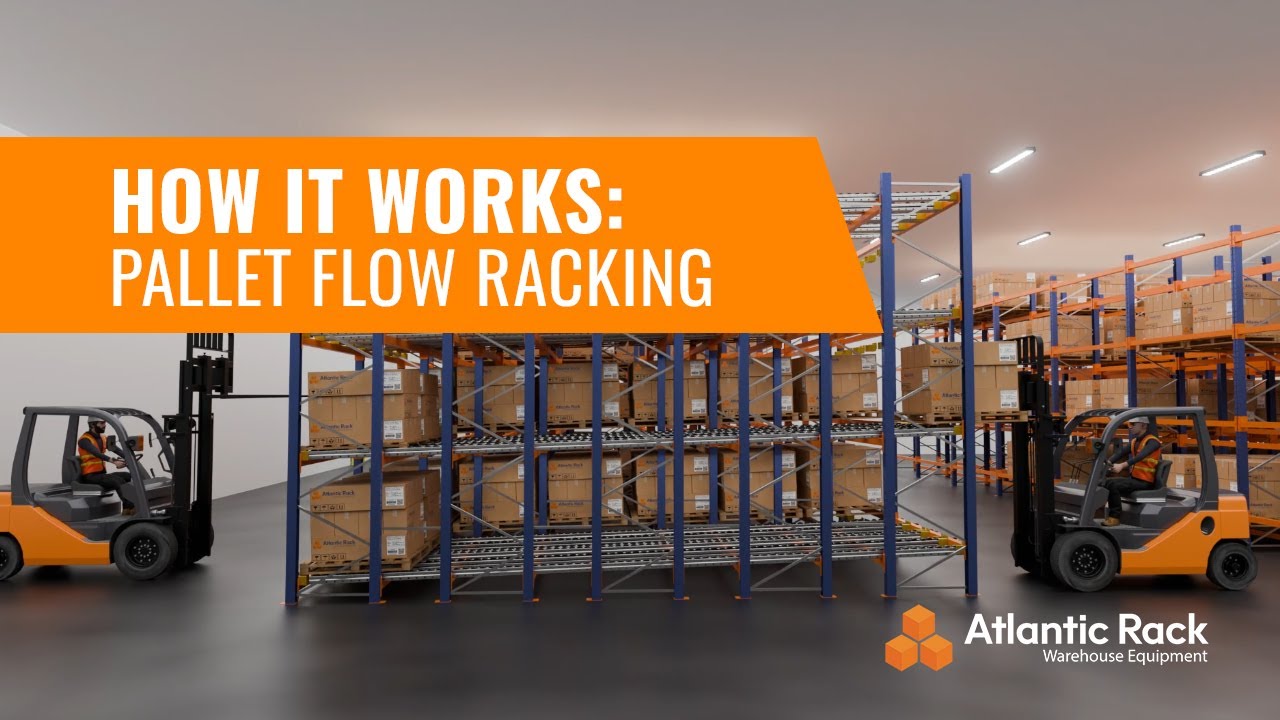
Pallet Flow Racking: High-Density FIFO Storage System
Atlantic Rack