On-Grid Robotic Pick: Ocado's Grocery Picking and Packing Solution
Quick Facts
Technology Performance Metrics
⭐Key Features
Benefits
Applications
Detailed Information
Technology Overview
On-Grid Robotic Pick from Ocado Group represents a groundbreaking advancement in the automation of online grocery fulfillment. The grocery sector presents unique challenges due to the extreme diversity of products (varying in size, shape, weight, and fragility) and the requirement for gentle, precise handling to prevent damage. Traditional rigidly programmed industrial robots are ill-suited for this environment. Ocado's solution is a highly adaptive, AI-driven robotic system designed to operate directly within their dense, cube-based automated storage structure (the 'Hive' or Grid). This technology aims to fully automate the final and most complex step—picking individual items and packing them into customer orders—thereby achieving a true "hands-off" fulfillment process from receiving to dispatch.
How It Works
Core Principles
The core principle is AI-powered, vision-guided robotic manipulation within a dense storage grid. Instead of bringing items to a fixed pick station, robotic arms are deployed on or adjacent to the grid structure itself. Using advanced machine vision and deep reinforcement learning, the robots identify, pick, and pack items directly from their storage locations without pre-programmed knowledge of each SKU, adapting their grip and placement strategy in real-time.
Key Features & Capabilities
The system is designed specifically for the demanding and unique needs of the grocery sector, where product variability is extreme. It is capable of picking and packing tens of thousands of products with varying shapes, sizes, weights, and fragility with the required gentleness and precision. This is enabled by cutting-edge machine vision, deep reinforcement learning, and advanced sensing. A key differentiator is its ability to operate without prior knowledge of items, making smart decisions on the fly for unseen products. It fundamentally changes warehouse flow by picking directly from the storage Grid, eliminating the need for traditional pick stations. Finally, it integrates and collaborates seamlessly with all Ocado bot fleets, creating a unified automated ecosystem.
Advantages & Benefits
The system solves one of the most complex fulfillment challenges, achieving human-like precision and accuracy in packing. It is the key to enabling complete end-to-end automated fulfillment of grocery orders without any human touch. From a facility perspective, it optimizes warehouse design, enabling unmatched capital and site efficiency by reducing the space needed for manual pick stations. This leads to faster site build-up/ramp-up and lower operating costs throughout the facility's lifecycle. It acts as a catalyst for greater throughput from the same footprint and provides operational flexibility by working on both order assembly during peaks and stock consolidation during off-peak hours.
Implementation Considerations
This technology represents a step-change in automation, likely requiring a holistic rethinking of fulfillment operations rather than a simple retrofit. It is deeply integrated with Ocado's proprietary 'Hive' grid and bot ecosystem, making it a core part of their unique end-to-end automation platform rather than a standalone, off-the-shelf product.
Use Cases & Applications
Ideal For
This technology is ideal for high-volume online grocery retailers and dedicated grocery fulfillment centers that require a fully automated solution to handle massive SKU variety and achieve the scale necessary for profitability.
Conclusion
Ocado's On-Grid Robotic Pick is more than just another robotic arm; it is a pivotal component in a fully integrated, automated grocery fulfillment architecture. By solving the "last yard" problem of item picking with AI and advanced robotics, it unlocks the potential for truly lights-out grocery distribution. While it is part of Ocado's proprietary ecosystem, its development signals the direction for the entire industry: towards highly adaptive, intelligent automation that can handle the real-world complexity of retail products. For any player in the online grocery space, this technology sets a new benchmark for what is possible in terms of efficiency, accuracy, and scalability.
Related Knowledge
Robotic Case Picking
Advanced robotic case picking systems that combine industrial robotics with intelligent vision systems to automate the handling of full cases and cartons, delivering exceptional speed, precision, and reliability in high-volume distribution operations.
Robotic Piece Picking
Advanced robotic systems that use AI and computer vision to automatically select and pick individual items from diverse inventory, revolutionizing warehouse fulfillment operations with human-like dexterity and intelligence.
Voice Picking Systems
Voice picking systems revolutionize warehouse operations by enabling hands-free, eyes-free order fulfillment through speech recognition technology. Workers receive spoken instructions through wireless headsets and confirm actions verbally, dramatically improving productivity, accuracy, and safety while reducing training time.
Vendor
OthersRelated Technologies
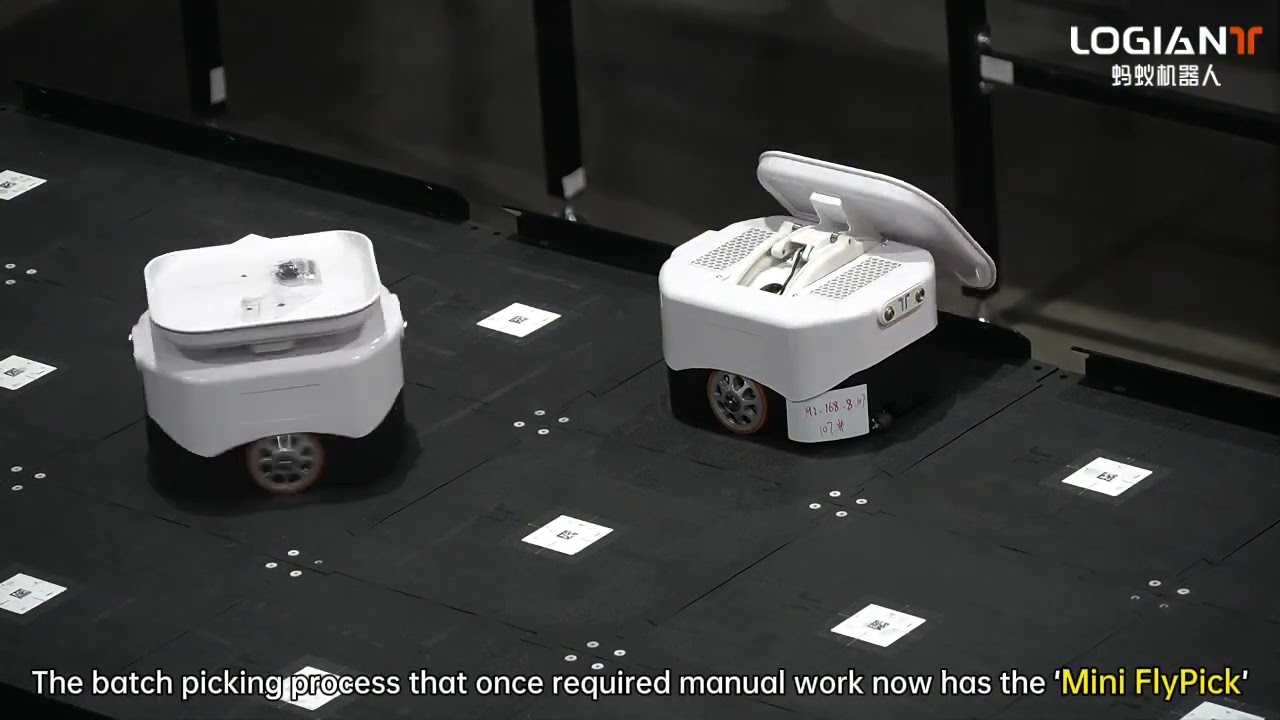
Mini FlyPick Robot: Compact High-Speed Sorting AMR
Others

Split Tray (Bomb Bay) Sorter Compilation: Versatile High-Speed Sortation
Others
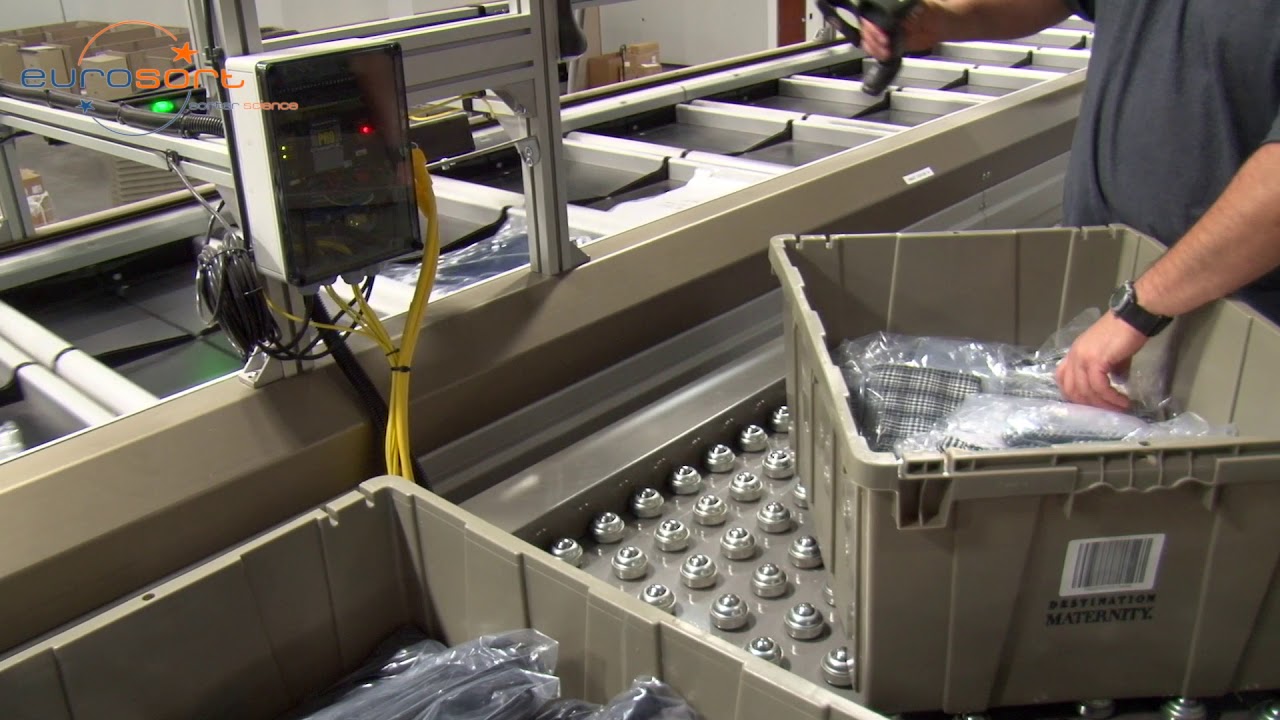
Patented Dual Split Tray (Bomb Bay) Sorter with Batch Induction
Others