Voice-Directed Warehouse System
Quick Facts
Technology Performance Metrics
⭐Key Features
Benefits
Applications
Detailed Information
Technology Overview
Jennifer™, developed by Lucasware, is a voice-directed warehouse system designed to modernize and optimize manual operations, particularly order picking. By replacing paper lists, handheld scanners, or fixed terminals with real-time spoken instructions and verifications, it creates a hands-free, eyes-up work environment. This technology aims to address core challenges in warehouse management: accuracy, training time, productivity, and labor flexibility. The system acts as an intelligent guide, directing workers through their tasks step-by-step, which is especially beneficial for training new staff and ensuring consistent processes are followed, leading to measurable improvements in operational performance.
How It Works
Core Principles
The core principle is voice-based, bidirectional communication for task execution and verification. The system provides audio instructions to the worker and requires spoken confirmations at key points to create an error-proof workflow loop.
Key Features & Capabilities
The real-time verbal guidance and verification is the defining feature, creating an intuitive, error-proofed workflow that keeps workers' hands and eyes free. The adaptive verification system can be tailored for worker experience; for example, it might ask inexperienced pickers to read product numbers for extra assurance. The web-based management dashboard gives supervisors powerful control, allowing them to adjust verification settings, monitor progress, and modify processes in real-time without disrupting operations. This central management capability is key to optimizing and scaling the system's use.
Advantages & Benefits
The system delivers substantial and quantifiable performance gains, specifically citing the ability to cut picking errors in half while achieving double-digit percentage increases in picking productivity. This directly translates to higher throughput and shipping more items in less time. A major strategic benefit is increased operational flexibility and reduced labor dependency, allowing facilities to handle peak volumes without proportionally increasing staff. Furthermore, it enhances safety by allowing workers to focus on their surroundings and improves employee morale by reducing frustration and simplifying complex tasks.
Implementation Considerations
Successful implementation requires a robust wireless network throughout the facility to ensure uninterrupted communication between the voice servers and the wearable devices. Change management and training are crucial to help workers adapt to the voice-interaction workflow. The initial process design and configuration in the management dashboard must accurately reflect the warehouse layout and optimal picking paths. Integration with the existing WMS or inventory system is necessary for seamless task assignment and data exchange.
Use Cases & Applications
Ideal For
This system is ideal for warehouses with high-volume picking operations, a diverse workforce, or those struggling with accuracy and training inefficiencies. It is particularly valuable in environments with many SKUs or similar-looking items.
Performance Metrics
The video provides concrete performance data: implementation of the Jennifer™ system has resulted in cutting picking errors in half and delivering double-digit gains in picking productivity. This leads to the ability to ship more items in a shorter period of time and successfully handle volume surges without the need for additional labor.
Conclusion
The Jennifer™ voice-directed system represents a powerful, human-centric technology for transforming warehouse operations. By leveraging natural voice communication, it enhances both the efficiency and the experience of the workforce. For companies seeking immediate, measurable improvements in accuracy, productivity, and labor flexibility without a massive capital investment in robotics, implementing a voice solution like Jennifer™ offers a compelling and rapid return on investment. It empowers workers, provides management with valuable control and insights, and builds a more resilient and responsive operation capable of meeting modern fulfillment demands.
Related Knowledge
Robotic Case Picking
Advanced robotic case picking systems that combine industrial robotics with intelligent vision systems to automate the handling of full cases and cartons, delivering exceptional speed, precision, and reliability in high-volume distribution operations.
Robotic Piece Picking
Advanced robotic systems that use AI and computer vision to automatically select and pick individual items from diverse inventory, revolutionizing warehouse fulfillment operations with human-like dexterity and intelligence.
Voice Picking Systems
Voice picking systems revolutionize warehouse operations by enabling hands-free, eyes-free order fulfillment through speech recognition technology. Workers receive spoken instructions through wireless headsets and confirm actions verbally, dramatically improving productivity, accuracy, and safety while reducing training time.
Vendor
OthersRelated Technologies
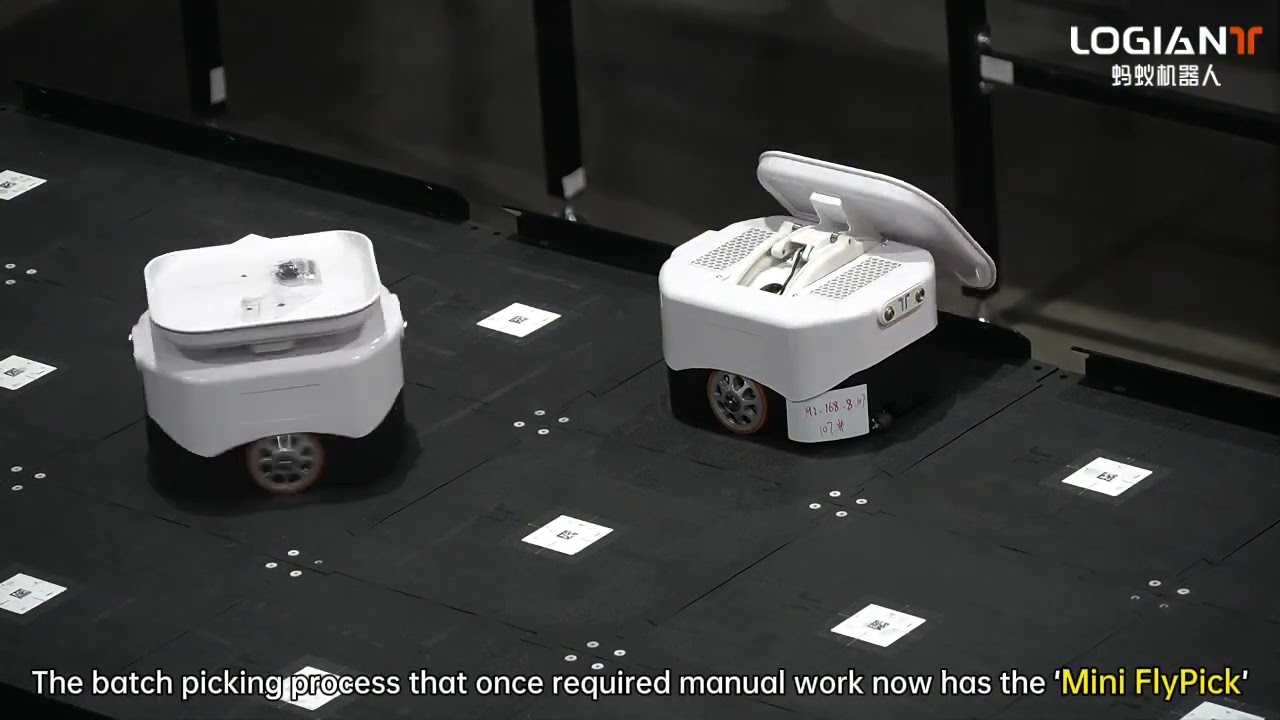
Mini FlyPick Robot: Compact High-Speed Sorting AMR
Others

Split Tray (Bomb Bay) Sorter Compilation: Versatile High-Speed Sortation
Others
Patented Dual Split Tray (Bomb Bay) Sorter with Batch Induction
Others