Bin Picking with 3D Vision and Robotic Arm
Quick Facts
Technology Performance Metrics
⭐Key Features
Benefits
Applications
Detailed Information
Technology Overview
Robotic bin picking is an advanced automation challenge that involves a robot identifying, locating, and picking individual parts that are randomly placed in a container (bin, tote, or box). This is a significant step beyond structured picking, as it requires the robot to handle variability in part position, orientation, and potential overlapping. The solution described combines two key technologies: a sophisticated 3D vision system from Spatial Vision/Universal Robotics and a standard industrial robotic arm from Yaskawa Motoman. The vision system acts as the robot's "eyes," providing precise 3D coordinates of the target part, while the robot executes the physical pick. This technology is crucial for automating the feeding of parts in manufacturing, moving away from manual labor or expensive, part-specific feeding bowls.
How It Works
Core Principles
The core principle is vision-guided robotic manipulation. A 3D vision system positioned above or near the bin captures a point cloud image of the scene. Advanced software, often utilizing machine learning algorithms, analyzes this 3D data to identify the specific part (e.g., a metal hinge) among clutter, determine its precise 3D position and orientation, and calculate a collision-free path for the robot to pick it. This coordinate data is then sent to the robot controller to execute the pick.
Key Features & Capabilities
The system's intelligence is provided by the Spatial Vision 3D imaging and machine learning software, which is capable of identifying and localizing specific parts in unstructured environments. The physical manipulation is performed by a reliable Yaskawa Motoman industrial robot arm. For handling the specific demo product, it utilizes a magnetic End-of-Arm Tool (EOAT), which is ideal for ferrous metal components. The vendor (Universal Robotics) claims their sensing and learning technology has broad applicability, stating it can be used to control any machine or sensor.
Advantages & Benefits
The primary advantage is that it automates the complex task of picking unordered parts from a bin, a process traditionally done manually. The 3D vision system provides the precise guidance necessary for the robot to successfully interact with randomly oriented objects, enabling flexibility in parts presentation.
Implementation Considerations
System performance in terms of speed (cycle time) and reliability (pick success rate) is highly dependent on factors such as part geometry, surface finish, how parts are piled in the bin, and ambient lighting conditions. Successful deployment requires seamless integration between the vision system's output, the robot's motion control, and the timing of the end-effector.
Use Cases & Applications
Ideal For
This technology is ideal for manufacturing and assembly lines where small to medium-sized parts need to be fed from bulk supply into a process, especially when parts are not easily conveyed or oriented by traditional means.
Conclusion
The bin picking solution combining Spatial Vision 3D imaging with a Yaskawa Motoman robot exemplifies the power of integrating advanced perception with robust manipulation. It tackles a classic automation hurdle—handling unstructured parts—and opens the door to greater automation in material handling and parts feeding. While the demo runs at half speed, indicating a balance between precision and cycle time, the technology represents a viable path to reducing manual labor in repetitive picking tasks. For manufacturers dealing with metal or other identifiable components supplied in bulk, such a vision-guided robotic system offers a flexible and increasingly capable automation option.
Related Knowledge
Robotic Case Picking
Advanced robotic case picking systems that combine industrial robotics with intelligent vision systems to automate the handling of full cases and cartons, delivering exceptional speed, precision, and reliability in high-volume distribution operations.
Robotic Piece Picking
Advanced robotic systems that use AI and computer vision to automatically select and pick individual items from diverse inventory, revolutionizing warehouse fulfillment operations with human-like dexterity and intelligence.
Voice Picking Systems
Voice picking systems revolutionize warehouse operations by enabling hands-free, eyes-free order fulfillment through speech recognition technology. Workers receive spoken instructions through wireless headsets and confirm actions verbally, dramatically improving productivity, accuracy, and safety while reducing training time.
Vendor
OthersRelated Technologies
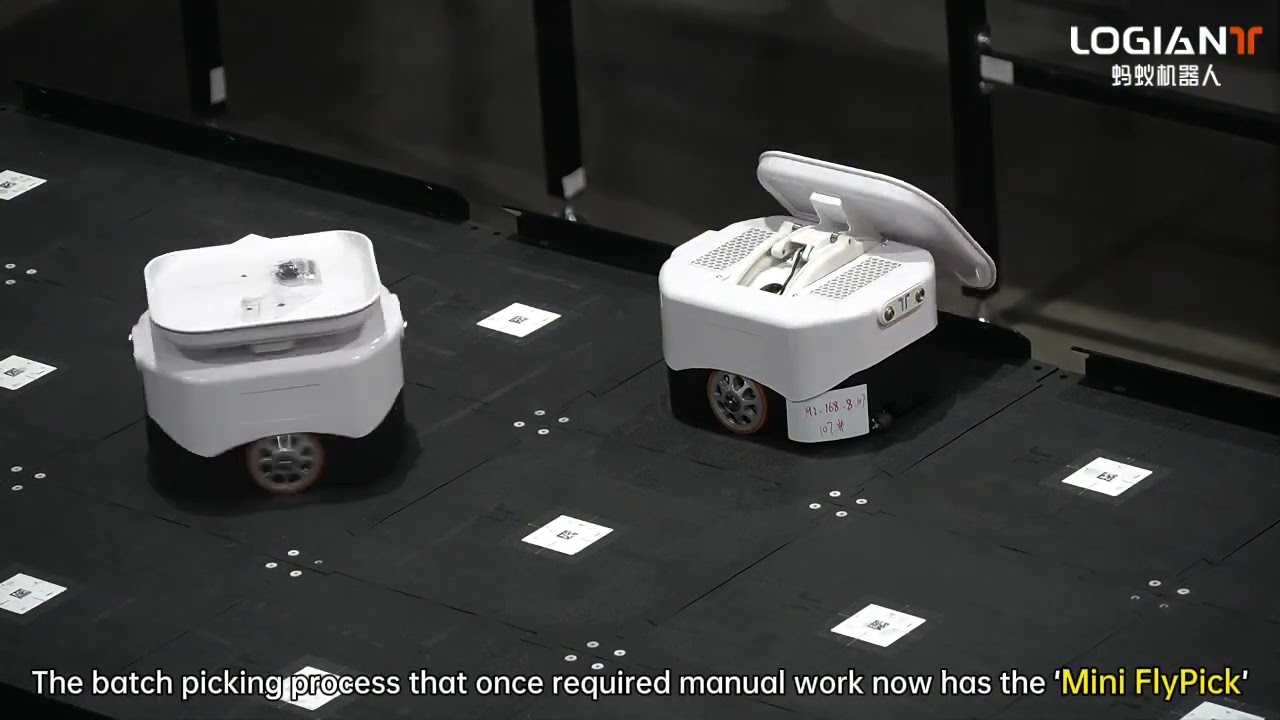
Mini FlyPick Robot: Compact High-Speed Sorting AMR
Others

Split Tray (Bomb Bay) Sorter Compilation: Versatile High-Speed Sortation
Others
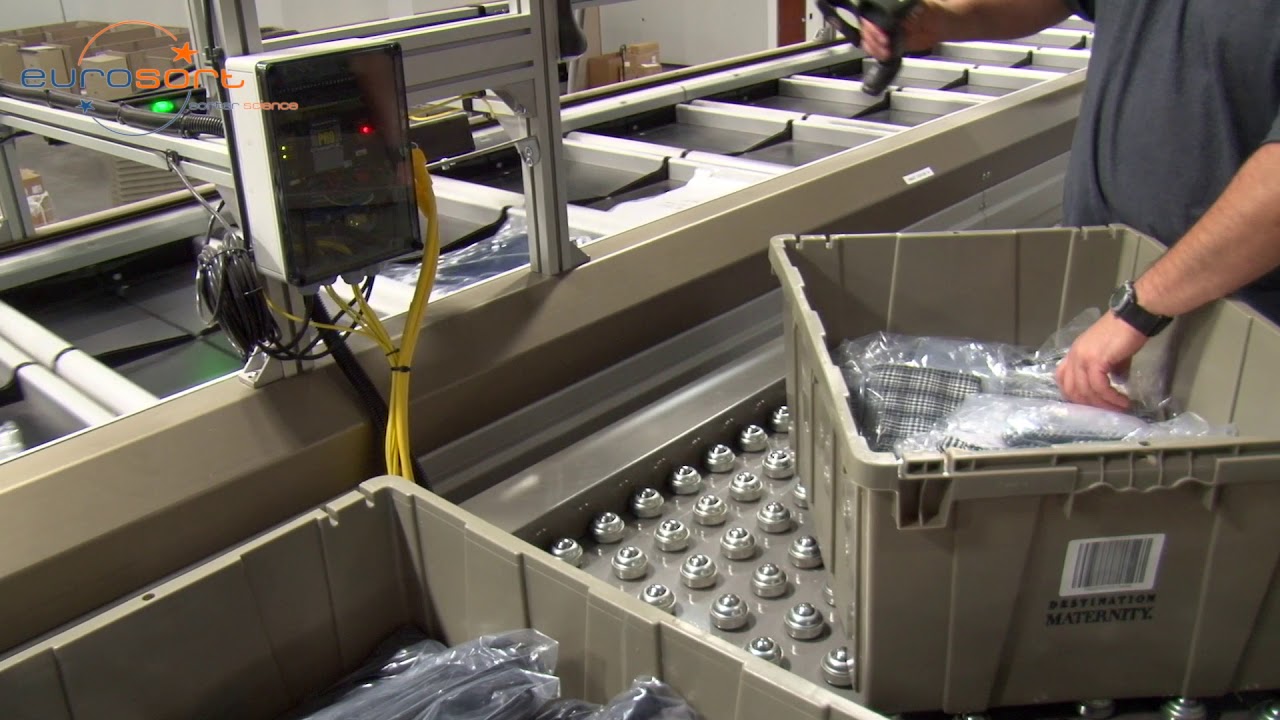
Patented Dual Split Tray (Bomb Bay) Sorter with Batch Induction
Others