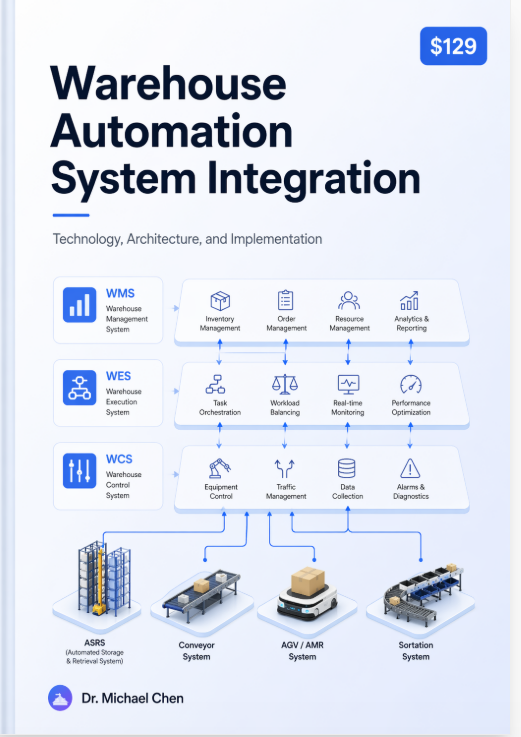
Warehouse Management System (WMS): Core Operations Platform
Quick Facts
Technology Performance Metrics
⭐Key Features
Benefits
Applications
Detailed Information
Technology Overview
A Warehouse Management System (WMS) is a foundational software platform designed to oversee and optimize all activities within a warehouse or distribution center. It acts as the central nervous system, providing real-time visibility and control over the complex flow of materials from the moment they are received to the point they are dispatched. The primary goal of a WMS is to improve productivity, accuracy, and efficiency by replacing manual, paper-based processes and guesswork with digital, data-driven guidance. It is applicable to various types of warehouses, including those handling raw materials, finished goods, temperature-sensitive items, and cross-dock operations. By managing critical functions and eliminating dependency on individual personnel for operational decisions, a WMS transforms warehouse management from a reactive to a proactive and optimized process.
How It Works
Core Principles
The WMS operates on a database-centric model that maintains a digital twin of the warehouse. It uses business rules and logic to track inventory in real-time, manage storage locations, and direct all material movements. It interfaces with users via RF scanners, mobile devices, or workstations, providing step-by-step instructions for tasks.
Key Features & Capabilities
End-to-End Process Control: A comprehensive WMS controls the entire spectrum of warehouse operations, including inventory management, location management, receiving, put-away, picking, sorting, packing, loading, invoicing, dispatch, and material movement. This holistic control is its defining feature.
Visibility and Data-Driven Decision Making: The system provides real-time visibility into inventory levels, order status, and workforce productivity. This data eliminates guesswork and dependency on individual personnel for critical operational knowledge.
Automated Guidance and Optimization: The WMS automates core decision-making functions such as suggesting the most efficient storage location (put-away), defining allocation policies (which inventory to pick from), and providing guided, step-by-step instructions to operators via mobile devices, optimizing their paths and tasks.
Advantages & Benefits
The primary benefit is the significant improvement in warehouse productivity and operational efficiency through automation and optimization of all processes. By providing centralized visibility and control, it enables effective management of operations across multiple, diverse warehouses from a single platform. The system eliminates dependencies on individual warehouse personnel for inventory status and routine decisions, reducing errors and training time. Furthermore, it provides critical business intelligence through data on operations, enabling continuous improvement and better strategic planning.
Implementation Considerations
Successful implementation requires a thorough analysis and potential redesign of existing warehouse processes to align with WMS best practices. Integration with other business systems, particularly the ERP, is crucial for seamless data flow (e.g., order import, inventory updates). User training and change management are vital to ensure warehouse staff adopt the new guided workflows. The system must be configured to match the specific warehouse layout and storage configurations (rack storage, floor storage, damaged goods locations, etc.).
Use Cases & Applications
Ideal For
A WMS is ideal for any business that operates a warehouse or distribution center, regardless of size or industry, especially those struggling with inventory accuracy, manual processes, or managing operations across multiple sites.
Performance Metrics
While specific numerical KPIs are not provided, the system's value is measured through improved productivity, increased inventory accuracy, reduced order cycle times, and lower operational costs. The elimination of personnel dependency for decisions leads to more consistent and reliable operations. The ability to manage multiple warehouses effectively is a key scalability and control metric.
Conclusion
A Warehouse Management System is an indispensable tool for modern logistics and supply chain operations. It moves warehouse management beyond simple tracking to active optimization and intelligent control of every asset and activity. For businesses like John's in the example, facing challenges in managing diverse and complex warehouse networks, implementing a robust WMS provides the visibility, control, and automated guidance needed to ensure smooth, efficient, and accurate operations. The investment in a WMS typically yields a strong return through labor savings, error reduction, space optimization, and improved customer service, making it a cornerstone technology for any competitive distribution operation.

Vendor
OthersRelated Technologies

Mini FlyPick Robot: Compact High-Speed Sorting AMR
Others

Split Tray (Bomb Bay) Sorter Compilation: Versatile High-Speed Sortation
Others

Patented Dual Split Tray (Bomb Bay) Sorter with Batch Induction
Others