Dynamic Slotting: Warehouse Optimization Solution
Quick Facts
Technology Performance Metrics
⭐Key Features
Benefits
Applications
Detailed Information
Technology Overview
Dynamic Slotting is an innovative warehouse optimization solution designed to address the limitations of traditional static slotting practices. Traditional slotting, typically performed once or twice a year by a team of engineers, involves manually determining product storage locations and executing physical relocations, which often fails to keep pace with the dynamic changes in product demand and warehouse operations. Dynamic Slotting transforms this process by integrating warehouse layout data, operational data from systems like WMS or ERP, and IoT-generated data into a machine learning model. This model is built with adaptability and reinforcement learning capabilities, enabling it to provide real-time, data-backed slotting recommendations that static rule-based engines or manual planning cannot match.
The core system architecture of Dynamic Slotting includes three key components: a data integration layer that connects to existing warehouse management systems and IoT devices, a machine learning engine that processes the integrated data to identify optimal storage locations, and a web-based user interface that simplifies the request and review of slotting recommendations. Unlike complex traditional slotting tools that require specialized industrial engineering skills to operate, this solution prioritizes user-friendliness, allowing warehouse staff to initiate recommendation requests without advanced technical training.
Key Features & Capabilities
The machine learning-driven analysis model is the cornerstone of Dynamic Slotting’s capabilities. Unlike static engineered slotting approaches that rely on historical data and rigid rules (which often contradict each other as more rules are added), this model leverages real-time operational data and IoT inputs to adapt to changing warehouse conditions. It can identify complex patterns such as product affinity—relationships between products that are frequently picked together—which is nearly impossible to calculate using simple Excel-based velocity analysis or traditional slotting tools. This adaptability ensures that the slotting recommendations remain relevant even as product demand fluctuates or new products are introduced.
The web-based user interface is designed for simplicity and accessibility. It eliminates the need for specialized industrial engineering expertise, enabling frontline warehouse staff to use the tool independently. Operators can easily request a specific number of recommendations, view detailed relocation plans with reason codes and ROI calculations, and access visual heat maps to understand picking activity distribution. The UI also supports customizable data columns, allowing users to display additional information such as current stock levels or allocated orders to make more informed decisions about when to execute relocations—for example, waiting for a slot to be empty to minimize relocation costs.
Another key feature is the user feedback integration mechanism. When operators reject a recommendation, they can provide a reason, and the AI engine uses this feedback to improve future suggestions. For instance, if a relocation is rejected because the product size in the system master data is incorrect, the engine will adjust its model to account for the actual product dimensions, preventing similar errors in subsequent recommendations. This closed-loop feedback system ensures that the tool continuously improves and aligns with the real-world operational constraints of the warehouse.
Advantages & Benefits
Dynamic Slotting delivers significant productivity improvements by reducing staff travel time. By optimizing product storage locations based on real-time picking data, the solution ensures that fast-moving items are placed in easily accessible, high-priority slots, minimizing the distance staff need to travel during picking operations. This directly translates to higher picking efficiency and throughput, addressing a major pain point in traditional warehouses where static slotting often results in suboptimal storage layouts as product demand changes over time.
Compared to static engineered slotting approaches, Dynamic Slotting offers superior adaptability to dynamic distribution center environments. Traditional slotting relies on historical data and manual planning, making it reactive and slow to respond to changes such as new product launches, demand spikes, or shifts in customer order patterns. In contrast, the machine learning model of Dynamic Slotting continuously processes real-time data, enabling proactive adjustments that keep the warehouse layout optimized at all times. This adaptability eliminates the need for costly and time-consuming annual slotting overhauls, reducing operational disruptions.
The solution also provides strong cost-effectiveness through measurable ROI calculations for each relocation. Every recommendation includes an ROI estimate—for example, a move that pays for itself in four days—allowing warehouse managers to prioritize high-value adjustments and justify the labor costs associated with physical relocations. Additionally, the user-friendly design reduces reliance on specialized industrial engineering resources, lowering the overall operational costs of implementing and maintaining the slotting process.
Implementation Considerations
Dynamic Slotting requires seamless integration with existing warehouse data systems, including WMS or ERP platforms, to access product data, order history, and operational metrics. Without reliable data integration, the accuracy of the machine learning model and the quality of recommendations will be compromised. Warehouses with legacy systems that lack open APIs may face additional integration challenges and may need to invest in middleware or system upgrades to support data sharing.
The effectiveness of Dynamic Slotting is highly dependent on the quality of input data. Inaccurate product master data—such as incorrect dimensions, weight, or demand forecasts—can lead to suboptimal recommendations or even errors in relocation planning. Warehouses must ensure that their product and operational data is up-to-date and accurate before implementing the solution to maximize its value. Regular data audits may be necessary to maintain recommendation quality over time.
Labor allocation is another key consideration. Physical product relocations require staff time, which must be scheduled to avoid conflicts with peak picking or shipping operations. The solution allows users to request a specific number of recommendations (e.g., 10 moves per shift) to align with available labor resources, but warehouse managers still need to plan and allocate staff effectively to execute the relocations without disrupting daily operations. This may involve scheduling relocations during off-peak hours or assigning dedicated teams to handle slot adjustments.
Use Cases & Applications
Ideal For
Dynamic Slotting is ideal for distribution centers and warehouses that experience frequent changes in product demand, high product turnover rates, or regular new product introductions. It is also well-suited for facilities that want to move beyond infrequent annual slotting adjustments to achieve continuous optimization, as well as warehouses looking to reduce replenishment costs by optimizing the storage locations of fast-moving items.
Performance Metrics
While specific throughput or efficiency improvement data is not explicitly provided in the source material, the solution’s core value proposition centers on reducing staff travel time and improving picking productivity. Each relocation recommendation includes an ROI calculation, with examples such as a move that recoups its costs in just four days. The heat map visualization tool enables warehouses to measure picking activity distribution, identifying areas of the warehouse that are overutilized or underutilized to guide further optimization efforts.
Future Trends
The future of Dynamic Slotting lies in deeper integration with emerging warehouse technologies, such as autonomous mobile robots (AMRs) and digital twins. Integrating with AMRs could enable automated execution of slot relocations, reducing the need for manual labor and further improving operational efficiency. Additionally, pairing Dynamic Slotting with digital twin technology would allow warehouses to simulate slotting strategies in a virtual environment before implementing them in the real warehouse, minimizing operational disruptions and optimizing the effectiveness of adjustments.
Conclusion
Dynamic Slotting represents a significant advancement over traditional static slotting practices, offering warehouses a data-driven, adaptive solution to optimize storage layouts and boost operational efficiency. By leveraging machine learning, IoT data integration, and a user-friendly interface, the solution enables continuous warehouse optimization without the need for specialized industrial engineering expertise. Its ability to provide measurable ROI for each relocation and adapt to dynamic operational changes makes it a valuable tool for modern distribution centers and warehouses. While successful implementation requires attention to data integration, data quality, and labor allocation, the benefits—in terms of productivity gains, cost reduction, and operational agility—far outweigh these considerations for most facilities.
Vendor
OthersRelated Technologies
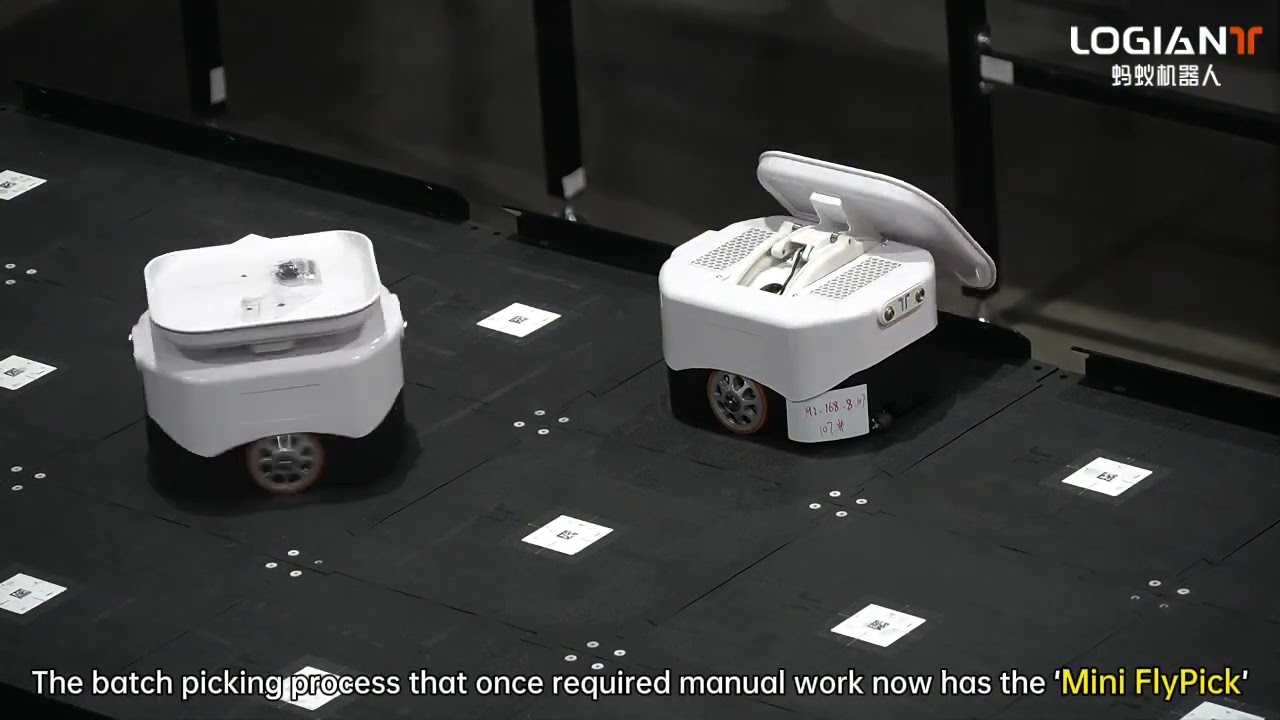
Mini FlyPick Robot: Compact High-Speed Sorting AMR
Others

Split Tray (Bomb Bay) Sorter Compilation: Versatile High-Speed Sortation
Others
Patented Dual Split Tray (Bomb Bay) Sorter with Batch Induction
Others